
Why BidTrack Doesn't Hand You a Standard Bidding Calculator — And Builds You Your Own Custom One Instead
Your bid is your secret sauce. We're not asking you to give it up.
The problem with "one-size-fits-all" bidding tools
Walk into any two successful painting, drywall, or specialty contracting companies and ask them how they bid the same scope of work, and you'll get two different answers. Different markup structures. Different ways of accounting for labor burden. Different contingency logic. Different rules of thumb built from years of jobs that went sideways and jobs that didn't.
That's not a flaw in the industry. That is the industry.
Competitive bidding only works because contractors don't all price things the same way. Your method — the way you weight labor vs. material risk, the way you build in your overhead, the shortcuts you've earned the right to take because you've done this a thousand times — is a big part of what makes your bids yours. It's part of how you win work, and part of how you stay profitable when you do.
So when we set out to build a bid calculator for subcontractors, we ran into a real problem: any calculator with a fixed formula bakes in someone else's bidding philosophy. Ours, or whoever we modeled it after. Adopt it, and you're not bidding your way anymore — you're bidding our way. Do that across enough companies, and you start flattening the exact competitive differences that make bidding work in the first place.
We didn't think that was fair to contractors. And honestly, we didn't think it was good for the industry either.
So we built it the other way around
Instead of building one calculator and asking every contractor to conform to it, BidTrack's AI interview agent sits down with you first.
It asks how you actually bid. What you mark up, and by how much. How you handle labor burden, waste factors, equipment costs, subcontracted scopes, risk contingency — whatever your method actually is, not a generic template of what a bidding method "should" look like.
Then it takes that interview and builds a calculator around it. Your logic, your categories, your markup structure — turned into a tool that works the way you already work, just faster and with fewer dropped line items.
No two contractors end up with the same calculator, because no two contractors bid the same way. That's the point.
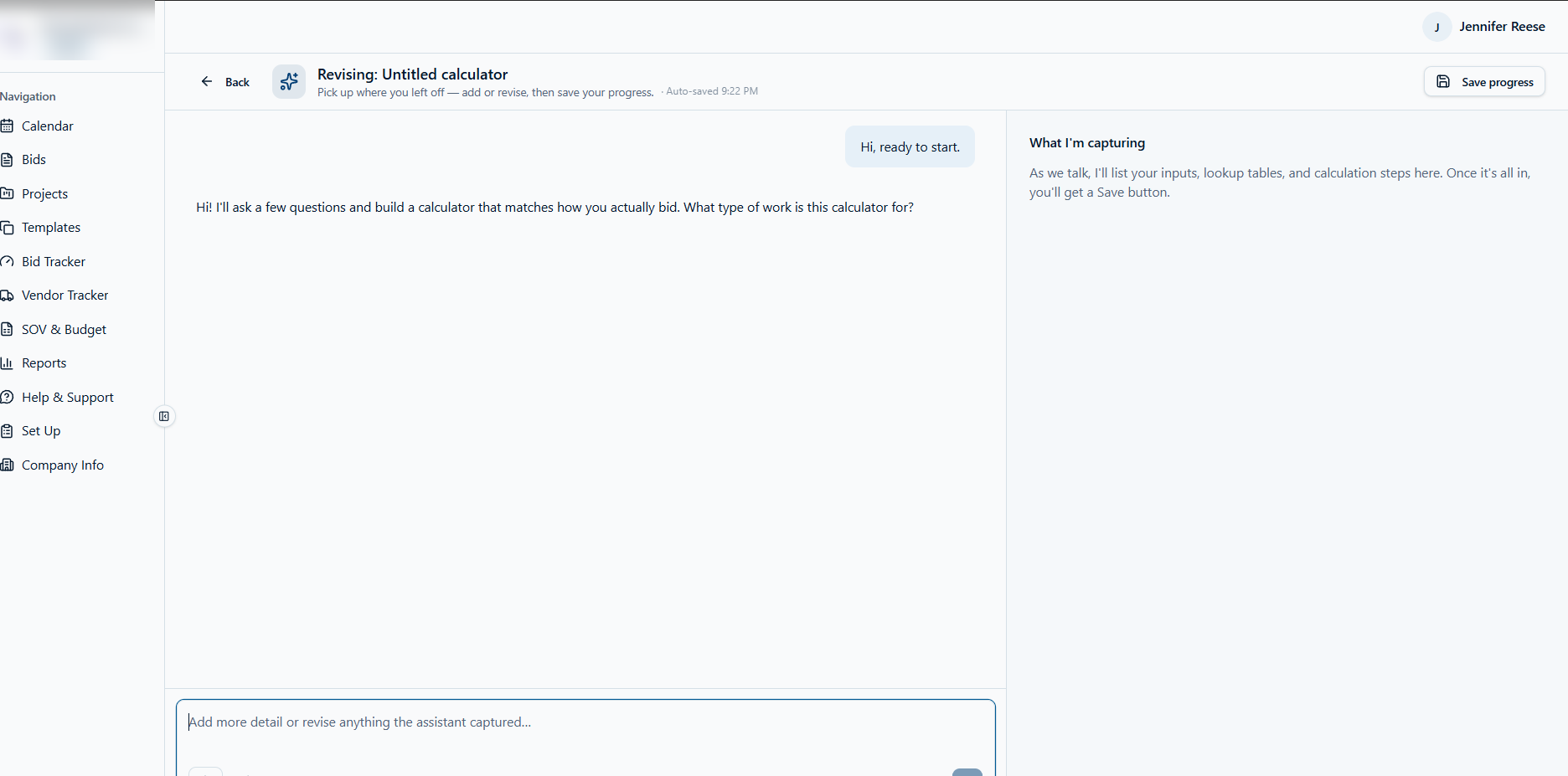
Nothing about the interview is generic. It follows your answers wherever they lead — asking about man-day rounding, wage types, equipment rentals, coat application rates, whatever's actually part of how you price a job.
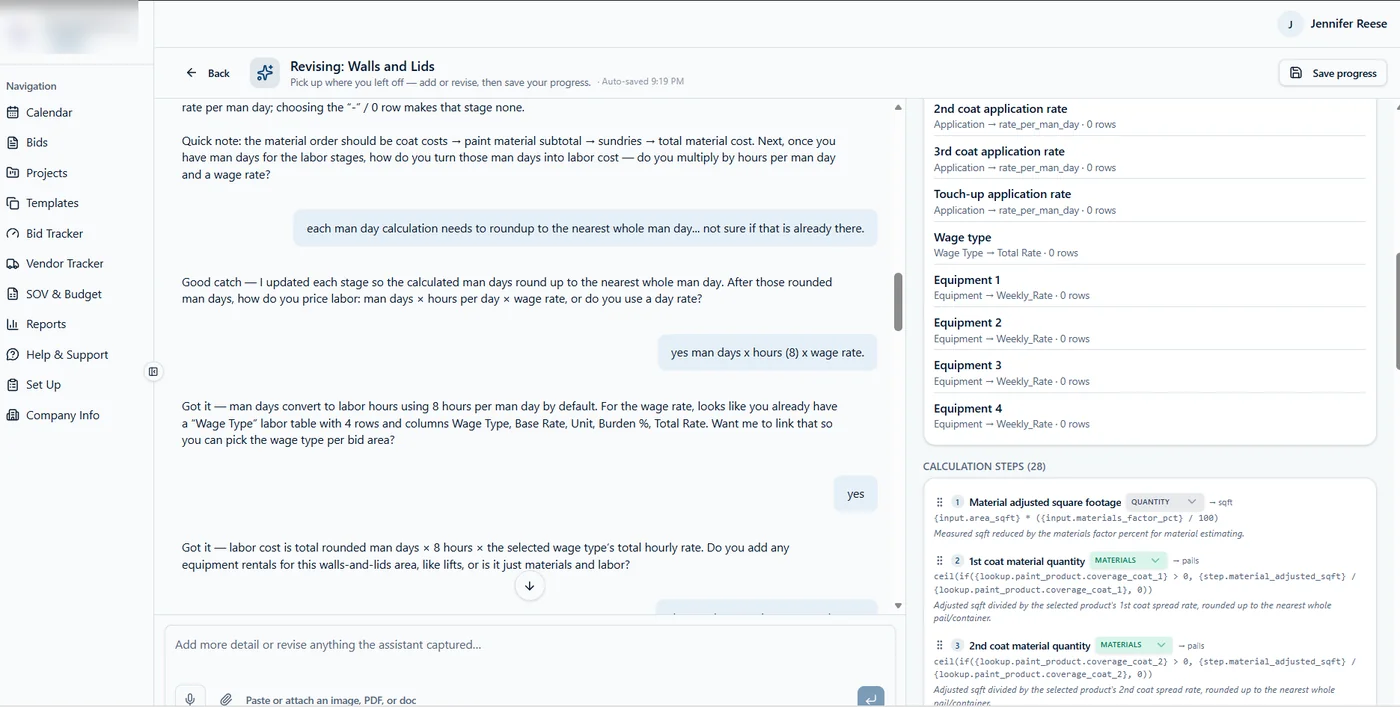
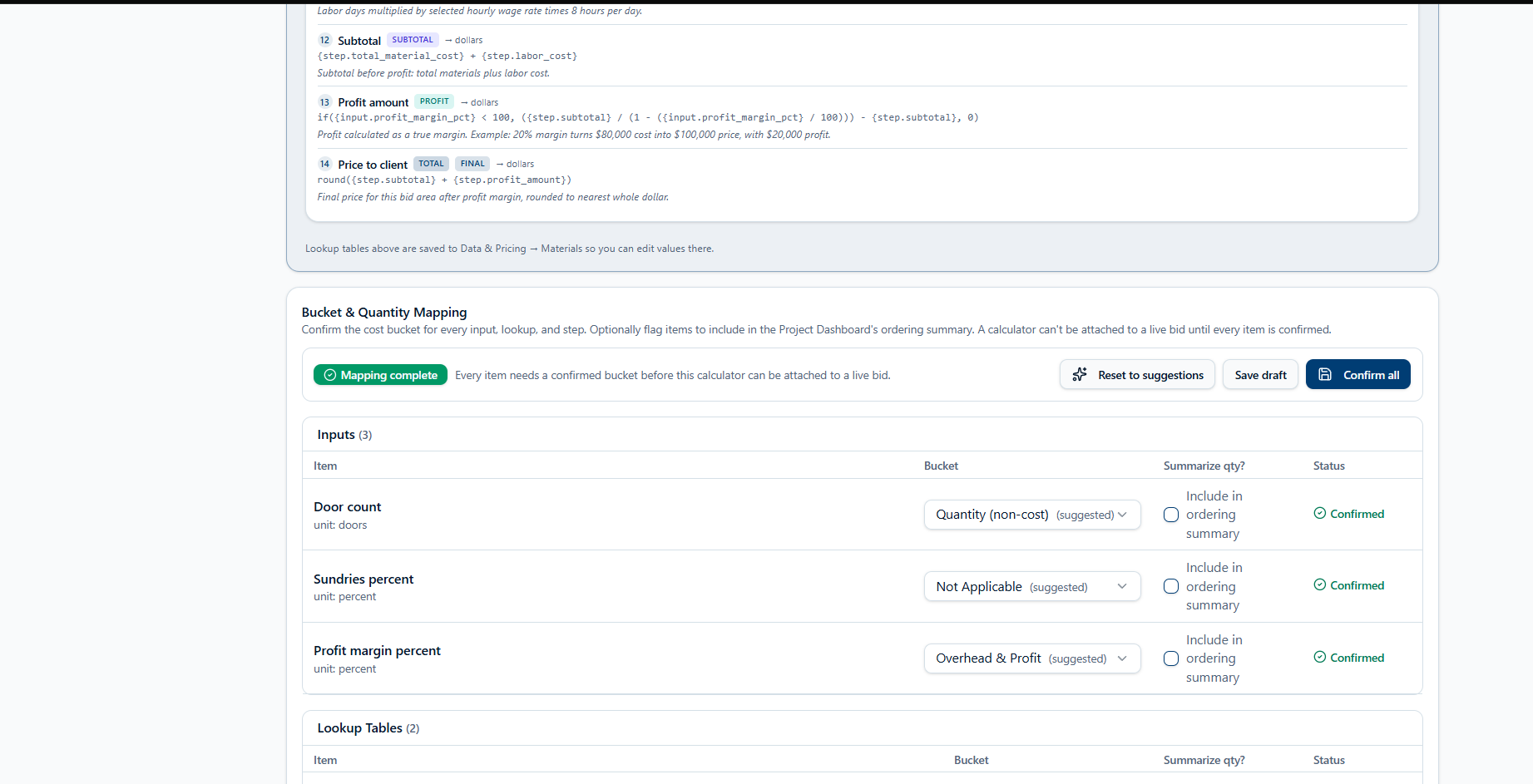
Once the interview has enough to work with, nothing gets added to your calculator without your sign-off. Every input, lookup table, and calculation step goes through a confirmation step — you assign it to the right cost bucket, and the calculator can't be attached to a live bid until everything is confirmed.
What this means for you
- →You keep your method. We're not standardizing you into a competitor's playbook.
- →You get speed without losing control. The calculator does the math your way — it doesn't decide your markup for you.
- →Your edge stays your edge. The thing that makes your bids competitive doesn't get diluted into a generic template shared across every contractor using the tool.
We built BidTrack for subcontractors, by people who've spent decades bidding this exact kind of work. We know the calculator isn't the hard part — knowing how to bid is. That knowledge is yours. Our job is just to make it faster to act on.
Questions contractors ask us
Ready to see what your calculator would look like?
Start the interview in BidTrack and get a calculator built around the way you already bid.