
Construction Measurement Tools Examples for Contractors
Discover essential construction measurement tools examples for contractors. Learn how to optimize your projects with the right measuring devices!
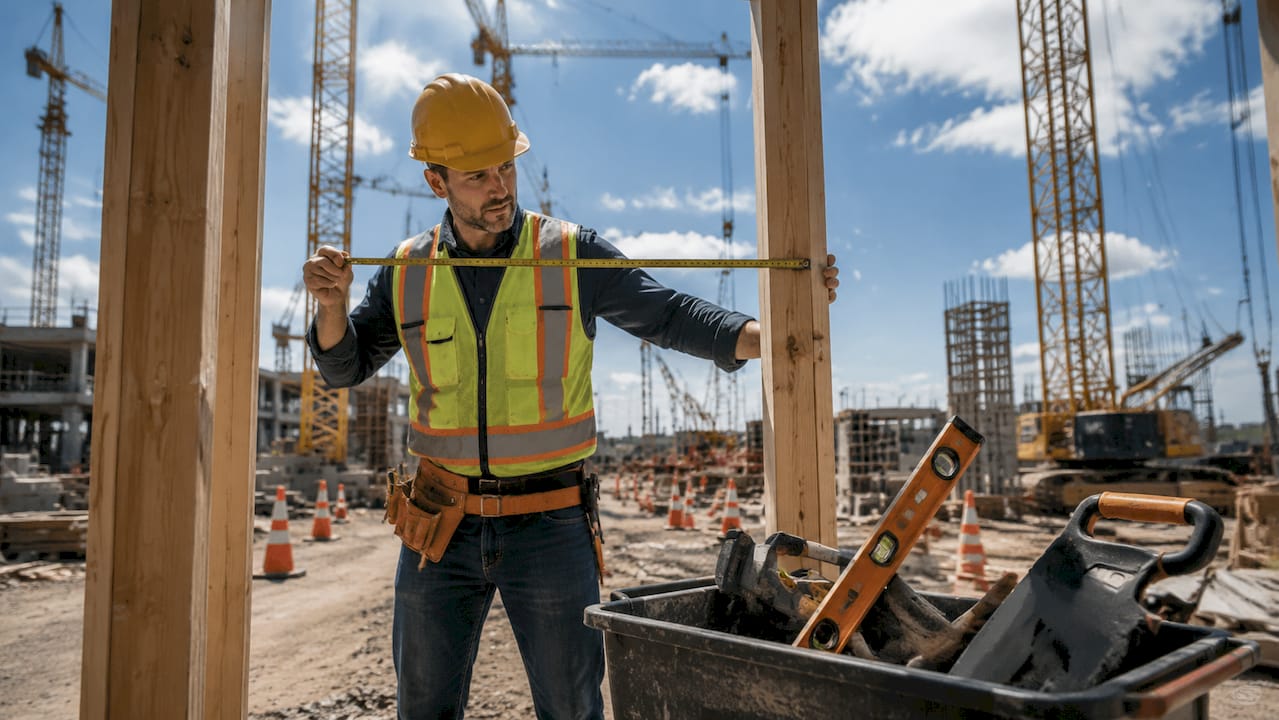
Construction measurement tools are instruments designed to ensure precise and efficient measurement of distances, angles, and layouts that are vital for project success. From a tape measure on a framing crew to a robotic total station on a complex commercial site, the right measuring device determines whether your work is plumb, square, and on budget. This article covers practical construction measurement tools examples across the full spectrum, from traditional hand tools to digital layout instruments and takeoff software, so you can match the right tool to every task you face on site.
1. Tape measures: the baseline for every job site
Tape measures remain the most widely used measuring devices for builders, and for good reason. Modern tape measures feature reinforced blades, high-contrast markings, and impact-resistant housings built for demanding conditions. They are the go-to tool for quick distance checks, rough framing, and layout verification where sub-millimeter precision is not required.
Choosing the right tape measure matters more than most contractors admit. A 25-foot, 1-inch-wide blade holds its shape at extension, which is critical when you are measuring solo across an open floor. Wider blades with nylon coating resist kinking and last significantly longer on active sites.
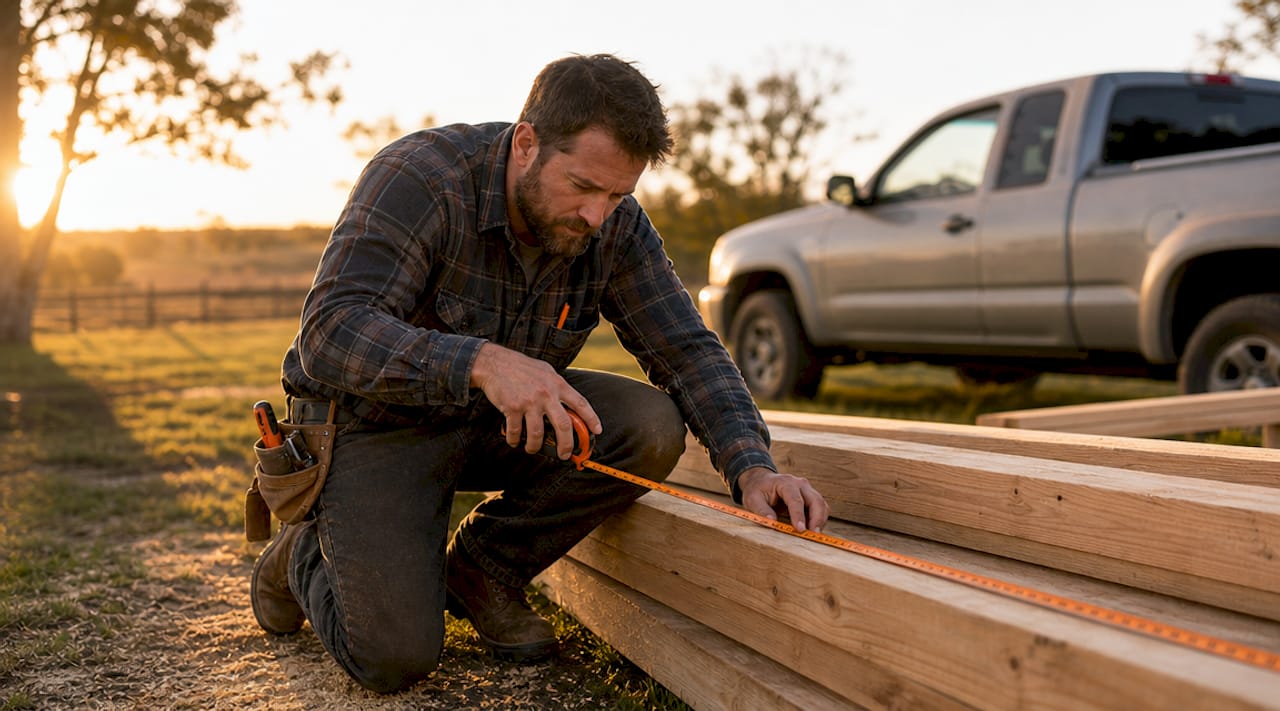
Pro Tip: Buy tape measures with both imperial and metric markings. When working from architectural drawings that mix units, dual-scale tapes eliminate conversion errors that cost time and money.
2. Spirit levels: confirming plumb and level on every surface
Spirit levels are the standard tool for confirming horizontal and vertical alignment during framing, installation, and finishing work. Traditional bubble levels work on the principle of a sealed vial with a centered bubble indicating true level. Digital spirit levels add a numeric readout, giving you the exact angle in degrees rather than a visual approximation.
For structural framing, a 48-inch or 72-inch level gives you a reliable reference across studs and beams. For tile work or cabinetry, a 24-inch or 48-inch digital level gives you the precision needed to hold tolerances within a fraction of a degree. The Stabila and Empire brands are widely trusted on commercial sites for their accuracy and durability.
3. Plumb bobs: low-tech vertical alignment that still earns its place
A plumb bob is a weighted, pointed tool suspended from a string that establishes a true vertical reference using gravity. Despite the availability of laser plumbs, plumb bobs remain relevant in situations where battery life, reflective surfaces, or bright ambient light makes laser tools unreliable.
Plumb bobs are particularly useful for transferring column centerlines from floor to ceiling in multi-story construction, and for checking the vertical alignment of door frames and curtain wall anchors. They cost almost nothing, require no calibration, and never run out of power. Every tool bag on a commercial site should carry one.
4. Measuring wheels: covering ground efficiently on large sites
Measuring wheels are the most efficient option for measuring long distances along the ground, such as site perimeters, road lengths, and utility runs. A single operator can cover hundreds of feet in minutes, recording distance directly on a mechanical or digital counter.
For civil and site work, measuring wheels with digital counters and reset functions save significant time over tape measures. Models from Komelon and Calculated Industries handle rough terrain well. The practical limitation is that measuring wheels require a continuous surface and are not suited for measuring across obstacles or in three dimensions.
5. Laser levels: projecting reference lines across large surfaces
Laser levels project horizontal and vertical reference lines across walls, floors, and ceilings, replacing the time-consuming process of snapping chalk lines or using a long level repeatedly. They are widely adopted in modern construction and renovation for ensuring structures and installations are level and plumb over extensive areas.
Self-leveling rotary laser levels from Bosch, Spectra Precision, and Leica are standard on commercial sites. A rotary laser set up in the center of a large floor slab can project a level reference to every wall simultaneously, cutting layout time dramatically. Line lasers are better suited for interior finishing work where you need a fixed reference line for tile, drywall, or cabinetry.
“The shift from chalk lines to laser levels on interior finishing work is one of the most significant productivity gains in the trades over the past two decades. A single laser level replaces hours of manual layout on a large floor plate.”
6. Robotic total stations: precision layout for complex structures
Robotic total stations like the Leica iCR70 and iCR80 enable one-person operation and integrate directly with BIM and CAD for precise layout and verification tasks on complex construction sites. The iCR80 supports ATRplus technology, machine control for graders and pavers, and long-range Bluetooth connectivity. These instruments are the gold standard for structural layout, foundation setting, and as-built verification on large commercial and civil projects.
A robotic total station allows a single operator to set up the instrument, walk to each layout point with a prism pole, and confirm the position remotely from a tablet or controller. This eliminates the two-person crew traditionally required for total station work. The accuracy achieved, typically within a few millimeters over long distances, is not replicable with any hand tool.
Combining tools based on task requirements improves overall project accuracy and efficiency. Tape measures handle quick checks while robotic total stations handle precise structural layout and machine control. Knowing when to deploy each tool is what separates experienced contractors from those who rely on one method for everything.
7. Construction sensors with camera-guided targeting
Camera-assisted sensors like the Leica iCS20 reduce targeting mistakes by streaming a live camera view to the operator’s tablet, allowing visual point selection rather than relying solely on laser targeting. They are designed specifically for interior finishing and MEP work, where precise placement of hangers, penetrations, and fixtures demands accuracy that a tape measure cannot provide.
The practical advantage of camera-guided targeting is that the operator can see exactly where the instrument is pointing before confirming a measurement. This eliminates the guesswork that causes costly rework on MEP rough-ins and interior layout. For subcontractors working in occupied or partially finished spaces, the camera view also reduces the risk of targeting the wrong surface.
8. The Topcon LN-1000i: reflectorless layout for tight spaces
The Topcon LN-1000i Layout Navigator integrates a 5MP camera for targeting, measures with a prism up to 130 meters, and operates reflectorless up to 50 meters with a bright green laser for visibility. It supports layout tasks that previous models could not handle, including overhead points up to 90 degrees vertical, making it practical for MEP, interiors, and foundation work.
The reflectorless measurement mode allows crews to capture layout points up to 50 meters without placing prisms, which reduces time and logistical complexity in foundation, MEP, and interior building layout tasks. For a single operator working in a congested mechanical room or above a ceiling grid, this capability changes what is achievable in a single shift.
Pro Tip: When using reflectorless mode in interiors, verify that the target surface is not highly reflective or transparent. Glass and polished metal can deflect the laser and produce false readings.
9. Digital takeoff software: measuring directly on drawings
Framework’s takeoff software allows direct measurement on uploaded drawings using tools for distance, area, perimeter, polyline, and count, eliminating the paper-based scaling errors that plague manual quantity surveys. Measurement sets can be calibrated manually or automatically, and quantities link directly into estimates or AI-generated bids.
The shift from manual, off-site scaling to integrated digital measurement on drawings paired with estimating reduces errors and saves significant time. For subcontractors preparing competitive bids, this integration means that a change to a measured quantity updates the estimate automatically, removing the double-entry risk that causes bid errors.
Here is how a typical digital takeoff workflow runs:
- Upload the drawing set to the software platform.
- Create a new measurement set for each trade or scope.
- Calibrate the drawing scale using two known reference points or auto-detection.
- Measure distances, areas, and counts directly on the drawing.
- Link measured quantities to line items in your estimate.
- Review the AI-assisted bid summary for completeness before submission.
Neglecting scale calibration in digital takeoff software leads to significant errors in measured quantity estimates, directly affecting bid accuracy and project budgeting. Calibration is not optional. It is the single most important step before any measurement begins.
| Software feature | Practical benefit |
|---|---|
| Auto-scale detection | Reduces setup time and eliminates manual calibration errors |
| Measurement sets by trade | Keeps quantities organized and traceable to specific scopes |
| Estimate integration | Eliminates double entry and keeps bid totals current |
| AI-assisted bid generation | Speeds up the estimating process for repeat scope types |
| Count tool for fixtures and openings | Replaces manual tallying that causes underbid quantities |
10. Choosing the right tool for the task
Matching tools to tasks is the core principle behind accurate and efficient construction measurement. No single instrument covers every scenario, and over-relying on one tool creates gaps in accuracy that show up as rework.
Here is a practical breakdown by application:
- Structural layout and framing: Robotic total stations like the Leica iCR70 for large-scale precision; tape measures and spirit levels for quick checks and alignment confirmation.
- Interior finishing and MEP: Camera-guided sensors like the Leica iCS20 or the Topcon LN-1000i for precise fixture and penetration placement; laser line levels for reference lines across walls and ceilings.
- Site and civil layout: Robotic total stations for foundation setting and grading control; measuring wheels for perimeter and utility run measurements.
- Takeoff and estimating: Digital takeoff software for accurate bid quantities directly from drawings, replacing manual scaling and paper-based methods.
- Budget-conscious operations: Laser levels and quality tape measures cover the majority of residential and light commercial work at a fraction of the cost of robotic instruments.
Key takeaways
Accurate construction measurement requires matching the right instrument to the task, from tape measures for quick checks to robotic total stations and digital takeoff software for precision layout and bid preparation.
| Point | Details |
|---|---|
| Match tools to tasks | Tape measures, laser levels, and robotic stations each serve distinct accuracy and range requirements. |
| Camera-guided targeting reduces errors | Tools like the Leica iCS20 and Topcon LN-1000i use live camera views to confirm measurement points visually. |
| Scale calibration is non-negotiable | Skipping calibration in digital takeoff software produces systematic quantity errors that damage bid accuracy. |
| Digital takeoffs replace manual scaling | Platforms like Framework link measured quantities directly to estimates, eliminating double entry. |
| Reflectorless mode adds field flexibility | The Topcon LN-1000i captures layout points up to 50 meters without prisms, improving one-person productivity. |
Why I think most crews are still under-equipped for modern measurement
I have watched crews on mid-size commercial projects spend two days on layout work that a robotic total station and a single operator could finish in four hours. The hesitation is almost always the same: the upfront cost feels high, and training takes time. Both objections are real, but neither holds up when you calculate rework costs on a single bad layout.
The more interesting shift I have seen is in digital takeoff adoption. Contractors who moved from paper scaling to software-based measurement two or three years ago are now winning bids that their competitors cannot price accurately. The reason is not that they are faster. It is that their quantities are tighter, their contingencies are smaller, and their margins are better protected. That is a structural advantage, not a marginal one.
What I would tell any subcontractor still on the fence about investing in modern measuring devices for builders: start with the tool that addresses your most common source of rework. If your MEP rough-ins are consistently off, a camera-guided layout sensor pays for itself in avoided corrections. If your bids are losing on price, digital takeoff software that tightens your quantities is the better first investment. The Won2Build software suite is worth examining for contractors who want measurement and estimating connected in one place rather than managed across separate tools.
The transition from manual to digital measurement is not about replacing skilled tradespeople. It is about giving them instruments that match the complexity of the work they are already doing.
— Jen Reese
Take your measurement accuracy from the field to the bid
Measuring accurately on site is only half the equation. The other half is translating those measurements into bids that protect your margins.
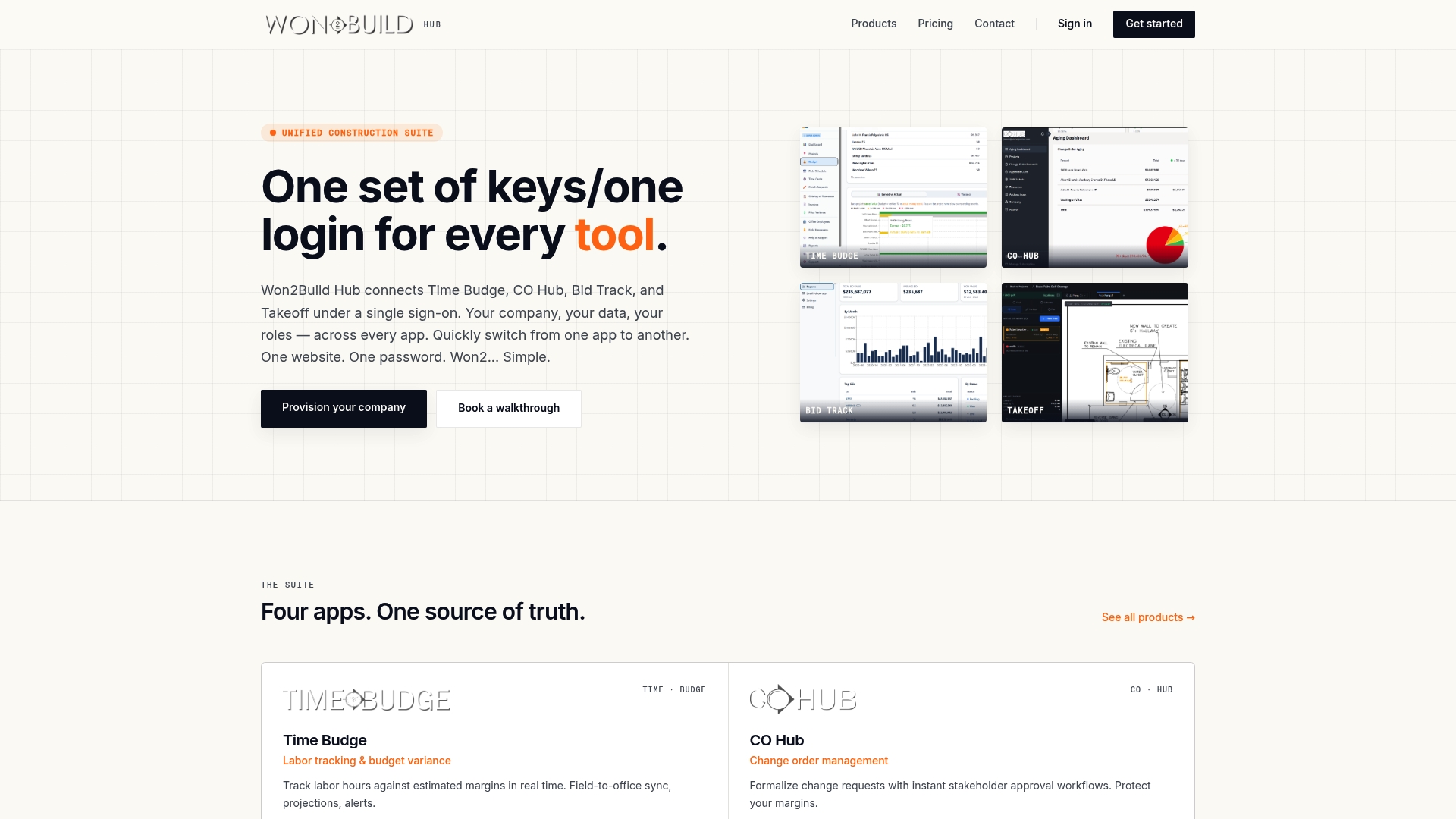
Won2build’s Takeoff software lets you measure distances, areas, and counts directly on uploaded drawings, then links those quantities straight into your estimates through the Won2Build Hub. No re-entering numbers. No scaling errors from printed plans. The platform connects Takeoff with Bid Track so your field measurements and bid pipeline stay synchronized in real time. For subcontractors who need tighter quantities and faster turnaround on competitive bids, this is the most direct path from drawing to dollar.
FAQ
What are the most common construction measurement tools?
The most common construction measurement tools are tape measures, spirit levels, laser levels, plumb bobs, and measuring wheels for field work, along with digital takeoff software for plan-based quantity measurement. Each tool serves a specific accuracy range and application.
When should you use a robotic total station instead of a laser level?
Use a robotic total station when your layout requires millimeter-level accuracy over long distances, integration with BIM or CAD files, or one-person operation on complex structural, civil, or MEP tasks. Laser levels are better suited for reference line projection on interior finishing work.
How does scale calibration affect digital takeoff accuracy?
Skipping or incorrectly setting scale calibration in digital takeoff software produces systematic errors across every measurement in that drawing set, which directly distorts quantity estimates and bid totals. Always calibrate each drawing before measuring, using two known reference points when auto-detection is unavailable.
What is reflectorless measurement and why does it matter?
Reflectorless measurement allows a layout instrument like the Topcon LN-1000i to capture points up to 50 meters without placing a physical prism at the target location. This is critical for overhead, confined, or congested spaces where prism placement is impractical.
Which measurement tools work best for MEP subcontractors?
Camera-guided sensors like the Leica iCS20 and the Topcon LN-1000i are the most effective measuring devices for MEP subcontractors, providing precise fixture and penetration placement in interior spaces. Digital takeoff software that links measured quantities directly to estimates also reduces bid errors on MEP scopes.
Recommended
One login for estimating, bid tracking, change orders, and labor.
The Hub is free. Pay only for the apps you turn on.
Create your free Hub account- Construction Software ROI: How Subcontractors Measure ItA practical way for commercial subcontractors to calculate construction software ROI: full costs, real benefits, a worked example and the mistakes that inflate it.
- How to Compare Plan Revisions and Control Estimate ChangesA practical guide for commercial subcontractors on comparing plan revisions, catching scope changes, and keeping estimates and change orders in step.
- Drywall Takeoff Basics: A Step-by-Step Guide for SubsLearn drywall takeoff basics: how to measure walls and ceilings, deduct openings, convert to sheets, set waste and finish levels, and avoid costly misses.