
Bid Bond Purpose Explained for U.S. Contractors
Learn what is a bid bond purpose for U.S. contractors. Discover how this financial guarantee protects project owners and ensures contract fulfillment.

A bid bond is a financial guarantee that ensures a contractor will sign the contract and provide required follow-up bonds if awarded a project. The bid bond definition covers three parties: the principal (contractor), the obligee (project owner), and the surety (bonding company). Understanding what a bid bond purpose actually means separates contractors who win work confidently from those who get caught off guard by bond claims, credit constraints, and default penalties. Penal sums typically range from 5% to 20% of the bid amount, and the bond’s core function is to protect owners from financial loss when a winning bidder walks away.
What is a bid bond purpose in construction?
A bid bond guarantees that a contractor will honor their bid and execute the contract if selected. Without this guarantee, project owners face real financial exposure. If the winning bidder refuses to sign, the owner must rebid the project, often at a higher cost. The bid bond covers that difference, up to the penal sum.
The surety’s liability is capped at the penal sum, even when the actual financial difference between bids is larger. That cap matters because it defines the maximum payout an owner can claim. The surety functions as a co-signer and risk underwriter, not as an insurer. The surety backs the contractor’s commitment and expects full reimbursement if a claim is ever paid.

Bid bonds also serve a secondary purpose that most contractors overlook. They signal financial credibility to the project owner before a single shovel hits the ground. A surety won’t issue a bond to a contractor who can’t demonstrate financial stability, so the bond itself acts as a pre-qualification stamp.
How bid bonds work: parties, mechanics, and liability
Three parties create the bid bond agreement, and each carries specific obligations.
- Principal: The contractor submitting the bid. The principal agrees to sign the contract and provide performance and payment bonds if awarded.
- Obligee: The project owner or public agency requesting the bond. The obligee receives financial protection if the principal defaults.
- Surety: The bonding company that underwrites the risk. The surety pays the obligee up to the penal sum if the principal fails to perform, then recovers those costs from the contractor.
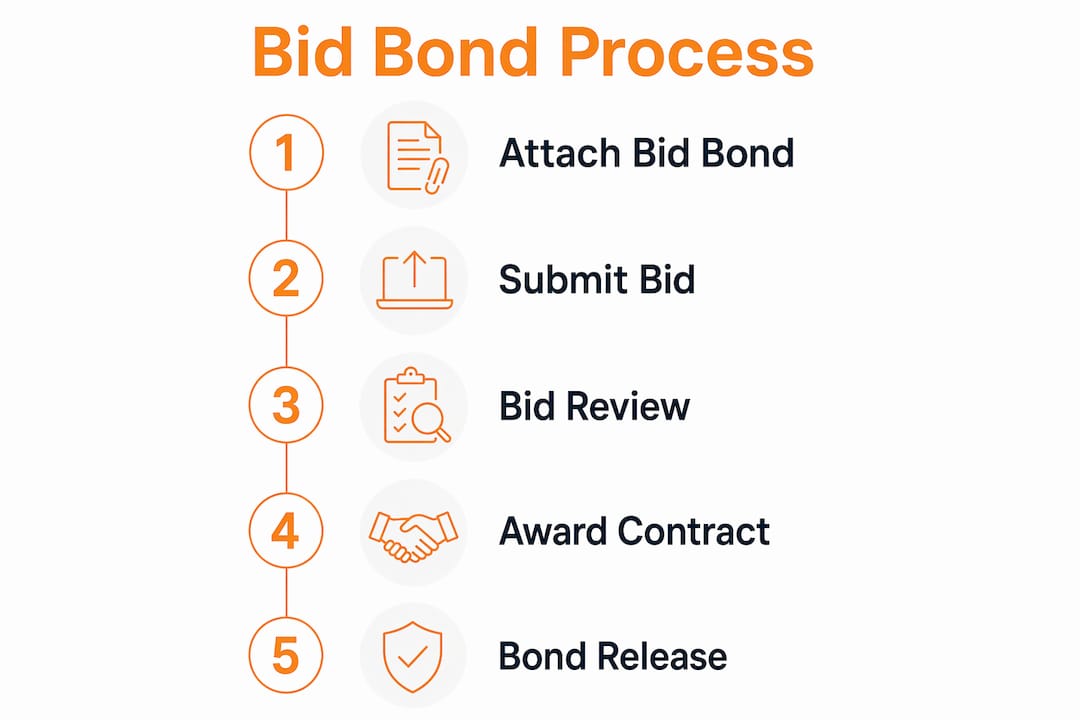
The mechanics work like this: a contractor submits a bid with a bid bond attached. If that contractor wins and then refuses to sign the contract, the owner files a claim. The surety pays the difference between the defaulting bid and the next lowest bid, up to the penal sum. The contractor then owes that amount back to the surety under an indemnity agreement.
Bid bonds, performance bonds, and payment bonds are three distinct instruments. Sequential bond obligations protect different phases of the project lifecycle. A bid bond covers the bidding phase. A performance bond guarantees contract completion. A payment bond guarantees subcontractors and suppliers get paid. Contractors who confuse these instruments often underprepare for the full bonding requirements of a project.
Pro Tip: Before submitting a bid on any bonded project, confirm with your surety that your current credit capacity covers both the bid bond and the performance and payment bonds that will follow. Running out of bonding capacity mid-project is a serious operational risk.
Why are bid bonds needed in the construction bidding process?
Bid bonds act as pre-qualification tools that verify a contractor’s financial integrity before any award is made. A surety will only issue a bond after reviewing the contractor’s financials, credit history, and track record. That review filters out undercapitalized or inexperienced contractors before they can win work they cannot deliver.
Project owners benefit in three concrete ways:
- Tender integrity: Bid bonds prevent contractors from submitting low-ball bids with no intention of following through, which keeps the bidding process honest.
- Default protection: If the winning bidder walks away, the owner recovers the cost difference without absorbing the full financial hit.
- Capital flow assurance: Bid bonds reduce uncertainty from bidder defaults, which supports consistent capital flow into construction projects.
“Bid bonds act as critical pre-qualification tools ensuring tendering process integrity and contract fulfillment reliability. They give project owners confidence that the contractors they select have the financial backing to follow through on their commitments.”
Private owners are not legally required by statutes like the Miller Act to demand bid bonds. The Miller Act applies to federal construction contracts above $150,000. Despite that, private owners frequently require bid bonds for the same financial protection reasons. The Miller Act standard has effectively set the industry norm, and private projects have followed suit.
Understanding bid bond implications for subcontractors is equally important. General contractors often pass bond requirements down the chain, meaning subcontractors may need their own bonds to participate in larger projects.
Typical penal sums and how bond release works
Penal sums vary by project type, and knowing the standard ranges helps contractors budget their bonding capacity accurately.
| Project type | Typical penal sum | Notes |
|---|---|---|
| Federal projects | 20% of bid amount | Required under the Miller Act for contracts above $150,000 |
| State and municipal projects | 10%–20% of bid amount | Varies by state procurement rules |
| Private commercial projects | 5%–10% of bid amount | Owner discretion; often mirrors public standards |
| Small private projects | 5% of bid amount | Common for lower-risk, lower-value contracts |
Typical penal sums of 5%, 10%, or 20% are the most common benchmarks across the industry. Owners use these percentages to calibrate how much risk protection they need relative to the contract value.
Bond release follows a clear sequence. Unsuccessful bidders get their bonds returned after the contract is awarded to another contractor. The winning bidder’s bond is released once they execute the contract and provide the required performance and payment bonds. Bond obligations release at award or contract fulfillment, freeing up the contractor’s credit capacity for the next opportunity.
Pro Tip: Track your bond release dates the same way you track payment milestones. A bond that stays open longer than necessary ties up credit you could use on the next bid. Won2build’s Bid Track application lets you log bond statuses alongside bid deadlines so nothing slips through.
Common misconceptions contractors have about bid bonds
The biggest misconception is that a bid bond works like insurance. It does not. Bid bonds are financial commitments that vouch for a contractor’s stability and capability. If the surety pays a claim, the contractor owes that money back in full. There is no loss absorption the way an insurance policy works.
Here are the most common mistakes contractors make with bid bonds:
- Assuming the bond protects them. The bond protects the owner. The contractor carries the liability if the surety pays out.
- Ignoring credit capacity. Bid bonds tie up credit and banking capacity, especially for small and mid-size contractors bidding on multiple projects at once. Each open bond reduces available bonding capacity.
- Failing to read the indemnity agreement. The indemnity agreement gives the surety the right to recover all costs, including legal fees, from the contractor. Signing without reading it is a serious risk.
- Withdrawing a bid after submission. Pulling a bid after the deadline triggers a bond claim. The surety pays the owner, then comes after the contractor.
- Not building a surety relationship early. Contractors who wait until they need a bond to approach a surety often get denied or face unfavorable terms.
Pro Tip: Build your surety relationship before you need it. Share your financials annually, pay your bills on time, and communicate proactively. Sureties issue bonds based on trust, and trust takes time to establish. Reviewing your bid management process annually helps you spot gaps in your bonding strategy before they cost you a contract.
Contractors managing multiple bids simultaneously face the sharpest liquidity pressure. SMEs bidding on multiple projects can find their credit lines stretched thin by simultaneous bond obligations. The practical answer is to prioritize bids strategically and release bonds as quickly as possible after each award cycle.
Key Takeaways
A bid bond is a legally binding financial guarantee that protects project owners from contractor default during the bidding phase, with penal sums ranging from 5% to 20% of the bid amount.
| Point | Details |
|---|---|
| Bid bond definition | A financial guarantee ensuring contractors sign the contract and provide follow-up bonds if awarded. |
| Three parties involved | Principal (contractor), obligee (owner), and surety (bonding company) each carry distinct obligations. |
| Penal sum range | Sums run from 5% to 20% of the bid amount, varying by project type and owner requirements. |
| Bond release timing | Unsuccessful bidders get bonds returned after award; winning bidders after contract execution. |
| Not insurance | Sureties recover all paid claims from the contractor under an indemnity agreement. |
Why contractors who ignore bond strategy pay for it later
Bid bonds look simple on the surface. You submit one with your bid, you win or you don’t, and the bond goes away. That framing is what gets contractors into trouble.
The real issue is that bid bonds are a window into how a surety views your business. Every bond application is a mini financial review. If your books are messy, your credit is thin, or your backlog is overextended, the surety notices. I’ve seen contractors lose bonding capacity right before a major bid cycle because they didn’t manage their open bonds actively. That’s not a bond problem. That’s a business management problem that shows up through bonds.
The contractors who handle bonds well treat them as a financial instrument, not a paperwork requirement. They track open bonds, release them promptly, and maintain clean financials year-round. They also understand that the surety is a long-term partner. Sureties who trust you will go to bat for you on a difficult bond. Sureties who barely know you will decline at the first sign of risk.
The other thing worth saying plainly: bid bonds are not the finish line. They’re the entry ticket. Winning a bonded project means you also need a performance bond and a payment bond. Contractors who treat the bid bond as the hard part often underprepare for the bonding requirements that follow. Build your bonding capacity with the full project lifecycle in mind, not just the bid.
— Jen Reese
How Won2build helps contractors manage bid bonds and bid pipelines
Tracking bid bonds manually across multiple active bids creates real risk. Deadlines get missed, bond statuses go stale, and credit capacity gets miscalculated.

Won2build’s Bid Track software gives contractors a centralized place to manage their entire bid pipeline, including bond statuses, submission deadlines, and award outcomes. When a bond releases, you see it. When a deadline is approaching, you know. Bid Track connects directly with Won2build’s other applications through a single sign-on, so your bid data stays in sync with your labor tracking and change order management without double entry. Contractors who want tighter control over their bidding process can explore Bid Track at Won2build.com.
FAQ
What is a bid bond in construction?
A bid bond is a financial guarantee that a contractor will sign the contract and provide required bonds if awarded a project. It protects the project owner from financial loss if the winning bidder defaults.
How much does a bid bond cost?
Bid bonds often come at no direct upfront cost to contractors, though they tie up credit capacity. The penal sum, which the surety would pay in a claim, ranges from 5% to 20% of the bid amount.
What happens if a contractor defaults on a bid bond?
The surety pays the project owner up to the penal sum to cover the cost difference between the defaulting bid and the next lowest bid. The contractor then owes the surety full reimbursement under an indemnity agreement.
When is a bid bond released?
Unsuccessful bidders get their bonds released after the contract is awarded to another contractor. The winning bidder’s bond releases once they execute the contract and provide performance and payment bonds.
Are bid bonds required on all construction projects?
Federal construction contracts above $150,000 require bid bonds under the Miller Act. State, municipal, and private projects vary, but private owners frequently require bid bonds for the same financial protection reasons.
Recommended
One login for estimating, bid tracking, change orders, and labor.
The Hub is free. Pay only for the apps you turn on.
Create your free Hub account- How to Compare Plan Revisions and Control Estimate ChangesA practical guide for commercial subcontractors on comparing plan revisions, catching scope changes, and keeping estimates and change orders in step.
- Drywall Takeoff Basics: A Step-by-Step Guide for SubsLearn drywall takeoff basics: how to measure walls and ceilings, deduct openings, convert to sheets, set waste and finish levels, and avoid costly misses.
- How to Reduce Profit Fade on Subcontractor JobsProfit fade usually starts in the field and hides until closeout. Here is how subcontractors can catch it weekly and protect the margin they bid.