
What Is a Subcontractor Takeoff? A 2026 Guide
Discover what a subcontractor takeoff is and how it ensures accurate bids and project profitability in construction. Read more!

A subcontractor takeoff is the systematic process of reviewing construction drawings and specifications to quantify all materials and labor for a specific trade scope, forming the numeric foundation every accurate bid depends on. Without a precise takeoff, every cost estimate downstream is a guess. For electrical, plumbing, drywall, and mechanical subcontractors alike, the takeoff is where project profitability is won or lost before a single tool hits the site.
The industry term you will encounter most often is quantity takeoff or material takeoff, though the phrase “subcontractor takeoff” covers both. A construction takeoff converts visual plan information into numeric quantities that drive cost estimating, procurement planning, and bid preparation. Won2build’s Takeoff and Bid Track applications are built specifically around this workflow, giving subcontractors a direct path from measured quantities to submitted bids without re-entering data between systems.
What is a subcontractor takeoff and how does it work?
A subcontractor takeoff is defined as the process of reviewing construction drawings and specifications to quantify all materials and labor for a specific scope. The output is a numbered list of measured quantities that an estimator then prices to build a bid. Every trade executes this process differently, but the core steps follow a consistent pattern.

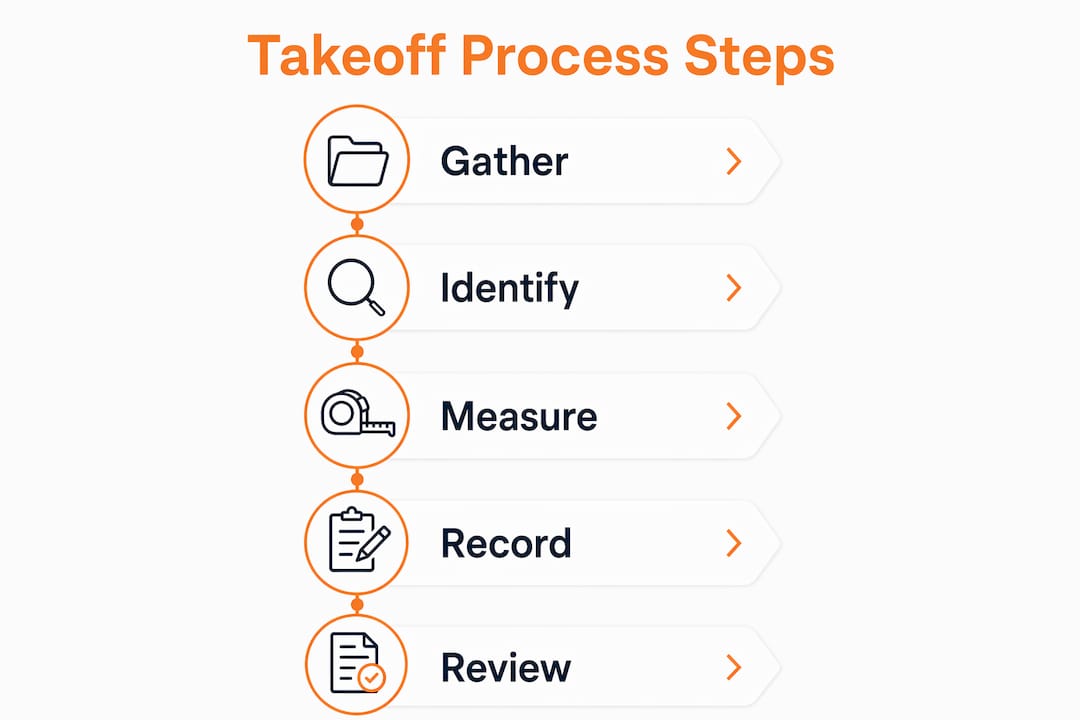
Step 1: Gather and review all project documents. Pull the full drawing set, specifications, addenda, and any RFI responses issued before the bid date. Missing a single addendum can invalidate your entire count.
Step 2: Identify your trade scope on the drawings. An electrical subcontractor marks conduit runs, panel locations, and device counts. A plumbing subcontractor traces pipe routes, fixture locations, and equipment pads. Marking your scope in a distinct color on the plans prevents double-counting and scope gaps.
Step 3: Measure quantities using the correct units. Construction takeoffs use standardized measurement units: linear feet (LF) for pipe and conduit, square feet (SF) for drywall and flooring, cubic yards (CY) for concrete, and each (EA) for fixtures and equipment. Using the wrong unit is one of the most common and costly errors in the subcontractor estimating process.
Step 4: Record quantities in a structured takeoff sheet. Organize by CSI division or trade system so the data maps cleanly to your cost codes and bid line items.
Step 5: Review and cross-check before pricing. Compare your quantities against the project specifications and any scope clarifications from the general contractor. A second set of eyes on a complex scope catches errors that cost real money.
Pro Tip: On large commercial projects, break the building into zones or floors before measuring. Counting the entire building at once increases the chance of losing your place and duplicating quantities.
How takeoff outputs feed into the bidding workflow
A completed takeoff is not the end of the process. It is the starting point for the subcontractor estimating process that produces a competitive, defensible bid. The quantity data from a takeoff feeds directly into scope packages, pricing sheets, and ultimately the Invitation to Bid (ITB) response.
Defining a trade-specific scope baseline before an ITB improves bid quality and reduces the time spent leveling competing bids. When a general contractor receives three bids with different scope assumptions, leveling them takes hours. When scope is defined precisely from the takeoff, bids become directly comparable.
Key benefits of connecting takeoff data to your bid pipeline include:
- Faster turnaround. Quantity data flows directly into pricing templates, cutting the time between plan receipt and bid submission.
- Fewer errors. Digital workflows reduce manual handoff errors and improve quantity output accuracy, producing faster and more competitive bids.
- Clearer scope exclusions. When your takeoff defines exactly what you measured, your bid exclusions are specific rather than vague, which protects you in contract negotiations.
- Better RFI management. Incomplete scope in bid packages leads to poor bid responses and increases RFIs. A thorough takeoff surfaces ambiguities before the bid is submitted, not after.
Clients using integrated takeoff and bidding software in early 2026 report saving between $20,000 and $100,000 per project by accelerating bid turnarounds and reducing errors. That range reflects project size, but even on a mid-size commercial job, the time savings alone justify the investment in connected tools like Won2build’s Bid Track.
Quantity takeoff vs. material takeoff: what subcontractors need to know
These two terms are often used interchangeably, but they describe different levels of detail with real consequences for bid accuracy.
| Type | What it measures | Who uses it most |
|---|---|---|
| Quantity takeoff | Net installed quantities (SF, LF, CY, EA) | General contractors, estimators |
| Material takeoff | Purchasable units including waste and accessories | Subcontractors, suppliers |
The key difference is that a quantity takeoff measures net installed quantities, while a material takeoff breaks those into purchasable units including waste and accessories. A drywall subcontractor performing a quantity takeoff might count 10,000 SF of wall area. The material takeoff converts that into actual sheet counts, accounting for standard 4x8 sheet sizes, cutting waste, corner bead, screws, and joint compound.
Material takeoffs are performed by subcontractors or suppliers preparing detailed bids, listing specific quantities of materials factoring in waste. This distinction matters because a bid built on net quantities alone will underprice materials every time. The waste factor on drywall alone typically runs 10 to 15 percent depending on room geometry.
Pro Tip: Build trade-specific waste factors into your takeoff template as default multipliers. A plumber who always adds 10% for pipe fittings and a drywaller who adds 12% for sheet waste will consistently bid closer to actual material costs than one who adjusts manually each time.
Common challenges in subcontractor takeoffs and how to fix them
Even experienced estimators run into problems that compromise takeoff accuracy. Knowing where errors originate is the first step toward eliminating them.
- Incomplete drawings. Bidding from a partial drawing set is one of the most common sources of scope gaps. Always confirm you have the full issued-for-bid set, including all addenda, before starting your count.
- Scope overlap with other trades. On mechanical and electrical scopes especially, the boundary between trades is not always clear on drawings. Confirm scope boundaries with the GC before measuring, not after submitting.
- Scale errors on digital plans. When working with PDF plans, an incorrect scale setting in your takeoff software produces systematically wrong quantities across the entire job. Always calibrate the scale against a known dimension on the drawing.
- Missed specifications. Drawings show geometry. Specifications define materials, grades, and installation methods. A takeoff that ignores the spec section can measure the right quantity of the wrong product.
- No revision tracking. Design changes and addenda issued mid-bid period invalidate portions of your takeoff. Without a clear system for tracking which drawing revision each quantity came from, you cannot efficiently update your count.
Marking drawings clearly by trade and establishing scope boundaries reduces bid-day confusion and improves bid comparability. This practice also creates a defensible record if scope disputes arise during contract execution.
Practical tips for optimizing takeoff efficiency in 2026
The subcontractor takeoff process has changed more in the past five years than in the previous twenty. Digital tools now handle tasks that once required hours of manual scaling and counting. Here is how to get the most from current methods.
- Adopt digital takeoff software. Measuring quantities on screen with calibrated digital tools is faster and more accurate than scaling paper prints. Won2build’s Takeoff software is built specifically for subcontractors, with digital plan measurement that feeds directly into your bid pipeline.
- Organize plans by trade before you start. Sort drawing sheets by discipline and mark your scope pages before measuring. This prevents you from working through irrelevant sheets and missing pages in your trade.
- Use integrated bid pipeline tools. Bid tracking software connects your takeoff quantities to bid submissions, ITB responses, and award tracking in one place, eliminating the re-entry that causes errors.
- Set a realistic timeline for complex scopes. A large commercial electrical takeoff on a multi-story building can take two to three days. Compressing that into a few hours produces errors. Build your bid calendar backward from the due date and protect takeoff time.
- Update your takeoff with every addendum. Treat each addendum as a partial re-takeoff. Identify which sheets changed, re-measure affected quantities, and document the revision. Bids submitted without incorporating addenda are a liability.
- Use the commercial estimating process as a framework. A structured estimating workflow ensures your takeoff feeds cleanly into labor pricing, overhead allocation, and markup before the bid goes out.
Key takeaways
A subcontractor takeoff is the non-negotiable first step in every accurate bid, converting plan geometry into priced quantities that protect your margin from the first number you write.
| Point | Details |
|---|---|
| Core definition | A subcontractor takeoff quantifies all materials and labor for a trade scope from construction drawings. |
| Quantity vs. material takeoff | Material takeoffs add waste and accessories to net quantities, giving subcontractors more accurate cost data. |
| Workflow integration | Takeoff outputs feed directly into ITBs and bid packages, reducing leveling time and improving bid comparability. |
| Digital tools save real money | Integrated takeoff and bidding software saves between $20,000 and $100,000 per project in 2026. |
| Accuracy best practices | Calibrate scale, track revisions, and mark trade scope boundaries before measuring to eliminate systematic errors. |
Why the takeoff is where subcontractors actually compete
I have reviewed hundreds of bids over the years, and the pattern is consistent: the subcontractors who win profitable work are not always the ones with the lowest overhead. They are the ones whose takeoffs are thorough enough that their pricing is defensible and their scope exclusions are specific. A vague bid built on a rough count is a liability the moment the contract is signed.
What I find most underappreciated in the subcontracting world is the material takeoff. Most estimators understand quantity takeoffs. Far fewer build accurate waste factors, accessory counts, and unit conversions into their process by default. That gap shows up as cost overruns on materials, not as estimating errors, so it never gets corrected at the source.
The software shift happening right now is real and worth paying attention to. Platforms that connect digital measurement directly to bid management are not just faster. They create a data trail that makes every future estimate more accurate because you can compare projected quantities against actual installed quantities after the job closes. That feedback loop is where estimating gets genuinely better over time, and it is only possible when your takeoff and your project data live in the same system.
Take your takeoffs further with Won2build
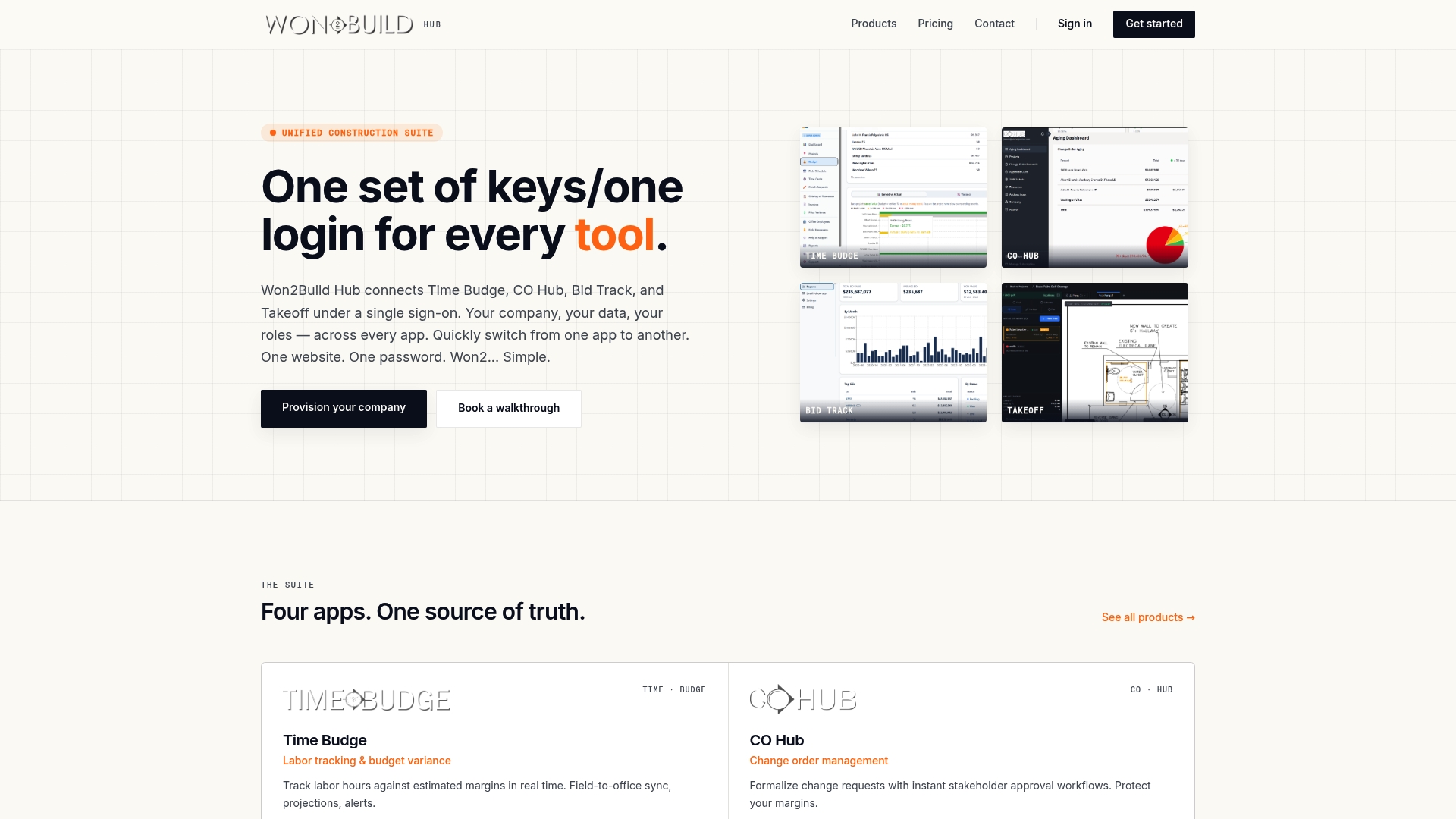
Won2build’s Takeoff application gives subcontractors a purpose-built digital measurement tool that works directly with construction plans, eliminating the manual scaling and transcription errors that inflate bid risk. Quantities measured in Takeoff flow directly into Bid Track, Won2build’s estimating and bid pipeline software, so your numbers move from plan to bid without re-entry. Won2build’s single sign-on connects Takeoff, Bid Track, CO Hub, and Time Budge in one platform, giving your field and office teams real-time access to the same data. If you are ready to build bids on numbers you can stand behind, Won2build is where that process starts.
FAQ
What is a subcontractor takeoff in simple terms?
A subcontractor takeoff is the process of measuring quantities of materials and labor from construction drawings for a specific trade scope. The output is a numbered list that drives cost estimating and bid preparation.
How is a quantity takeoff different from a material takeoff?
A quantity takeoff measures net installed quantities such as total square footage, while a material takeoff converts those into purchasable units that include waste factors and accessories. Subcontractors use material takeoffs to build more accurate bids.
What units are used in a construction takeoff?
Standard takeoff units include linear feet (LF) for pipe and conduit, square feet (SF) for wall and floor surfaces, cubic yards (CY) for concrete and earthwork, and each (EA) for fixtures and equipment.
How does takeoff software improve bid accuracy?
Digital takeoff tools calibrate scale automatically, track which drawing revision each quantity came from, and feed measured data directly into pricing templates. This reduces manual transcription errors and speeds up the subcontractor estimating process.
When should a subcontractor start the takeoff process?
Start the takeoff immediately after receiving the full issued-for-bid drawing set, including all addenda. Beginning before the complete set is available risks measuring quantities that change with later revisions.
Recommended
One login for estimating, bid tracking, change orders, and labor.
The Hub is free. Pay only for the apps you turn on.
Create your free Hub account- 7 Concrete Takeoff Steps Estimators Use to Avoid Ordering ShortfallsFollow seven concrete takeoff steps to calculate cubic yards, size rebar and formwork, convert volumes to supplier units, and verify quantities before bid...
- Are E-Signature Change Orders Legal and Worth the Switch?E-signature change orders streamline your workflow, ensuring faster approvals, fewer disputes, and quicker invoicing—discover the benefits now!
- How to Link Takeoff to Estimate for Accurate BidsLink your takeoff quantities to your estimate for accurate bids. Discover the seamless integration method that reduces errors and saves time.