
Change Order Documentation: Subcontractors’ Same Day Field Checklist
Learn how subcontractors can document field changes the same day, support costs and schedule impacts, and carry approved changes into SOV updates.

A construction change order is a written amendment that changes scope, contract sum, or contract time, and the single practice that preserves payment is same-day, contemporaneous documentation tying narrative, quantities, and photos together. That habit, repeated on every job, is what turns a disputed field directive into a paid change order. The checklist and templates below show exactly how to build that habit.
TL;DR:
- Choose a bilateral change order when scope, price, and time are agreed; a CCD starts work before pricing is settled, leaving contractors to prove impacts.
- Record who issued the directive, crew hours, quantities, equipment, and timestamped photos the same day; AIA contracts commonly set a notice window of 21 days.
- Itemize labor, materials, and equipment costs, directive dates, and schedule effects, then attach required signatures, daily logs, photos, and vendor quotes to support review.
- After approval, update the G702/G703 schedule of values and ensure its revised total matches the new contract sum before submitting the next pay application.
Table of Contents
- What a change order is, and how it differs from a CCD or constructive change
- Essential elements every defensible change order package must contain
- When to use bilateral vs unilateral change orders and CCDs
- Step-by-step documentation and submission process
- Why contemporaneous evidence wins claims
- Approvals, signatures, and feeding change orders into SOV and pay apps
- Examples, templates, and a printable on-site checklist
- Why subcontractors should make this a habit
- CO Hub: change order management built around this workflow
- FAQ
- Sources
- Key industry and primary sources
What a change order is, and how it differs from a CCD or constructive change
A change order is a written modification to the contract that adjusts scope, the contract sum, contract time, or some combination of the three, and it becomes part of the contract once signed by the required parties. That sounds simple, but the instrument you use depends on how the change arrives on the job.
A construction change directive (CCD) is different: it lets an owner and architect order work to proceed before price or time impacts are agreed, which shifts the documentation burden onto the contractor to prove cost and schedule effects later. A constructive change happens informally, often through a verbal instruction, a rejected submittal, or a design conflict, with no written order at all, so the contractor has to document the owner’s conduct to prove a change occurred. A cardinal change is a change so large it goes beyond what the contract reasonably anticipated, which can entitle the contractor to treat the original contract as breached rather than merely amended.
Under standard industry practice, the change order form is typically prepared by the architect or construction manager and routed for three signatures: owner, architect, and contractor, following the structure AIA guidance lays out for distinguishing change orders from CCDs. A CCD, by contrast, requires only the owner and architect to sign, since the work proceeds on pending pricing. Knowing which instrument applies determines what paperwork to start building the moment the field event happens.
Essential elements every defensible change order package must contain
A change order that survives owner review and, if necessary, a dispute, needs more than a one-line description and a price. Reviewers and auditors, including those on federal projects governed by FAR subpart 43.2, expect a complete record tying the directive to its cost and schedule effects.
- Project and contact identifiers: project name, contract number, and a reference to the specific drawing, spec section, or contract line item affected.
- Scope description: precise language identifying the trade, location, and how the work differs from the original contract documents.
- Cost breakdown: labor, materials, equipment, and markups itemized, with unit pricing shown wherever the work can be measured in units.
- Dates: when the directive was given, when pricing was developed, and when signatures were collected.
- Schedule impact: a quantified number of days added or confirmation of no impact, not a vague statement.
- Signatures: the approvals required by the governing contract form, whether that is a three-party change order or a two-party CCD.
- Supporting evidence: daily logs, timestamped photos, vendor quotes, and time-and-material tickets attached as backup.
Pro Tip: Attach your backup documents in the order a reviewer will ask for them: directive, scope, pricing, schedule impact, then evidence. A package read in that sequence gets approved faster.
When to use bilateral vs unilateral change orders and CCDs
Picking the right instrument for the situation determines how much proof burden falls on you before you get paid.
- Bilateral change order: both parties have agreed on scope, price, and time before signing. This is the cleanest path and the one to push for whenever possible, since it closes out the change immediately.
- Unilateral change order: the owner directs the change and signs alone, often used on public contracts when a contractor disputes price but the work must proceed; definitization happens later.
- Construction change directive: issued when the owner needs work to start before cost or time is settled, converting to a change order once pricing is definitized, a practice AIA’s CCD guidance describes in detail.
Common triggers include differing site conditions discovered after excavation begins, owner-driven scope additions, and design errors caught during shop drawing review. Whatever the trigger, entitlement rests on three elements: showing the change falls outside the original contract scope, showing causation between the directive and the added cost or time, and quantifying the actual impact (quantum) with real numbers rather than estimates.
Step-by-step documentation and submission process
Treat every potential change order as a timeline that starts the moment someone gives you a verbal or written directive, not when you get around to writing it up.
- Capture same-day: log who gave the directive (name, title, and method, whether verbal, email, or RFI response), the exact location and trade affected, and a plain description of the work.
- Quantify as you go: record crew size, hours worked, material quantities, and equipment used, and tie any time-and-material tickets directly to that day’s log entry.
- Price the change: choose unit-rate pricing when the work is measurable (square footage, linear footage, cubic yards) and lump-sum pricing when it is not; state assumptions and exclusions explicitly so there is no ambiguity about what the price covers.
- Submit on time: check your contract’s notice window. AIA-based contracts commonly reference a 21-day notice period for claims, so submit the COR promptly rather than waiting for a slow week. For structuring the unit-rate versus lump-sum decision and the line items a reviewer expects, a construction estimate components breakdown is a useful reference.
- Track to resolution: log the submission date, follow up on a set cadence, and update your internal tracker when the signed COR comes back, feeding the approved amount into your schedule of values.
Pro Tip: Start the COR draft the same day the directive happens, even if pricing is not final. A partially complete package beats a perfect one written from memory three weeks later.
The most common reasons a COR gets rejected or delayed are missing signatures, a scope description vague enough to argue over, or a price with no backup quotes attached. A short internal checklist before submission, covering signatures, backup documents, and a schedule impact statement, catches most of these before they cost you a billing cycle. Reviewing the change order approval process step by step helps clarify where internal review tends to stall.
Why contemporaneous evidence wins claims
Peer-reviewed research backs up what experienced superintendents already know: systematic change order management measurably affects project outcomes. A 2022 study in the ASCE Journal of Construction Engineering and Management found that systematic change-order management frameworks significantly influence overall project performance, and the study points to documentation and financial process management as two of the top factors driving that outcome.
A defensible daily report needs a handful of consistent fields to do its job:
- Date, project, and location of the work observed.
- Crew count, trade, and hours worked.
- Equipment and materials used or delivered.
- Weather or site conditions when relevant to the claim.
- Timestamped photos tied to the specific scope item in question.
The gap between a log written the same day and one reconstructed weeks later is not cosmetic. A contemporaneous entry, made in the field with a timestamp and synced to cloud storage, creates a chain of evidence that is far harder to challenge than notes assembled from memory after a dispute starts. Delayed change-order approvals already strain contractor cash flow, as the Associated General Contractors points out, so weak documentation only compounds that risk by giving reviewers a reason to push the approval further down the pile.
Approvals, signatures, and feeding change orders into SOV and pay apps
A change order is not real money until it is signed by the parties the contract requires, and until that approved amount shows up in your schedule of values.
Once a COR is signed, it becomes a binding amendment to the contract, which means the next pay application should reflect it. Update your G702/G703 totals to add the new line item at its approved value, and make sure the revised SOV total matches the new contract sum exactly. A practical draw schedule template is a useful reference for keeping those totals aligned when a change hits mid-cycle.
- Confirm who on the owner’s side has signature authority before routing the package, so it does not bounce back for the wrong signature.
- Bill time-and-material work as progress payments while a lump-sum price is still being negotiated, rather than waiting for full definitization.
- Double-check that the revised SOV total, not just the new line item, reflects the updated contract sum before submitting the pay app.
Pro Tip: Keep a running log of every pending COR’s dollar value next to your current SOV total, so you always know your true contract value even before signatures come back.
The most common administrative error is submitting a pay application with an outdated SOV that does not yet reflect an approved change, which forces a correction cycle and delays payment by a full billing period. Catching that mismatch before submission, rather than after rejection, is a five-minute check that saves weeks.

Examples, templates, and a printable on-site checklist
A COR package does not need to be elaborate, but it does need to be complete every time. Keep a folder template ready so the field crew is not assembling documents from scratch under deadline pressure.
- Directive log entry: who gave the instruction, when, and by what method.
- Scope description: trade, location, and a one or two sentence description of the added or changed work.
- Pricing line: for example, “Additional conduit run, electrical, 40 linear feet at $18 per foot plus 15% markup,” which shows unit, quantity, rate, and markup in one line.
- Backup attachments: vendor quotes, T&M tickets, and photos, each labeled with the date and COR number.
- Schedule impact statement: number of days, or a note confirming no impact.
For file organization, name folders by project and COR number, and store photos with a consistent naming convention that includes the date and location, so anyone pulling the file later can reconstruct the sequence of events without guessing.
Why subcontractors should make this a habit
The subcontractors who get paid fastest are not the ones with the best lawyers. They are the ones whose daily log takes seven minutes to fill out and gets filled out every single day, directive or not. That habit, more than any contract clause, is what separates a change order that clears review in a week from one that sits in dispute for months.
Documentation discipline is not glamorous work, but it is the difference between a CO Hub type of workflow and a drawer full of sticky notes reconstructed from memory at the worst possible moment.
— Jen Reese
CO Hub: change order management built around this workflow
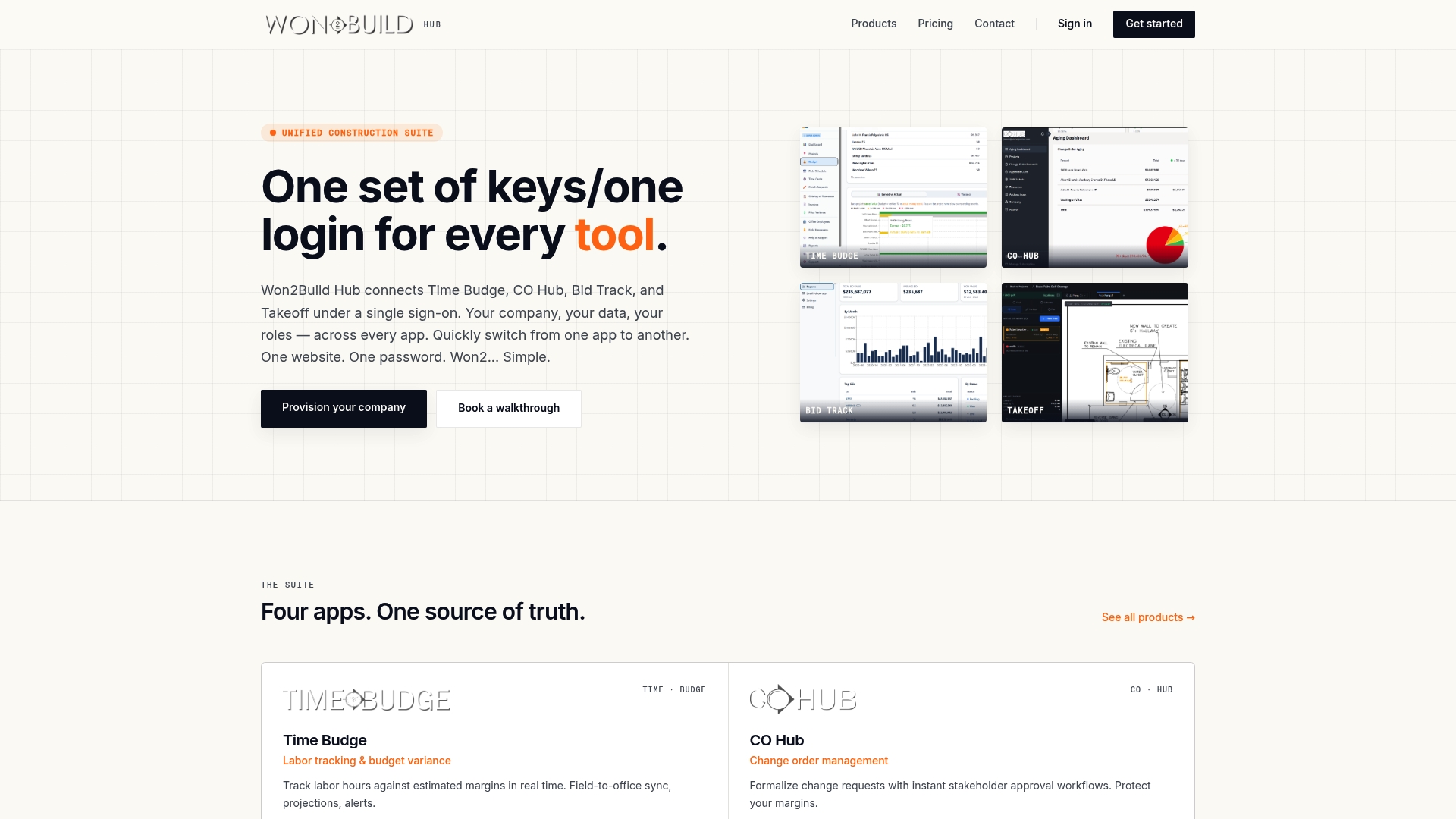
We built CO Hub around the exact sequence described above: field capture, pricing, submission, and tracking, without re-entering data at every step. Field teams log directives and attach timestamped photos from a phone, and that information syncs straight to the office in real time.
- Capture directives and photos in the field with automatic timestamp and cloud sync.
- Track every COR’s lifecycle from draft to signed approval in one dashboard.
- Feed approved change orders directly into schedule of values updates, so nothing gets missed on the next pay app.
CO Hub runs at $59 per month per company, as listed on our pricing page, and connects with the rest of the Won2Build Hub suite through a single login. Check current pricing and start a trial to see how much time a synced workflow saves on your next project.
FAQ
What should be included in a change order?
A valid change order needs project identifiers, a precise scope description, an itemized cost breakdown, dates for the directive and signatures, a quantified schedule impact, and the signatures the contract requires. Supporting evidence like daily logs, photos, and vendor quotes should be attached as backup.
What does a change order document look like?
It typically follows a standard form, such as AIA’s G701, with fields for contract reference, a written scope description, a pricing table broken into labor, materials, and equipment, a schedule impact statement, and signature blocks for the required parties.
What is the difference between an RFI and a change order?
A request for information (RFI) asks for clarification on a design or spec conflict and does not by itself change the contract. A change order is the written amendment that follows once that clarification, or any other triggering event, results in a confirmed change to scope, cost, or time.
What are some examples of change orders?
Common examples include adding conduit runs discovered during an electrical rough-in, extending a schedule after differing site conditions are found during excavation, or pricing additional framing after a design revision. Each example needs its own scope description, cost breakdown, and schedule impact statement to be defensible.
Sources
- Federal Acquisition Regulation (FAR) subpart 43.2
- ASCE Journal: research on change-order management and project performance
- AIA Contracts resource: construction change directive vs change order
- Associated General Contractors: Change orders
- VDOT change management instructional and informational memorandum
Key industry and primary sources
- Federal Acquisition Regulation (FAR) subpart 43.2
- VDOT change management instructional and informational memorandum
- ASCE Journal: research on change-order management and project performance
- Associated General Contractors: Change orders
- AIA Contracts resource: construction change directive vs change order
- Make G702/G703 totals match: Excel construction draw schedule template
- Construction Estimate Components List: 2026 Field Guide
- The Change Order Approval Process, Step by Step
Recommended
One login for estimating, bid tracking, change orders, and labor.
The Hub is free. Pay only for the apps you turn on.
Create your free Hub account- Managers: Make Mobile Field Workflows Resilient for 72 Hour OutagesPlaybook for field managers: offline first mobile workflows, resilient sync and conflict handling, compliance first AI guardrails, and practical pilot steps.
- Daily Signed Records: Force Account Tracking for Managers & InspectorsField checklist for project managers and inspectors to keep force account tracking audit-ready: use daily signed records for labor, equipment, and...
- Stop Timecard to Report Drift: Labor Cost Codes for SubcontractorsFix the timecard to report chain with labor cost codes that tie crews to budgets. Includes a 6 code starter and a burdened rate example.