
Stop Timecard to Report Drift: Labor Cost Codes for Subcontractors
Fix the timecard to report chain with labor cost codes that tie crews to budgets. Includes a 6 code starter and a burdened rate example.

Labor cost codes are the project accounting labels you use to assign every hour to the correct budget line so you can measure budget-to-actual and protect margins. They feed timecards, payroll transfers, and job-cost reports, which means a mislabeled hour does not just skew a spreadsheet: it hides real cost from the people who are supposed to catch it before it eats a project’s profit.
TL;DR:
- Using a dedicated overtime code provides clearer visibility into overtime hours and costs compared to applying a multiplier to regular hours.
- Maintaining a short, consistent code list and enforcing code selection during time capture prevents costly labeling errors that can skew job-cost reports.
- Accurate labor cost allocation relies on timely payroll transfers, proper mapping of codes to accounts, and enabling labor-hours allocation within systems.
- Systems that unify estimate, time capture, and reporting modules help ensure consistent coding and reduce discrepancies in labor cost tracking.
- Regularly reviewing workers’ compensation rates and class classifications is essential, as changes can significantly impact the fully burdened labor rate.
Table of Contents
- What labor cost codes include and how they differ from cost categories
- Practical examples: a sample cost-code list and how to handle overtime
- How labor cost codes move through systems: timecards to reports
- Allocation methods and calculation basics you can apply today
- Worked example: computing a fully burdened rate and posting it to a code
- Best practices and common mistakes to avoid
- A practitioner’s view on getting crews to actually use the codes
- Why Time Budge makes labor cost coding easier to enforce
- Where to go for the underlying documentation
- Sources
- FAQ
What labor cost codes include and how they differ from cost categories
A labor cost code is the specific tag applied at the moment work is recorded, tied to a trade, task, or phase on one job. A cost category is broader: “labor” as opposed to “materials” or “equipment.” A GL cost type sits above both, telling the accounting system whether a dollar is direct or indirect. Investopedia’s explanation of labor cost separates wages, payroll taxes, and benefits into direct and indirect labor costs, and that split is exactly what your code structure needs to reflect if you want clean job-cost reports.
Most subcontractors build their code list around a handful of recurring buckets:
- Trade or role codes, such as carpentry, electrical, or general labor.
- Premium and overtime codes that isolate extra pay from base hours.
- Supervision or foreman codes for oversight time separate from production work.
- Mobilization and setup codes for time spent before productive work starts.
- Clean-up codes to track closeout labor separately from installation.
Number your codes consistently across every project (100 series for labor, 200 for carpentry, and so on) so a foreman on job three uses the same code a foreman on job one would use.
Practical examples: a sample cost-code list and how to handle overtime
A short, disciplined list beats a sprawling one. Here is a starting structure that many subcontractors adapt:
- 100, General labor: unskilled or mixed-task work not tied to a single trade.
- 200, Carpentry: framing, trim, and rough carpentry hours.
- 300, Foreman/supervision: oversight time billed separately from production.
- 400, Mobilization: setup, staging, and equipment prep before work starts.
- 500, Clean-up: closeout and site restoration labor.
- OT, Overtime: hours beyond the standard threshold, tracked apart from base pay.
For overtime, you have two real choices: a dedicated OT code, or a multiplier applied to the base code. A separate code gives you cleaner visibility into how much overtime a project is consuming, but it also means two entries for the same task. A multiplier keeps entries simple but buries the overtime signal inside the base code’s total. Whichever you pick, document it once and govern changes through a single owner so field crews are not guessing week to week.
How labor cost codes move through systems: timecards to reports
The data flow is straightforward on paper and fragile in practice. An hour starts on a timecard, rolls into a timesheet, transfers through the payroll module, exports into the job-costing system, and lands on a budget-to-actual report. Break any link in that chain and the report at the end shows a number nobody trusts.
A few prerequisites determine whether that chain holds:
- Payroll has to be transferred into the accounting system before job-cost reports can reflect it accurately.
- Cost codes need to be mapped to GL accounts and job phases, not just typed loosely into a time entry field.
- Labor-hours allocation has to be enabled where the system supports it, since some allocation methods will not run without it.
Documentation for allocation code setup confirms that methods like Labor Hours and Employee Headcount require the payroll module to be transferred to accounting first. Skip that step and the allocation runs on stale or missing data.
Once the chain works, managers see hours by code, budget versus actual by code, and the percentage of budgeted hours already used, which is usually the first place a job going sideways shows up. Getting time capture right in the field is the foundation for all of it, which is why field procedures deserve their own attention in a practical guide to tracking labor hours on job sites.
Allocation methods and calculation basics you can apply today
Once hours are captured, you have to decide how to spread shared or indirect costs across cost codes. The method you choose depends on what data you have and how precise you need the result to be.
- Labor hours method: allocates cost in proportion to hours worked on each code, the most direct option when time capture is reliable.
- Relative account balances: spreads cost based on existing balances in related accounts, useful when hours are not the right driver.
- Weighted average daily balance: accounts for cost that accrues unevenly across a period rather than in a flat rate.
- Indirect cost rate: applies a calculated rate to a base, common for overhead that cannot be tied to a single task.
- Employee headcount: divides cost evenly per employee, simplest but least precise when workloads vary.
Trimble’s documentation on job-cost allocation setup notes that systems can be configured to recalculate and remove negative-percentage allocations, a setting worth turning on before you run your first real allocation.
Three formulas carry most of the weight in daily use: allocation percentage by hours equals hours on a code divided by total hours; fully burdened rate equals wage plus payroll taxes plus benefits plus workers’ comp; burden multiplier equals fully burdened rate divided by base wage. Gusto’s guide to calculating labor costs walks through building that burdened rate step by step, starting with wages and layering on taxes, benefits, and overtime.
Worked example: computing a fully burdened rate and posting it to a code
Say a carpenter earns a base hourly wage of $30. Add payroll taxes, benefits, and workers’ comp, and the burden items might total several dollars per hour, resulting in a fully burdened rate higher than the base wage.
- List the base wage and every burden line item separately: payroll taxes, benefits, workers’ comp, and any other employer-paid cost.
- Sum the burden items and add them to the base wage to get the fully burdened hourly rate, which will be higher than the base wage.
- Multiply that rate by hours worked, for example, 8 hours on code 200 (Carpentry), for a posted cost that is the product of the fully burdened rate and hours worked, reflecting the true labor cost against that budget line.
On a budget-to-actual report, that entry shows up as 8 actual hours against code 200’s budgeted hours, with the dollar figure rolling into actual cost for comparison against budget. Workers’ comp class matters here: a change in classification can shift the burden line item enough to move the final rate by several dollars an hour, which is why reporting on workers’ comp rate increases flags class-specific premiums as one of the largest swing factors in labor burden. Readers building their own estimates can start with a labor cost calculator built for contractors to skip the manual math.
Best practices and common mistakes to avoid
Most coding errors trace back to governance, not math. A short, well-documented code list, taught to every field crew before they touch a timecard, prevents most of the drift that creeps in over a busy season.
- Enforce code selection at the point of time capture, not after the fact in the office.
- Separate pay-type flags (regular, overtime, premium) from activity codes so the list does not multiply every time a new pay rule appears.
- Review workers’ comp classes and burden rates on a set schedule rather than waiting for a renewal notice to force the update.
- Watch for negative-percentage allocation results, which usually signal a setup error rather than a real cost swing, and cap allocation rules where the system allows it.
Pro Tip: Reconcile coded hours against payroll weekly, not monthly. A miscoded week caught early is a five-minute fix; caught at month-end, it is a research project.
A practitioner’s view on getting crews to actually use the codes

The gap between having a code list and having crews use it correctly is where most subcontractors lose money. A standard list, a short training session before rollout, and weekly reconciliation catch most drift before it compounds across a job. Enforcing single-point entry, so a code is chosen once at time capture and never re-keyed downstream, removes the most common source of mismatched hours.
Suites that carry the same code set from estimating through time capture cut down on the double entry that causes those mismatches in the first place. Early wins worth tracking in the first quarter of rollout: fewer miscoded hours, faster turnaround on change-order capture, and estimates that better reflect what jobs actually cost.
— Jen Reese
Why Time Budge makes labor cost coding easier to enforce
Some software solutions are built to address the common problem subcontractors face when codes live in separate systems for estimating and time capture, drifting apart until the reports lose trust. Certain integrated software suites use consistent code sets across field time capture, change order tracking, and original estimate inputs to maintain accuracy and consistency.
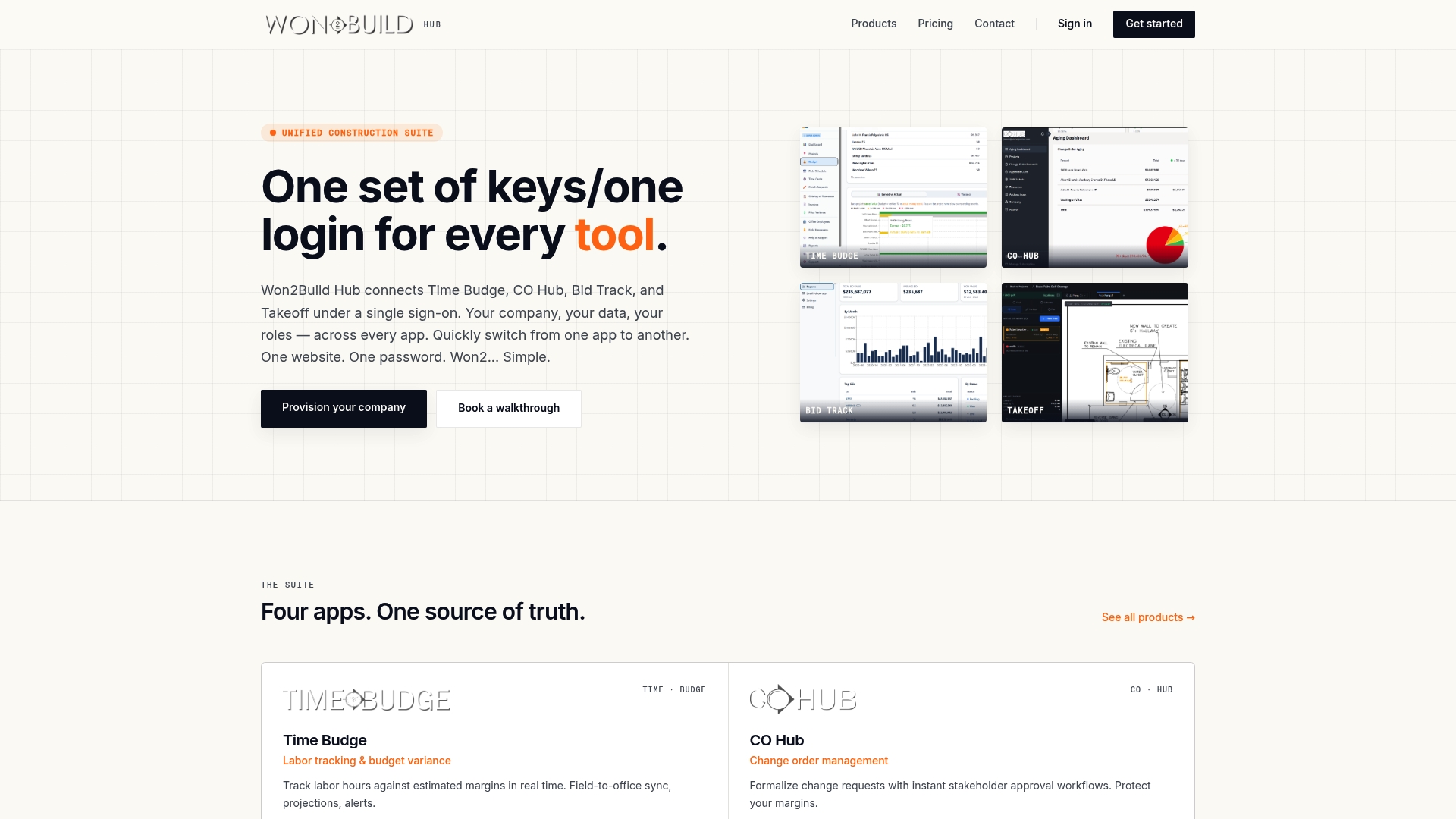
Applications running on a unified platform with single sign-on allow codes created in one module to appear consistently in others without retyping, and field entries can sync to job-cost reports in real time. If you want to see how that fits your own code list, check Time Budge’s product page or compare options on the pricing page.
Where to go for the underlying documentation

For readers setting up allocation rules directly in their accounting or job-cost system, the primary documentation is worth reading before you build anything. Allocation code setup guidance and a practical labor cost calculation guide cover the mechanics in more depth than any summary can. Readers working in Building Information Modeling workflows may also find a guide to Revit quantity takeoff useful for connecting takeoff quantities to labor estimates.
Sources
- Understanding Labor Costs: Definitions, Categories & Their Impact
- Add Allocation Codes
- About the JC Allocation Codes Form | Trimble Help
- How to Calculate Labor Costs: The Small Business Owner’s Guide | Gusto
FAQ
What are the 7 types of cost?
Definitions vary by accounting framework, and no single source in this article defines exactly seven cost types. Construction job costing generally groups costs into labor, materials, equipment, subcontractor costs, and overhead, with labor further split into direct and indirect categories as described by Investopedia’s overview of labor costs.
Can you provide examples of cost codes?
Common examples include a general labor code, a carpentry code, a foreman or supervision code, and a dedicated overtime code, each numbered to stay consistent across projects. A short sample list might run 100 for general labor, 200 for carpentry, 300 for supervision, and OT for overtime hours.
What are the different types of labor costs?
Labor costs split into direct costs, tied to hours worked on specific tasks, and indirect costs like payroll taxes and benefits that support those hours. Investopedia’s explanation of labor cost frames this direct versus indirect split as central to accurate project pricing.
What is the formula for labor cost?
The fully burdened labor rate equals base wage plus payroll taxes plus benefits plus workers’ comp, and Gusto’s labor cost guide walks through adding each of those elements to the base wage. Multiply that burdened rate by hours worked to get the labor cost posted to a given cost code.
Recommended
One login for estimating, bid tracking, change orders, and labor.
The Hub is free. Pay only for the apps you turn on.
Create your free Hub account- Managers: Make Mobile Field Workflows Resilient for 72 Hour OutagesPlaybook for field managers: offline first mobile workflows, resilient sync and conflict handling, compliance first AI guardrails, and practical pilot steps.
- Daily Signed Records: Force Account Tracking for Managers & InspectorsField checklist for project managers and inspectors to keep force account tracking audit-ready: use daily signed records for labor, equipment, and...
- Cut Clock In Errors: Bilingual Time Tracking for SubcontractorsField-tested advice for subcontractors on deploying bilingual time tracking that translates full workflows, reduces clock-in errors, and keeps audit logs...