
Digital Bid Tracking for Commercial Construction: 2026 Guide
Discover the role of digital bid tracking commercial construction plays. Streamline your bidding process, enhance visibility, and win more projects!

Digital bid tracking is the systematic use of technology to monitor, manage, and analyze commercial construction bids from initial opportunity through final award. The role of digital bid tracking in commercial construction has shifted from a convenience to a competitive necessity. Tools like Won2build’s Bid Track, along with platforms from US Tech Automations and Kynection, now give commercial construction managers the pipeline visibility and automation they need to win more work. Contractors who rely on spreadsheets are leaving real money on the table, and the data makes that case clearly.
How does digital bid tracking improve bid volume and reduce missed deadlines?
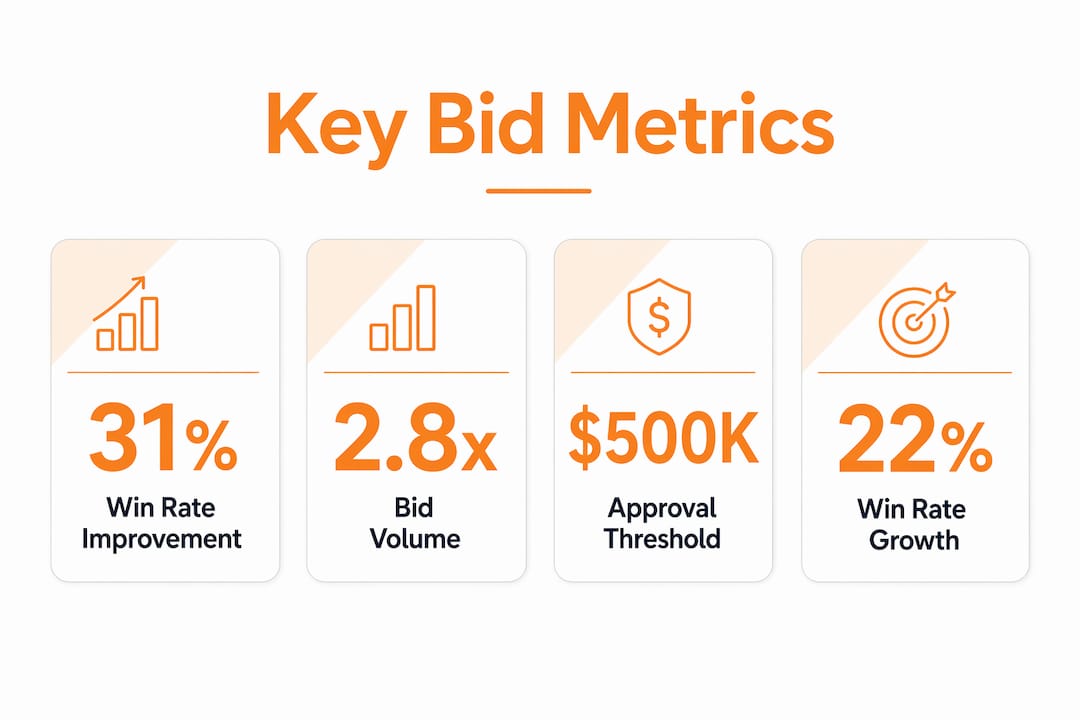
The most direct impact of digital bid tracking is volume. GCs using bid management automation submit 2.8–3.4x more projects per estimator than those using manual methods. That multiplier comes from faster turnaround and better selectivity, not from working longer hours.

Missed deadlines are the other side of the same problem. Migrating from spreadsheets to dedicated tools reduces missed deadlines by 73% and increases bid volume by 34%. Those two numbers together explain why commercial bid management software has grown so quickly across the industry.
Automated reminder systems are the mechanism behind that improvement. A well-configured system sends alerts at the 5-day and 1-day marks before each bid deadline. If a bid remains in “In Progress” status at the 1-day mark, the system escalates automatically to a supervisor. That single feature eliminates the most common cause of late submissions: the bid that everyone assumed someone else was finishing.
Key automation features that drive deadline performance include:
- Reminder cascades at 5-day and 1-day intervals before submission deadlines
- Status-based escalation that flags stalled bids before they become missed deadlines
- Pipeline dashboards that show every active bid, its current status, and its due date in one view
- Automated follow-up logging that records every client interaction without manual entry
Pro Tip: Model your bid statuses in tiers: “Identified,” “In Progress,” “Under Review,” and “Submitted.” Enforcing escalation at each stage prevents the last-minute scramble that kills accuracy and margin.
What analytics insights does digital bid tracking enable to increase win rates?
Analytics are where digital bid tracking pays its biggest dividend. Analytics-driven bid selection improves win rates by 22–31% within the first year of adoption. That improvement comes from making better go/no-go decisions, not from submitting more bids blindly.
The metrics that matter most are bid-to-win ratio, estimate accuracy by project type, and cost per bid submitted. Tracking these over time reveals which project categories your team prices competitively and which ones you consistently lose. That knowledge lets you stop chasing low-probability work and concentrate resources on bids you can actually win.
Logging outcomes is equally important. Every lost bid is a data point. When you record why you lost, whether on price, scope, or relationship, you build a competitive intelligence file that sharpens every future estimate. Contractors using analytics-based selection report win rates 5–8 percentage points above their category averages.
| KPI | What it measures | Why it matters |
|---|---|---|
| Bid-to-win ratio | Wins divided by total bids submitted | Reveals overall competitiveness |
| Estimate accuracy | Actual cost vs. estimated cost | Identifies pricing gaps by project type |
| Cost per bid | Labor and overhead per submission | Shows where automation saves the most |
| Pipeline value | Total dollar value of active bids | Forecasts future revenue exposure |
| Days to submit | Time from opportunity to submission | Measures process efficiency |
How do automated bid tracking workflows function?
A well-designed automated workflow covers the full bid lifecycle in four stages. Each stage has defined triggers, responsible parties, and time-based rules that remove human memory from the equation.
- Opportunity monitoring. The system pulls new bid opportunities from project databases, owner portals, or direct invitations. Each opportunity is logged with a deadline, project value, and assigned estimator.
- Deadline reminder cascade. Automated alerts fire at the 5-day and 1-day marks. Automated deadline cascades reduce late submissions by 91%, which is the single largest reliability gain available from automation.
- Pricing approval routing. Bids above a defined dollar threshold route automatically to a senior estimator or project executive for review before submission. This step catches scope gaps and margin errors that individual estimators miss under deadline pressure.
- Post-bid logging. After submission, the system records the final number, the submission time, and the outcome when it becomes available. That data feeds directly into the analytics layer described above.
Integration is what makes this workflow practical. Connecting bid tracking to estimating software, shared calendars, and notification tools like Slack or email means every team member sees the same status in real time. No one is working from a stale spreadsheet copy.
Pro Tip: Configure threshold-based approval routing for any bid over $500,000. A mandatory second review at that level catches the margin errors that are too expensive to miss, and it takes less than five minutes of a senior estimator’s time.
The escalation logic for stalled bids is the most underestimated feature in any automated system. Most teams assume their estimators will flag problems. They rarely do until it is too late.
How does digital bid tracking compare with manual methods?
Manual bid tracking fails in predictable ways. Version confusion, lost data, and forgotten follow-ups are the most common. The deeper problem is what the industry calls “ghost bids.” 34% of manual bids expire without a decision, meaning the contractor submitted work and never followed up. That is pure revenue lost to administrative failure.
The financial cost is not abstract. Construction firms lose an estimated $10.8M–$43.2M annually from administrative bid errors. Automation eliminates 84% of those failures, according to Dodge Construction Network’s 2025 analysis. For a mid-size commercial subcontractor, that number represents a meaningful share of annual revenue.
| Feature | Manual tracking | Digital tracking |
|---|---|---|
| Deadline visibility | Relies on individual memory | Automated alerts at fixed intervals |
| Data centralization | Fragmented across spreadsheets | Single source of truth for all bids |
| Error rate | High, due to manual entry | Reduced by automated data capture |
| Follow-up tracking | Inconsistent | Logged automatically post-submission |
| Analytics capability | None without manual aggregation | Real-time dashboards and reporting |
| Scalability | Breaks down above 10–15 active bids | Handles hundreds of concurrent bids |
The transparency gap is just as damaging as the error rate. When bid data lives in individual spreadsheets, no manager has a complete picture of the pipeline. Digital systems centralize everything, so a project executive can see every active bid, every deadline, and every estimator’s workload in one screen.
What steps should managers take to implement digital bid tracking?
Implementation does not require a full technology overhaul. The right starting point depends on your current bid volume and team size.
- Assess your bid volume first. Teams submitting fewer than 10 bids per month can start with a standalone tool like Won2build’s Bid Track pipeline software. Teams above that threshold benefit from a fully integrated platform that connects bid tracking to estimating and document management.
- Audit your current process before switching. Map every step from opportunity identification to submission. Identify where deadlines are missed and where data gets lost. That audit tells you exactly which automation features to prioritize.
- Integrate with your existing estimating tools. Bid tracking software that does not connect to your estimating workflow creates double entry. The benefits of switching to dedicated tools compound when the systems share data automatically.
- Train estimators on status discipline. The automation only works if estimators update bid statuses consistently. A 30-minute onboarding session on status definitions pays for itself the first time escalation catches a stalled bid.
- Measure ROI at 90 days. Track bid volume, missed deadlines, and win rate before and after implementation. Most commercial construction teams see measurable improvement within the first quarter.
The labor savings alone justify the investment for most teams. When estimators stop managing spreadsheets and start focusing on pricing strategy, the quality of every bid improves.
Key Takeaways
Digital bid tracking is the most direct way for commercial construction managers to increase bid capacity, reduce deadline failures, and improve win rates through data-driven go/no-go decisions.
| Point | Details |
|---|---|
| Volume multiplier | Automation enables estimators to submit 2.8–3.4x more bids without adding headcount. |
| Deadline reliability | Switching from spreadsheets to dedicated tools cuts missed deadlines by 73%. |
| Win rate gains | Analytics-driven bid selection improves win rates by 22–31% within the first year. |
| Ghost bid risk | 34% of manual bids expire without follow-up, representing direct revenue loss. |
| Implementation path | Assess bid volume, integrate with estimating tools, and measure ROI at 90 days. |
What I’ve learned about bid tracking that most articles get wrong
The conversation around digital bid tracking almost always focuses on volume. Submit more bids, win more work. That framing misses the real advantage.
The contractors I’ve watched pull ahead in competitive markets are not the ones submitting the most bids. They are the ones submitting the right bids faster and with better numbers. Automation frees estimators from deadline management so they can spend that time on pricing strategy, scope review, and relationship-driven follow-up. That is where margin is made or lost.
The operational risk that nobody talks about is the late edit. A bid that is 95% complete at the 1-day mark is not a bid that is almost done. It is a bid that is one scope change away from a pricing error. Enforcing escalation at fixed lead times, not when someone feels like flagging a problem, is the discipline that separates firms with consistent margins from firms that win work and wonder why they are not making money.
Viewing digital tracking as a capacity multiplier rather than just software changes how you implement it. You are not buying a tool. You are redesigning how your estimating team allocates its time.
— Jen Reese
Won2build’s Bid Track: built for commercial bid pipelines
Won2build’s Bid Track gives commercial construction managers a dedicated pipeline for every active bid, with automated deadline alerts, status tracking, and outcome logging built in. It connects directly with Won2build’s Takeoff and CO Hub applications through a single sign-on, so estimators move between bid tracking, digital takeoff, and change order management without re-entering data.
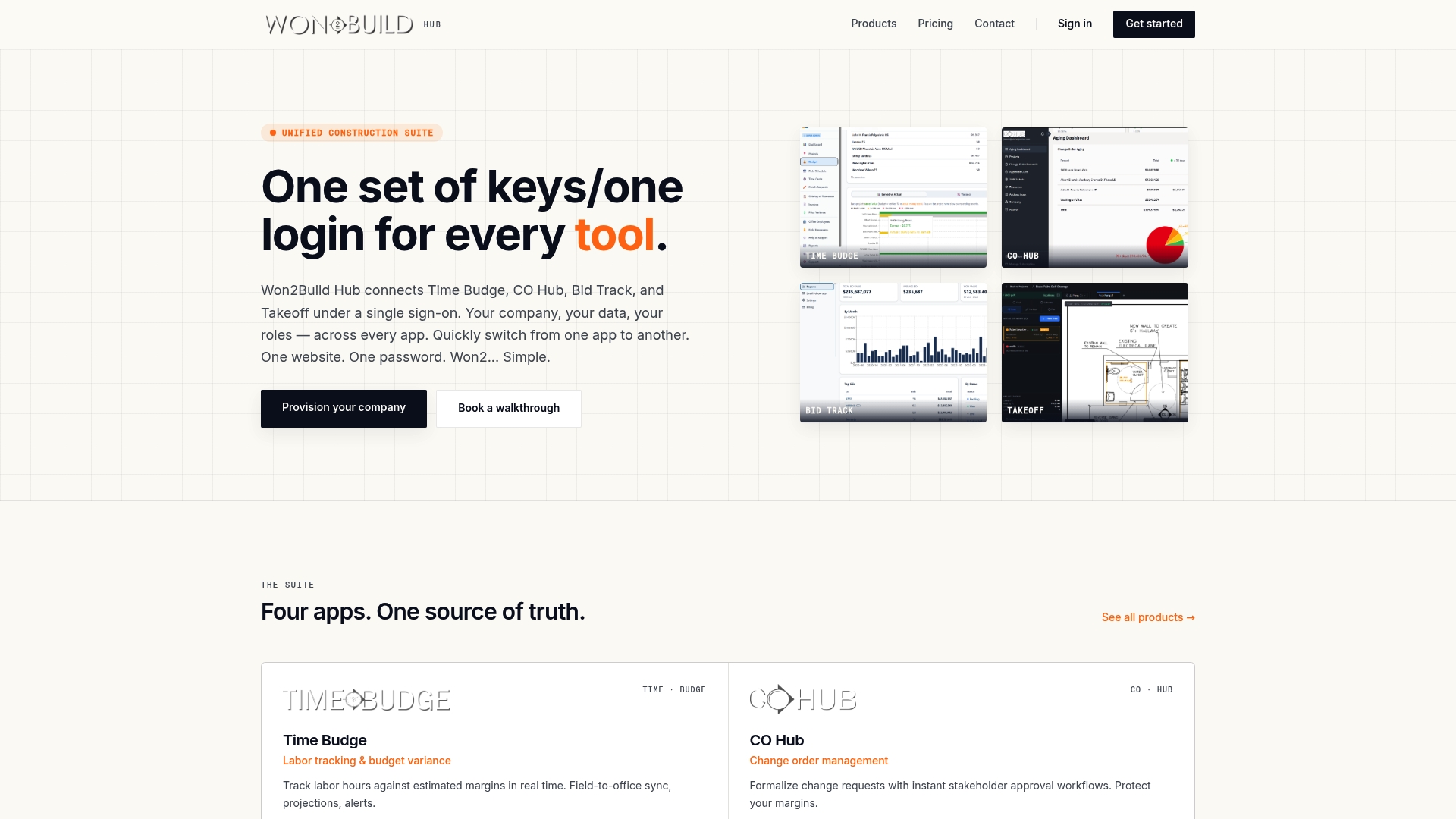
Bid Track is designed for subcontractors who need real-time visibility across multiple concurrent bids without the overhead of enterprise software. Setup is straightforward, and the pipeline dashboard gives project executives an immediate view of every bid’s status, value, and deadline. For teams ready to move past spreadsheets, Bid Track is the practical next step.
FAQ
What is digital bid tracking in commercial construction?
Digital bid tracking is the use of software to monitor, manage, and analyze construction bids from opportunity identification through award. It replaces manual spreadsheets with centralized dashboards, automated alerts, and outcome logging.
How much can digital bid tracking improve win rates?
Analytics-driven bid selection improves win rates by 22–31% within the first year of adoption. Contractors using this approach also report win rates 5–8 percentage points above their category averages.
What is a “ghost bid” and how does tracking prevent it?
A ghost bid is a submitted proposal that expires without any follow-up from the contractor. Digital tracking systems log every submission and trigger automated follow-up reminders, eliminating the administrative gap that causes ghost bids.
How do I track multiple commercial bids simultaneously?
Dedicated bid tracking software like Won2build’s Bid Track provides a pipeline dashboard for multiple bids that shows every active opportunity, its status, and its deadline in one view. Automated status updates remove the need for manual tracking across separate files.
When does a commercial construction team need integrated bid tracking?
Teams submitting more than 10 bids per month benefit most from an integrated platform that connects bid tracking to estimating and document management. Below that volume, a standalone tool delivers the core benefits of deadline automation and pipeline visibility.
Recommended
One login for estimating, bid tracking, change orders, and labor.
The Hub is free. Pay only for the apps you turn on.
Create your free Hub account- 7 Concrete Takeoff Steps Estimators Use to Avoid Ordering ShortfallsFollow seven concrete takeoff steps to calculate cubic yards, size rebar and formwork, convert volumes to supplier units, and verify quantities before bid...
- Are E-Signature Change Orders Legal and Worth the Switch?E-signature change orders streamline your workflow, ensuring faster approvals, fewer disputes, and quicker invoicing—discover the benefits now!
- How to Link Takeoff to Estimate for Accurate BidsLink your takeoff quantities to your estimate for accurate bids. Discover the seamless integration method that reduces errors and saves time.