
30/60/90 Plan to Fix Field to Office Communication for Subcontractors
Subcontractors: use a mobile first, field first 30/60/90 rollout to close gaps, cut rework 5–15%, and sync labor using CMAA and FMI findings.

The fastest, most reliable way to fix field to office breakdowns is a mobile-first capture workflow tied to a single project hub that standardizes daily reports, RFIs, and change orders. CMAA guidance recommends mobile capture of safety forms, timecards, crew hours, and photos with automated routing for approval, and FMI research ties field leadership and look-ahead planning directly to fewer resource emergencies. What follows is a practical playbook: the habits, tools, processes, and rollout steps that make this work on a real jobsite.
TL;DR:
- Using a mobile-first workflow reduces communication gaps caused by paper forms and verbal decisions that often result in delays or errors.
- Essential tools include offline-capable reporting apps, centralized project hubs, and integration with back-office systems to ensure real-time data consistency.
- Standardized processes require immediate documentation of field decisions, clear RFIs with assigned responders, and linked change orders tied to approved scopes.
- A phased implementation over 90 days helps crews adopt new habits gradually, focusing first on mobile reports, then on RFIs, and finally on dashboards and broader rollout.
- Clear ownership, cadences like weekly look-aheads, and escalation rules are crucial for maintaining workflow discipline and preventing schedule emergencies.
Table of Contents
- Key practices that close the gap between field and office
- Tool categories that make field-to-office communication work
- Standardized workflows for daily reports, RFIs, and change orders
- Roles, cadence, and look-ahead planning that keep it running
- Quick implementation checklist and a 30/60/90-day plan
- How an integrated subcontractor suite maps to these practices
- Practical priorities for field-first implementation
- How Won2Build Hub can speed field to office sync
- Sources
- FAQ
Key practices that close the gap between field and office
Most communication failures on a jobsite are not dramatic. They are small, repeated gaps: a verbal decision nobody wrote down, a paper form that gets rained on, a photo that never makes it to the estimator. Closing those gaps starts with removing paper from anything that matters and building habits around a few core practices.
- Go paperless for daily reports, inspections, timecards, and toolbox talks so nothing depends on a form surviving the day.
- Build a mobile daily report template that captures crew hours, photos, weather, deliveries, equipment status, safety events, blockers, and cost codes in one entry, a structure that CMAA’s guidance recommends for reducing rework and admin time.
- Turn verbal field decisions into a documented record immediately, whether that is a marked-up photo, an RFI, or a two-line note.
- Apply the 7 Cs, clear, concise, concrete, correct, coherent, complete, and courteous, to keep written and spoken updates usable rather than vague, a checklist MindTools describes as a practical filter for workplace messages.
- Set short service-level windows for office review so exceptions get handled the same day instead of sitting in a queue.
Pro Tip: Require one photo per cost code on every daily report. It settles more disputes than any amount of written explanation.
Tool categories that make field-to-office communication work
Software choice matters less than the pattern it follows. A handful of feature sets separate tools that actually get used from tools that get abandoned after a month.
- Mobile field reporting apps need offline capture, photo markup, geotags, and required fields that block submission until the basics are filled in.
- A project hub or single source of truth keeps plans, RFIs, change orders, and time records synchronized so nobody is working from a stale copy.
- Integration patterns, whether native connectors or an API layer, push field data into accounting and estimating systems automatically, avoiding the double entry that integration and workflow guidance treats as a core design problem in back-office systems.
- Collaboration tools like chat and async video handle heavier coordination that a form cannot, especially for design clarifications or multi-trade scheduling conflicts.
- Security and audit trails matter because every RFI response, change order approval, and timecard entry may end up supporting a claim months later.
Standardized workflows for daily reports, RFIs, and change orders
Tools only help if the workflow behind them is consistent from project to project. Four processes deserve a fixed structure that every crew and every office follows the same way.
- Daily reports need required fields tied to cost codes, so crew hours and production units reconcile against the estimate the same day they happen, a link CMAA’s field-to-office guidance calls out as central to catching cost drift early.
- RFIs need a clear filer, a named responder, and an expected turnaround, with every step logged so the audit trail holds up later.
- Change orders and time-and-material tickets should be captured from the field the moment work happens, with a simple approval rule set that flags anything over a set dollar threshold for PM sign-off.
- Procurement and material requests should tie directly to approved scope, since an order pulled from the wrong revision is one of the more expensive mistakes a project can make.
Versioned digital plans with a one-click update model close the loop: when a sheet changes, every device shows the current version instead of crews working from a printout marked up three revisions ago. Construction of field-office workflows ties centralized documentation for RFIs, change orders, and procurement directly to lower rework and better visibility across a project.
Roles, cadence, and look-ahead planning that keep it running
None of this holds together without clear ownership. Foremen and superintendents own the daily report, flag blockers as they happen, and show up to look-ahead planning sessions instead of skipping them for schedule pressure. Project managers and office admins own exception review: approving change orders, reconciling daily costs, and chasing down anything that looks off before it compounds.
A weekly look-ahead covering the next three to six weeks surfaces labor, equipment, and material needs before they become emergencies. FMI’s labor productivity research links this cadence, paired with stronger field leadership, to fewer weekly resource emergencies and better protected margins. Escalation rules matter too: blocked work and procurement delays need a defined path upward instead of sitting until someone happens to ask. Role clarity also reduces the kind of field-leader burnout that FMI’s research flags as a persistent driver of turnover on crews stretched thin.

Quick implementation checklist and a 30/60/90-day plan
Rolling out new communication habits works better in stages than all at once. A phased plan gives field crews time to adopt one change before layering on the next.
- Days 1 to 30: pilot mobile daily reports with a single crew, remove paper from that crew’s core forms, and train field leads on the required fields.
- Days 31 to 60: add mobile capture for RFIs and change orders, connect one back-office integration such as accounting or estimating, and start weekly look-ahead meetings.
- Days 61 to 90: build dashboards for office visibility, track rework and RFI response times, and expand the pilot to additional crews.
Rework tied to poor field communication can run 5% to 15% of project costs, according to Construction.live’s workflow analysis, which is the gap a phased rollout is designed to close. Early KPIs worth tracking include field report completion rate, average RFI response time, and rework events as a share of budget. Our real-time reporting guide covers how to build dashboards around these same metrics.
How an integrated subcontractor suite maps to these practices
Won2Build Hub is built around the same workflow this guide recommends. Time Budge handles field time capture and syncs labor data back to the office without a second entry, a pattern covered in more detail in our labor tracking field guide. CO Hub captures change orders and T&M tickets directly from the field. Bid Track and Takeoff connect estimating notes and digital plan quantities to what crews report on-site. Single sign-on across all four apps means a foreman or PM moves between time, change orders, bids, and takeoffs without re-entering the same project data, which is the double-entry problem most field-to-office breakdowns trace back to.

Practical priorities for field-first implementation
If field crews will not use a tool, it fails, no matter how complete the feature list looks. Usability beats functionality every time a foreman has to choose between filling out a form and getting back to the crew.
Small pilots with clear KPIs consistently outperform big rollouts pushed across every project at once. Measure completion rates and response times on one crew before expanding, and treat people and meeting cadence as investments equal to the software itself. Tools do not fix communication. Consistent habits, backed by tools that get out of the way, do.
— Jen Reese
How Won2Build Hub can speed field to office sync
The modules above map directly to what this guide recommends: software for labor sync, change orders, connecting estimates to field reality, all accessible through a unified login. 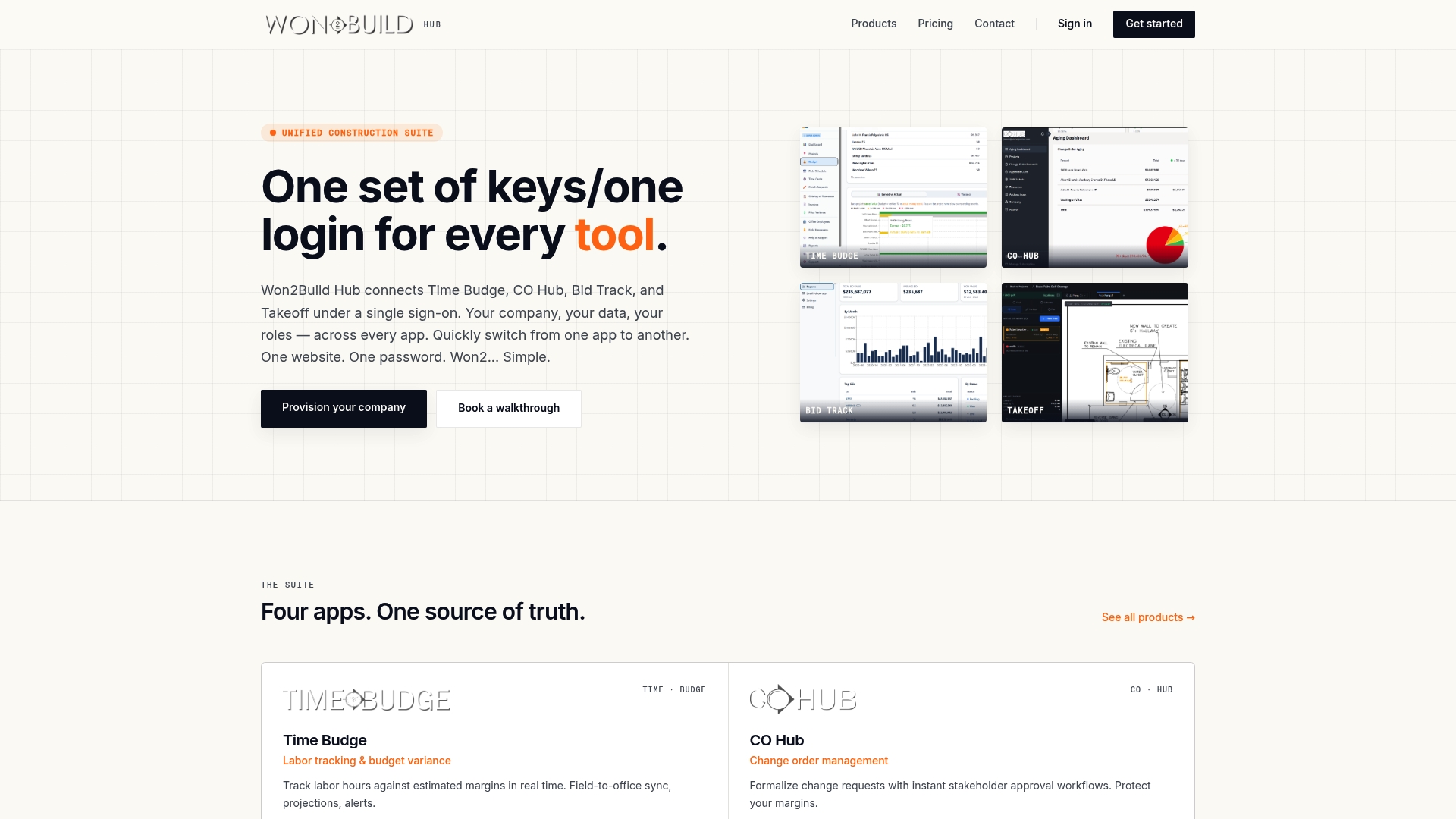
If your crews are still juggling paper forms and separate logins, pricing details for the full Won2Build Hub suite are worth a look, or visit the Won2Build Hub landing page to see how the modules connect.
Sources
- Field-to-Office Communications (CMAA)
- FMI labor productivity and workforce availability studies
- The 7 Cs of Communication (MindTools)
- Construction
FAQ
What are 5 good communication skills in the workplace?
Strong workplace communication generally includes clarity, active listening, conciseness, consistency, and the ability to document decisions accurately. On a jobsite, documentation matters as much as verbal skill, since a decision only helps the office if it gets written down and routed to the right person.
What are the 7 C’s of communication in the workplace?
The 7 Cs are clear, concise, concrete, correct, coherent, complete, and courteous, a framework MindTools describes as a practical checklist for effective messages. Applying them to daily reports and RFIs helps keep field updates specific enough for the office to act on without follow-up questions.
What are the four forms of workplace communication?
Workplace communication is commonly grouped into verbal, written, visual, and nonverbal forms. On a construction site, verbal updates and radio calls handle immediate coordination, while written daily reports, marked-up photos, and digital plans carry the documentation that protects both the crew and the office later.
What is a field in communication?
In a data or reporting context, a field is a single defined piece of information captured on a form, such as crew hours, weather conditions, or a cost code entry. Well-designed daily reports use required fields to make sure nothing critical gets skipped before a report reaches the office.
How much does Won2Build cost?
Won2Build’s individual modules are priced separately: Time Budge and Bid Track are each $199 per month per company, and CO Hub is $59 per month per company, with a $2 per month active field worker fee applying to certain modules. Takeoff and the full Hub bundle pricing are available on request through the pricing page.
Recommended
One login for estimating, bid tracking, change orders, and labor.
The Hub is free. Pay only for the apps you turn on.
Create your free Hub account- Managers: Make Mobile Field Workflows Resilient for 72 Hour OutagesPlaybook for field managers: offline first mobile workflows, resilient sync and conflict handling, compliance first AI guardrails, and practical pilot steps.
- Daily Signed Records: Force Account Tracking for Managers & InspectorsField checklist for project managers and inspectors to keep force account tracking audit-ready: use daily signed records for labor, equipment, and...
- Stop Timecard to Report Drift: Labor Cost Codes for SubcontractorsFix the timecard to report chain with labor cost codes that tie crews to budgets. Includes a 6 code starter and a burdened rate example.