
Subcontractor Workforce Management Explained for PMs
Discover subcontractor workforce management explained for PMs. Learn to boost productivity, reduce costs, and streamline project success today!

Subcontractor workforce management is the structured system a construction project manager uses to plan, coordinate, and oversee all subcontracted labor from selection through final payment. The discipline covers prequalification, scope writing, scheduling, compliance monitoring, payment controls, and performance documentation. Without it, projects drift into cost overruns, schedule conflicts, and legal disputes that erode profit on every job. 91% of general contractors report higher productivity when they replace spreadsheets with purpose-built subcontractor management workflows. That number signals how much operational value a formal system creates.
What are the key components of subcontractor workforce management?
Subcontractor workforce management explained at its core is a set of repeatable processes, not a single task. Each component protects a different part of the project.
Prequalification and selection set the foundation. Before a subcontractor ever steps on site, you need proof of financial stability, past project references, safety records, and current licensing. Skipping this step is the single most common cause of mid-project subcontractor failure.

Scope of work preparation and bid leveling come next. Bid leveling normalizes disparate bids so you compare apples to apples across every trade. Without it, the lowest number on paper often carries hidden exclusions that trigger expensive change orders later. A detailed written scope eliminates the ambiguity that turns into disputes. You can also review why subcontractors overbid projects to understand how scope gaps inflate pricing from the subcontractor’s side.
The remaining components work together as an ongoing management cycle:
- Scheduling coordination: Trade sequencing, weekly look-aheads, and milestone dates shared with every subcontractor on the project.
- Compliance monitoring: Certificates of insurance, licenses, and safety certifications tracked with expiration alerts. Automated alerts at 90, 60, and 30 days before expiration prevent coverage gaps that expose you to liability.
- Payment management: Retainage schedules, milestone invoices, and lien waiver collection at each pay application.
- Performance tracking: Daily logs, quality inspections, and documented notices that create a defensible record if disputes arise.
Pro Tip: Invest 30 minutes up front writing a detailed scope before you send a single bid invitation. That one document eliminates more disputes than any contract clause you can add later.
How can construction managers optimize subcontractor labor scheduling?
Static monthly schedules fail on active construction sites. Conditions change daily, and a schedule that updates once a month gives subcontractors no reliable signal about when to mobilize their crews.
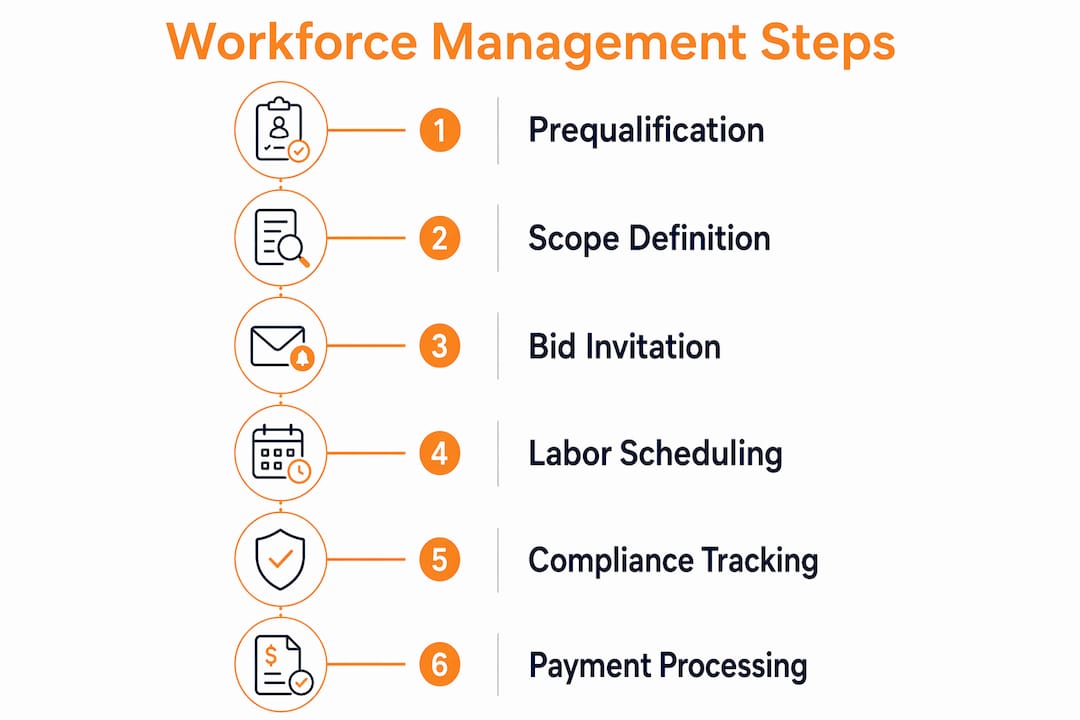
Weekly look-aheads and pull-planning replace static schedules with a rolling three-week window of confirmed tasks. Pull-planning works by asking each trade to commit only to work they can actually complete given current site conditions. The result is fewer idle crews and fewer conflicts between trades working in the same space.
Effective scheduling coordination follows a clear sequence:
- Establish trade sequencing. Map the logical order of work across all trades before mobilization. Framing must be complete before mechanical rough-in; mechanical rough-in must be inspected before insulation. Sequence errors cascade into weeks of delay.
- Publish a shared schedule. Every subcontractor needs access to the same schedule, not just their own slice of it. When an electrician sees that the drywaller is running two days behind, they can adjust their crew deployment before idle time accumulates.
- Run weekly coordination meetings. A 30-minute standing meeting with all active trade foremen surfaces conflicts before they become delays. Document every commitment made in that meeting.
- Track spatial deployment. Know which crews are working in which zones each day. Overcrowding a floor with three trades simultaneously destroys productivity for all of them.
- Update the schedule in writing. Verbal change orders cause major disputes; only documented, signed notices serve as legal evidence for schedule and cost changes. Every schedule revision needs a written notice to the affected subcontractors.
Pro Tip: Use a digital platform that lets subcontractors view their upcoming tasks and confirm availability. When subs have visibility, they show up prepared. When they are working from a phone call, they guess.
Understanding how roofing and specialty trades fit into the coordination picture matters too. The DFW roofing subcontractor role is a useful reference for project managers who need to sequence weather-dependent trades around other work.
What role does technology play in managing subcontractor teams?
Technology converts subcontractor management from a paper-chasing exercise into a data-driven operation. The gap between firms using purpose-built software and those using spreadsheets is measurable.
91% of general contractors see productivity gains when they adopt specialized subcontractor management software. That productivity gain comes from eliminating the manual work of tracking documents, chasing signatures, and reconciling schedules across email threads.
The core capabilities that drive results in subcontractor workforce optimization include:
- Centralized document portals: Digital portals consolidate certificates, scopes, payments, and lien waivers, cutting document retrieval from hours to seconds. When an auditor or attorney asks for a specific lien waiver from 18 months ago, you find it in seconds, not days.
- Automated compliance tracking: Software that flags expiring insurance certificates before the gap occurs protects you from uninsured liability on active work.
- Real-time labor tracking: Digital time cards and attendance logs tied to cost codes give you a live picture of labor deployment versus budget.
- Integrated bid management: Platforms that connect bid invitations, scope documents, and award decisions in one place reduce procurement errors and speed up the subcontractor selection cycle.
Won2build addresses all of these needs through its integrated suite. Time Budge handles labor tracking, CO Hub manages change orders, Bid Track controls the bid pipeline, and Takeoff supports digital plan quantification. Single sign-on across all four applications means field data and office data stay synchronized without manual re-entry.
What legal and financial controls protect your subcontractor relationships?
A signed subcontract is not a formality. It is the document that determines who pays when something goes wrong.
Every subcontract must define scope, payment terms, schedule obligations, and default remedies. The cure notice provision is one of the most important clauses in any subcontract. A standard cure notice gives a subcontractor 48–72 hours to correct a default before the general contractor can hire a third party to complete the work at the subcontractor’s expense. Without this clause, your legal options narrow significantly.
Key financial controls every construction business should implement:
- Retainage at 5–10%: Retainage in this range keeps subcontractors financially committed through punch-list completion. Below 5%, you lose leverage. Above 10%, you strain the subcontractor’s cash flow and risk losing them to better-paying projects.
- Lien waiver collection: Require conditional lien waivers with every pay application and unconditional waivers upon final payment. This protects the owner and the general contractor from double-payment claims.
- Insurance compliance verification: Confirm that certificates name your entity as an additional insured. A certificate that does not include this language offers no real protection.
- Documented schedule notices: Strict adherence to written schedule notices is critical for legal protection against delay claims. Every delay notice, acceleration directive, and schedule revision needs a date-stamped written record.
Pro Tip: Tracking prevailing wage time cards on public projects is a compliance requirement, not an option. A single audit finding can trigger back-pay liability that exceeds the profit on the entire contract.
Key Takeaways
Effective subcontractor workforce management requires formal systems for selection, scheduling, compliance, payment, and documentation working together as a single operational cycle.
| Point | Details |
|---|---|
| Prequalify before you bid | Verify financial stability, safety records, and licensing before inviting any subcontractor to bid. |
| Level every bid | Normalize all bids against a written scope to avoid hidden exclusions and costly change orders. |
| Use weekly look-aheads | Replace static monthly schedules with rolling three-week pull-planning to reduce idle time and trade conflicts. |
| Set retainage at 5–10% | This range keeps subcontractors committed through punch-list completion without straining their cash flow. |
| Document everything in writing | Written notices for schedule changes, cure notices, and change orders are your only legal protection in a dispute. |
The part most project managers underestimate
Most project managers treat subcontractor management as an administrative burden. It is not. It is an operational discipline that directly determines whether a project finishes on time and on budget.
The relationship side of managing subcontractor teams gets undervalued most. Subcontractors choose which jobs to prioritize when their crews are stretched thin. They pick the sites where they get paid on time, where the schedule is clear, and where the project manager takes responsibility when the general contractor causes a delay. If you want your subs to show up with their best crews, you have to earn that.
I have seen project managers fight over a 2% retainage reduction while simultaneously losing two weeks of schedule because they would not admit their own submittal review was late. The subcontractor knew it. The project manager knew it. But no one documented it, so the dispute dragged on for months. Accepting responsibility when you cause a delay costs you nothing and earns you enormous goodwill.
The other underestimated investment is upfront bid leveling. Spending an extra hour normalizing bids before award feels slow when you are under pressure to get a project started. That hour prevents weeks of “that was not in my scope” arguments during construction. Failing to normalize bids leads to disputes and cost overruns that erase the apparent savings from the low bid.
Subcontractor engagement techniques that actually work are simple: pay on time, communicate clearly, share the schedule, and own your mistakes. The rest is process.
— Jen Reese
How Won2build supports your subcontractor management workflow
Construction project managers who want to move from reactive firefighting to proactive control need tools built for the way subcontractor work actually flows.
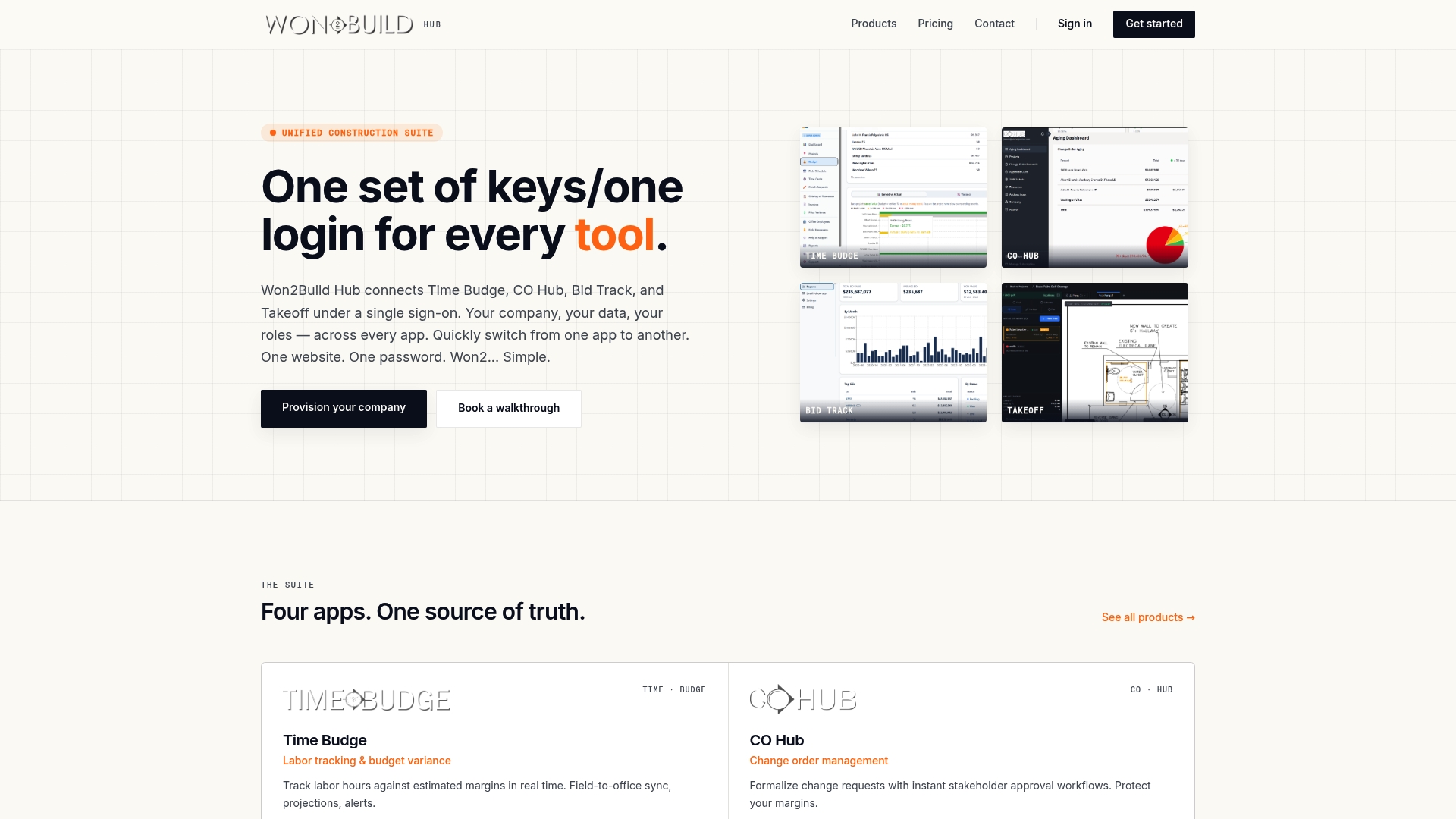
Won2build’s integrated platform connects bid management, change order control, labor tracking, and digital takeoff in one place. CO Hub gives you a documented audit trail for every change order, so scope disputes get resolved with data instead of memory. Bid Track manages your entire bid pipeline from invitation through award, with bid leveling built into the workflow. Because all four applications share a single sign-on, your field data and office records stay aligned without double entry or data loss. Project managers who need tighter control over subcontractor labor costs can also review the time tracking benefits that Won2build’s Time Budge application delivers on active projects.
FAQ
What is subcontractor workforce management?
Subcontractor workforce management is the structured process of selecting, scheduling, monitoring, and paying subcontracted labor to keep construction projects on time and within budget. It covers every stage from prequalification through final lien waiver collection.
How do weekly look-aheads improve subcontractor coordination?
Weekly look-aheads give every trade a confirmed three-week window of upcoming tasks, replacing static monthly schedules that go stale within days. This reduces idle time and prevents multiple trades from conflicting in the same work zone.
What is the correct retainage percentage for subcontractors?
The standard retainage range is 5–10% of each payment. Below 5% removes the financial incentive for punch-list completion; above 10% strains the subcontractor’s cash flow and can push them toward better-paying projects.
Why do verbal change orders cause disputes?
Verbal change orders have no legal standing in a construction dispute. Only documented, signed notices serve as evidence for schedule and cost changes, which is why every scope or schedule modification must be confirmed in writing.
How does bid leveling reduce subcontractor disputes?
Bid leveling normalizes all received bids against a common written scope, exposing exclusions and assumptions before award. This prevents the “that was not in my scope” disputes that drive cost overruns and schedule delays during construction.
Recommended
One login for estimating, bid tracking, change orders, and labor.
The Hub is free. Pay only for the apps you turn on.
Create your free Hub account- 7 Concrete Takeoff Steps Estimators Use to Avoid Ordering ShortfallsFollow seven concrete takeoff steps to calculate cubic yards, size rebar and formwork, convert volumes to supplier units, and verify quantities before bid...
- Are E-Signature Change Orders Legal and Worth the Switch?E-signature change orders streamline your workflow, ensuring faster approvals, fewer disputes, and quicker invoicing—discover the benefits now!
- How to Link Takeoff to Estimate for Accurate BidsLink your takeoff quantities to your estimate for accurate bids. Discover the seamless integration method that reduces errors and saves time.