
How to Manage Multi-Phase Commercial Bids Effectively
Learn how to manage multi-phase commercial bids effectively. Discover structured processes and tools to improve your bidding success.

Multi-phase commercial bidding is defined as a structured procurement process where a contractor or subcontractor moves through sequential stages, from opportunity qualification through bid preparation to submission and post-award tracking, each requiring distinct workflows and decision points. The bid management lifecycle consists of three primary stages: opportunity identification and qualification, resource-intensive bid preparation, and submission with tracking through the decision process. Errors introduced during preparation, such as inaccurate quantity takeoffs and missing specialty scopes, are the leading cause of lost bids and margin erosion. To manage multi-phase commercial bids well, project managers and bid coordinators need a disciplined process, the right tools, and clear team roles before the first RFP lands on their desk. Won2build was built specifically to support subcontractors through every one of these stages.
What are the essential stages in managing multi-phase commercial bids?
The phased bidding process follows a predictable structure. Understanding each stage prevents the reactive scrambling that kills bid quality.
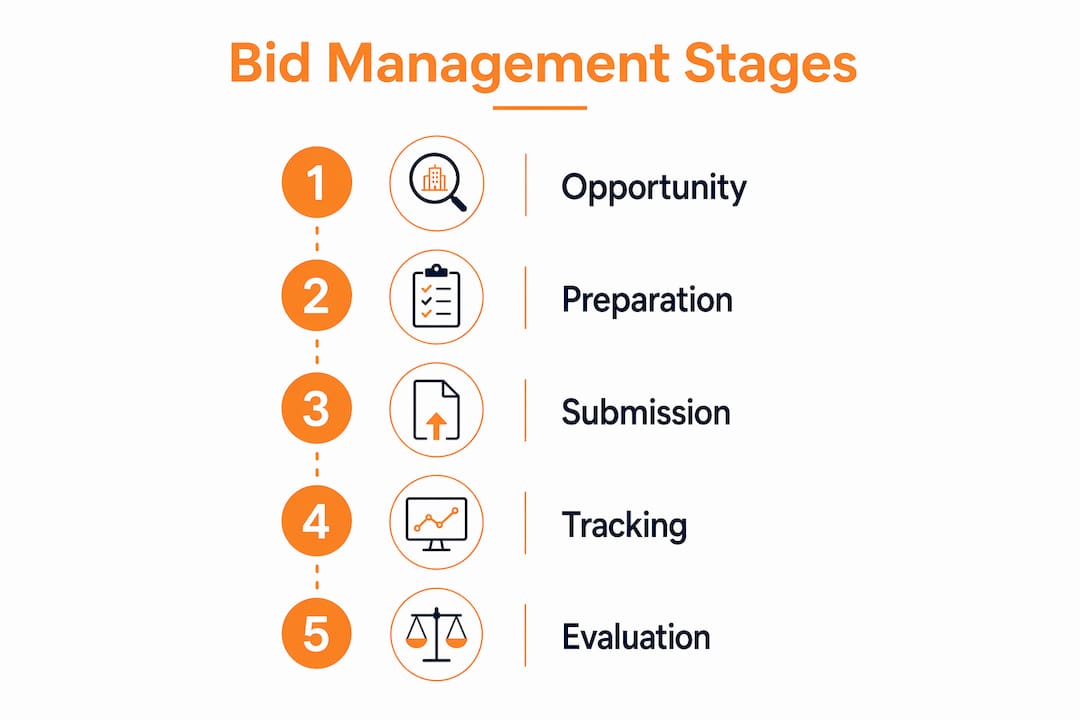
Stage 1: Opportunity identification and go/no-go qualification
Every bid cycle starts with a decision: pursue or pass. Bid managers who prioritize bids by revenue impact and qualification scores prevent resource drain and keep their teams focused on winnable work. A simple scoring matrix, rating project size, client relationship, scope fit, and competition level, gives coordinators a defensible basis for that decision. Passing on a bad-fit bid is not a loss. It protects capacity for the next opportunity.
Stage 2: Bid preparation
Preparation is the most resource-intensive phase in any commercial bid management workflow. Scope review, quantity takeoffs, subcontractor coordination, and cost assembly all happen here, often simultaneously and under deadline pressure. Inaccurate takeoffs and missing specialty scopes, such as firestopping or commissioning, are the most common sources of bid errors at this stage. A disciplined scope review checklist, reviewed by both the estimator and the project manager, catches gaps before they become costly omissions.

Stage 3: Submission
Late or incomplete submissions are disqualified regardless of price competitiveness. That single fact makes deadline management a non-negotiable discipline. Submission requires compliance verification, formatting review, and a final scope confirmation before the package leaves your office. Build a submission checklist that mirrors the owner’s or GC’s stated requirements exactly.
Stage 4: Post-submission tracking
Bid tracking does not end at submission. Monitoring evaluation status, responding to clarification requests, and logging outcomes, wins and losses alike, feeds the continuous improvement cycle that separates high-performing bid teams from the rest. Organizations that analyze post-bid outcomes achieve up to a 30% increase in revenue through applied learning. That number reflects what happens when teams treat every result as data.
Pro Tip: Set a calendar reminder for five business days after each submission deadline. Use that date to follow up on bid status and log the outcome in your tracking system, regardless of the result.
Which tools do you need to manage bids efficiently?
The right tools remove friction from every phase of a phased bidding process. The wrong ones create it.
A centralized bid tracking system is the single most important organizational tool for teams managing multiple simultaneous bids. Tender management software reduces version sprawl, improves alignment, and enforces compliance in multi-functional bid teams working on complex tenders. Without centralization, version control breaks down, deadlines get missed, and scope gaps go undetected until it is too late.
Beyond tracking, teams need tools that support three core functions:
- Document control: A single source of truth for drawings, specs, addenda, and correspondence. Every team member works from the same version.
- Quantity takeoff software: Digital plan quantification reduces measurement errors and speeds up the preparation phase. Won2build’s Takeoff software supports accurate digital quantity takeoffs directly from plan files.
- Bid pipeline management: A live dashboard showing every active bid, its phase, deadline, and assigned owner. Won2build’s Bid Track provides centralized pipeline management built for subcontractor workflows.
Organizational prerequisites matter as much as software. Defined team roles, a master bid calendar, and written communication protocols prevent the coordination failures that derail bids during peak cycles.
| Tool category | Primary function | Impact on bid quality |
|---|---|---|
| Bid tracking platform | Deadline and pipeline management | Prevents missed submissions |
| Takeoff software | Quantity measurement from digital plans | Reduces scope and cost errors |
| Document control system | Version and addenda management | Eliminates working from outdated drawings |
| Standardized bid templates | Pre-bid formatting alignment | Cuts post-submission reconciliation time |
Pro Tip: AI-powered RFP tools now automate repetitive formatting and compliance tasks. Redirecting that saved time toward scope analysis and win strategy is where bid quality actually improves.
How do you execute bid leveling for accurate comparisons?
Bid leveling is the process of normalizing incoming subcontractor or vendor bids so they can be compared on equal terms. Without it, the lowest number on a spreadsheet is meaningless. A four-layer control strategy makes apples-to-apples comparisons achievable and defensible.
The four layers of bid leveling control
- Document control: Confirm every bidder received the same drawings, specifications, and addenda. A bid based on an earlier drawing set is not comparable to one based on the current issue.
- Scope control: Identify inclusions, exclusions, and specialty scope gaps across all bids. Scope gaps, such as missing firestopping or testing and balancing, commonly affect 10–20% of subcontractor bid packages when left unaddressed at the invitation stage.
- Commercial control: Compare unit pricing, allowances, and production assumptions rather than total bid amounts alone. A bid that looks $40,000 lower may carry a unit rate that will escalate significantly during execution.
- Performance control: Evaluate schedule commitments, manpower capacity, and risk profile. A subcontractor who cannot staff the project at the required pace creates a schedule risk that no low price offsets.
Evaluating bids beyond price by assessing scope alignment, schedule commitments, manpower capacity, and risk profile is the standard that separates sound procurement decisions from ones that create problems in the field.
Pro Tip: Treat bid leveling as a pre-bid activity, not a post-submission one. Standardized bid templates sent with the invitation package mean up to 95% of incoming data arrives in a comparable format, cutting reconciliation time significantly.
The construction bid leveling process rewards teams that invest time before bids come in. Setting scope expectations, formatting requirements, and exclusion lists in the invitation letter eliminates the most common sources of comparison failure.
What are the best practices for managing multi-phase commercial bids?
Commercial bid management tips from experienced coordinators share a common thread: discipline in process prevents chaos at deadline. The following practices separate teams that win consistently from those that scramble.
- Maintain a bid tracking rhythm. Log every active bid in a centralized system with status, deadline, assigned estimator, and follow-up date. A digital bid tracking system gives coordinators a live view of the entire pipeline without relying on email threads or memory.
- Standardize bid templates before invitations go out. Pre-bid leveling through standardized templates saves substantial post-submission reconciliation time. Teams that skip this step spend hours after bid day manually aligning formats that should have been aligned before.
- Delegate repetitive tasks to automation. High-performing bid teams delegate routine formatting and compliance tasks to automation tools, shifting focus to strategic content and scope analysis. AI tools now handle RFP parsing, compliance checklists, and document assembly reliably.
- Use version control on all bid documents. Every drawing revision, addenda, and scope clarification needs a date stamp and a distribution log. Working from an outdated document is one of the most preventable bid errors in commercial construction.
- Avoid stacking bids without capacity planning. Pursuing too many bids simultaneously without matching team capacity to workload degrades quality across all active proposals. A go/no-go scoring process applied consistently prevents this.
The role of AI in architecture and construction bids has expanded significantly, particularly in compliance verification and risk flagging. Teams that integrate these tools into their standard workflow gain a measurable speed and accuracy advantage over those still relying on manual review alone.
Pro Tip: Build a “lessons learned” log for every bid, win or lose. Reviewing it quarterly reveals patterns in scope gaps, pricing misses, and missed deadlines that no single debrief captures.
Key Takeaways
Effective multi-phase bid management requires a structured lifecycle, disciplined leveling, centralized tracking, and continuous improvement from every bid outcome.
| Point | Details |
|---|---|
| Follow the three-stage lifecycle | Qualify opportunities, prepare bids with precision, and track every submission through to outcome. |
| Level bids before they arrive | Send standardized templates with invitations to make incoming bids comparable from the start. |
| Evaluate beyond total price | Compare unit rates, scope inclusions, schedule commitments, and manpower capacity across all bids. |
| Centralize tracking and documents | Use a single platform for pipeline visibility, version control, and deadline management. |
| Capture every bid outcome | Log wins and losses systematically to build the institutional knowledge that improves future win rates. |
What I’ve learned managing bids through peak cycles
The biggest shift I’ve seen in bid coordination over the past decade is not technological. It is attitudinal. The bid managers who consistently outperform their peers stopped thinking of themselves as submission coordinators and started acting as project leaders from the moment an opportunity hits the pipeline.
Early qualification is where this shows up most clearly. Teams that spend thirty minutes on a disciplined go/no-go review before committing estimating resources protect themselves from the single biggest drain in commercial bidding: pursuing work you were never positioned to win. I’ve watched teams burn two weeks of estimating capacity on a project where they had no client relationship, no relevant experience, and no realistic path to a competitive number.
The second thing I’ve learned is that bid rhythm matters more than bid volume. Maintaining a consistent cadence, regular status reviews, weekly pipeline meetings, and structured follow-up calls, keeps quality high even when the calendar is full. The teams that lose quality during peak cycles are almost always the ones that abandoned their process when volume spiked.
Technology has made the rhythm easier to sustain. Automation handles the formatting and compliance tasks that used to consume hours. That time now goes to scope analysis, subcontractor relationships, and win strategy. That is the right trade.
— Jen Reese
Won2build tools built for multi-phase bid management
Managing a complex bid pipeline without purpose-built tools means accepting preventable errors and missed deadlines as a cost of doing business.
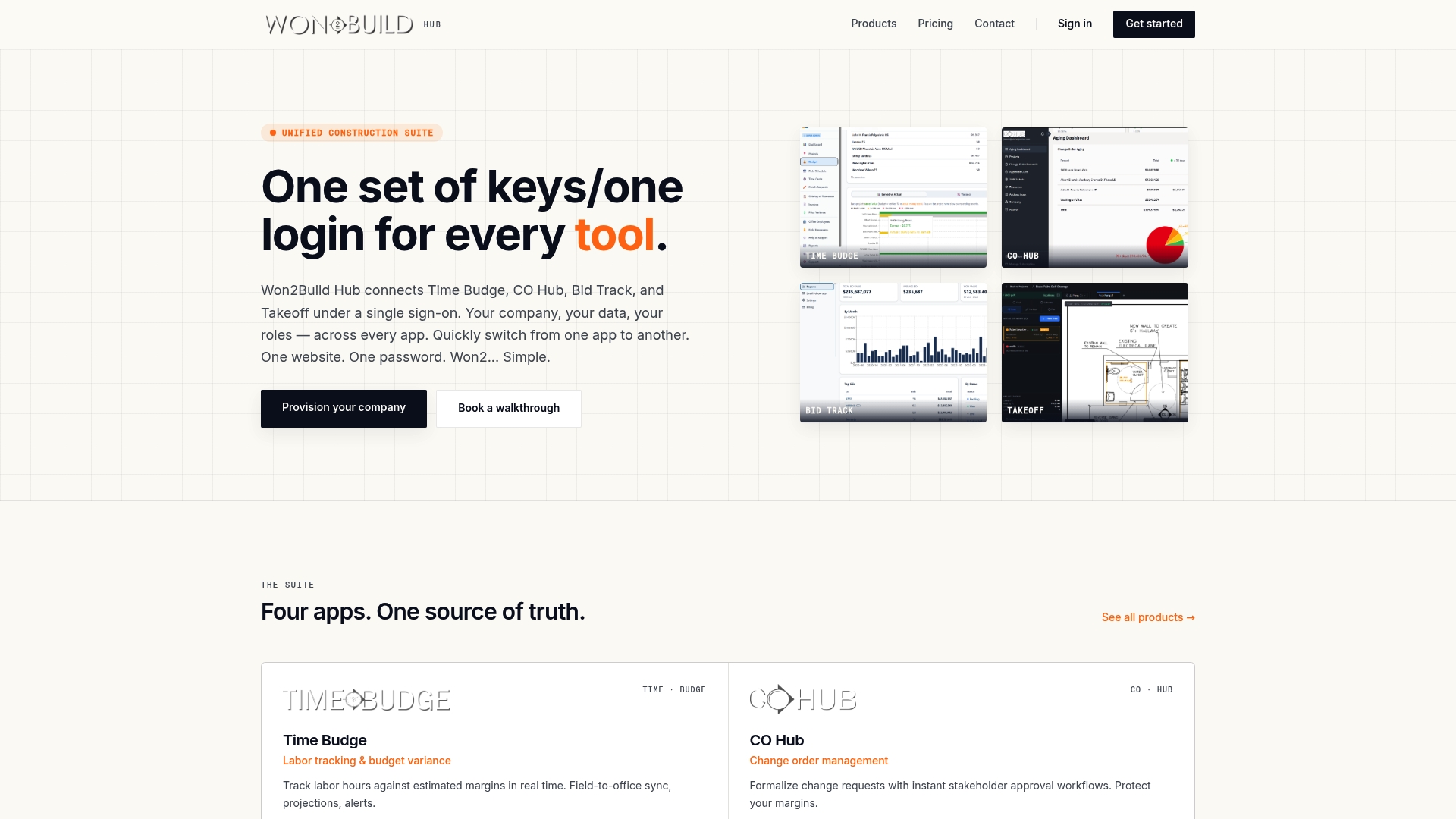
Won2build’s integrated suite addresses the two highest-risk phases in commercial bid management directly. Bid Track gives subcontractor teams a centralized pipeline dashboard with deadline tracking, bid status visibility, and estimating tools built into a single sign-on environment. The Takeoff application supports accurate digital quantity measurement from plan files, reducing the scope errors that most commonly inflate or deflate bid totals. Both tools share real-time data across the Won2build platform, so field and office stay aligned without double entry. Teams managing multiple active bids can request a demo directly through the Won2build products page.
FAQ
What is a multi-phase commercial bid?
A multi-phase commercial bid is a structured procurement process divided into sequential stages, typically opportunity qualification, bid preparation, submission, and post-award tracking. Each phase requires distinct workflows and decision criteria.
How do you prevent missed bid deadlines?
Centralized bid tracking with assigned owners, deadline alerts, and a submission checklist prevents missed deadlines. Late or incomplete submissions are disqualified regardless of price, making deadline management a non-negotiable discipline.
What is bid leveling and why does it matter?
Bid leveling normalizes incoming bids so they can be compared on equal terms across scope, pricing, schedule, and risk. Scope gaps affect 10–20% of subcontractor bid packages when leveling is skipped, making it a critical step in fair evaluation.
How many bids should a team manage at once?
The right number depends on team capacity and bid complexity. A go/no-go scoring process applied to every opportunity prevents teams from pursuing more bids than they can prepare with full accuracy and attention.
What does post-bid tracking involve?
Post-bid tracking includes monitoring evaluation status, responding to clarification requests, and logging win/loss outcomes. Teams that systematically analyze bid results achieve measurably higher win rates over time through applied learning.
Recommended
One login for estimating, bid tracking, change orders, and labor.
The Hub is free. Pay only for the apps you turn on.
Create your free Hub account- 7 Concrete Takeoff Steps Estimators Use to Avoid Ordering ShortfallsFollow seven concrete takeoff steps to calculate cubic yards, size rebar and formwork, convert volumes to supplier units, and verify quantities before bid...
- Are E-Signature Change Orders Legal and Worth the Switch?E-signature change orders streamline your workflow, ensuring faster approvals, fewer disputes, and quicker invoicing—discover the benefits now!
- How to Link Takeoff to Estimate for Accurate BidsLink your takeoff quantities to your estimate for accurate bids. Discover the seamless integration method that reduces errors and saves time.