
Why Commercial Estimating Software Saves Time
Discover why commercial estimating software saves time by automating key stages. Cut your bid preparation hours dramatically and boost efficiency.

Commercial estimating software is defined as a digital platform that automates quantity takeoff, pricing lookup, and proposal assembly to replace manual bid preparation. For U.S. commercial subcontractors, the time cost of manual estimating is concrete: manual bids over $50,000 consume 10–15 hours each, while automated workflows cut that to 4–6 hours. That is a 60% reduction achievable within 90 days. Understanding why commercial estimating software saves time starts with knowing exactly which stages of the process eat the most hours and how software attacks each one.
Why commercial estimating software saves time at every stage
The estimating process has three major stages where time disappears: quantity takeoff, pricing lookup, and proposal assembly. Each one is a candidate for automation, and each delivers measurable savings.
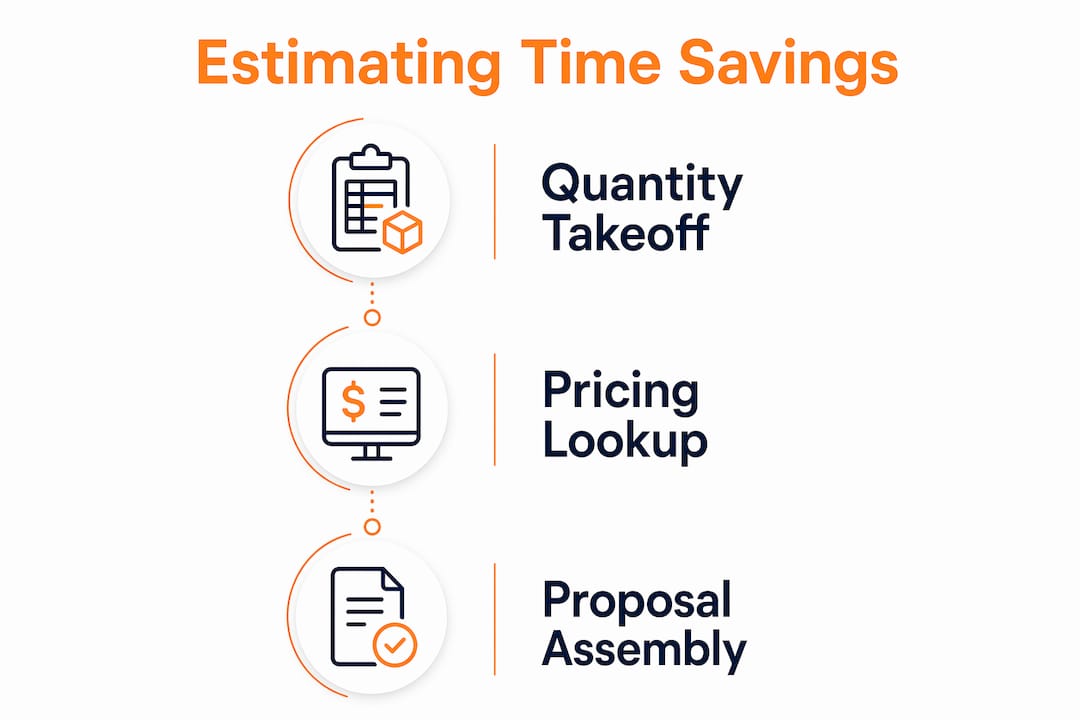
| Stage | Manual time | Automated time | Time saved |
|---|---|---|---|
| Quantity takeoff | 5–8 hours | 2–3 hours | 55–65% |
| Pricing lookup | 2–4 hours | Under 30 minutes | 70%+ |
| Proposal assembly | 2–4 hours | Under 10 minutes | 90%+ |
Automated quantity takeoff reduces estimate completion time by 55–65%. That means an estimator who previously measured plans by hand for a full day can finish the same task before lunch. The time freed up does not disappear into overhead. It goes directly into reviewing more opportunities.
Pricing database integration cuts the lookup and calculation work that estimators typically do by hand. Instead of cross-referencing spreadsheets or calling suppliers, the software pulls current labor and material rates automatically. Errors from stale pricing or transposed numbers drop sharply.

Proposal assembly is the stage most subcontractors underestimate. Manually building a formatted bid document takes 2–4 hours per bid. With integrated software templates, that same task takes under 10 minutes. Across a month of active bidding, that difference alone can recover a full workday.
Pro Tip: Sequence your automation in this order: takeoff first, then pricing calibration, then proposal templates. Skipping pricing calibration and jumping straight to proposals locks in inaccurate rates, which costs more time to fix than the manual process ever did.
How does estimating software increase bid capacity and win rates?
Time savings at the individual bid level compound quickly across a firm’s entire pipeline. Firms that automate estimating workflows win 20–30% more competitive bids because of faster turnaround and better pricing accuracy. Faster turnaround means your bid lands on the GC’s desk before competitors who are still building spreadsheets.
The math on bid capacity is straightforward. If your estimator previously produced two bids per week at 10–15 hours each, automation at 4–6 hours per bid means the same person can produce four or five bids in the same window. Automated workflows produce over twice as many bids without adding staff. That is new revenue opportunity at zero additional labor cost.
Accuracy improvements compound the win rate gains. Manual pricing errors create two problems: bids that are too high lose the job, and bids that are too low win the job and destroy the margin. Software that pulls from a calibrated pricing database eliminates both failure modes. The result is bids that are competitive and profitable at the same time.
- Faster bid delivery signals professionalism and responsiveness to GCs
- Accurate pricing reduces costly rework after award
- Higher bid volume increases the statistical probability of winning
- Freed estimator time allows deeper scope review on high-value jobs
The benefits of estimating software extend beyond the estimating department. When your pipeline grows without adding headcount, the entire operation scales more efficiently.
What manual estimating mistakes cost the most time?
Manual estimating has predictable failure points. Recognizing them explains exactly why subcontractors switch to digital tools.
-
Quantity takeoff by hand. Manual measurement of plans consumes 30–40% of total estimating labor. A single missed dimension or scale error forces a full remeasure. There is no audit trail, so finding the mistake requires starting over.
-
Pricing lookup from static spreadsheets. Labor and material costs change constantly. Estimators working from a spreadsheet last updated three months ago are bidding on stale numbers. The error shows up as a margin shortfall after award, not before.
-
Proposal assembly from scratch. Building a formatted bid document manually for every job is pure repetition. It adds 2–4 hours to every bid with no analytical value. The time goes to formatting, not thinking.
-
Formula rebuilding in spreadsheets. Automated estimation eliminates manual formula rebuilding, which is one of the most time-consuming and error-prone tasks in manual estimating. Estimators who maintain complex spreadsheets spend significant time fixing broken formulas rather than reviewing scope.
-
Disconnected data entry. When estimating, project management, and cost tracking live in separate systems, the same numbers get typed multiple times. Each re-entry is a chance for error and a waste of time.
Pro Tip: Before switching to software, audit your last five bids and log the actual hours spent at each stage. That baseline makes the time savings from automation concrete and measurable, and it builds the internal case for adoption.
Takeoff and pricing together account for 58% of total estimating labor. Automating just those two stages delivers the fastest return on investment, often within 60 days. That is where to focus first.
Practical tips to maximize time savings with commercial estimating tools
Getting the most from efficient estimating software solutions requires more than installing the platform. Implementation choices determine whether subcontractors realize the full time savings or leave most of them on the table.
Start with takeoff, not templates. Subcontractors who jump straight to proposal templates before calibrating their pricing database save time on formatting but still produce inaccurate numbers. Takeoff accuracy feeds pricing accuracy, which feeds proposal quality. The sequence matters.
Invest time upfront in pricing calibration. A pricing database populated with your actual labor rates, supplier agreements, and regional cost factors pays back that setup time on every single bid. Generic default rates are a shortcut that costs margin.
Run parallel estimates during the transition. For the first four to six weeks, run a manual estimate alongside the software estimate on the same job. The comparison builds confidence in the software output and surfaces any calibration gaps before they affect a live bid.
Integrate estimating with project management. Integrating estimating with historical cost data and project management creates real-time alignment between what was bid and what is being built. That connection prevents the common problem where field costs drift from the estimate with no early warning. Won2build’s suite connects Takeoff and Bid Track with labor tracking and change order management through a single sign-on, eliminating the re-entry that costs time across disconnected tools.
Use pre-built proposal templates from day one. Do not wait until the system is “perfect” to use templates. Even a basic template eliminates the formatting hours immediately. Refine it over time as you learn what GCs in your market expect.
Cloud-based estimating platforms.05) add the benefit of real-time access from the field and office simultaneously. That said, subcontractors moving to cloud tools should establish clear data governance and cybersecurity protocols to protect sensitive bid pricing.
Key Takeaways
Commercial estimating software saves time by automating the three stages that consume the most estimating labor: quantity takeoff, pricing lookup, and proposal assembly, cutting total bid time by up to 60%.
| Point | Details |
|---|---|
| Takeoff automation | Automated quantity takeoff cuts measurement time by 55–65%, doubling bid output without adding staff. |
| Proposal assembly | Software templates reduce proposal assembly from 2–4 hours to under 10 minutes per bid. |
| Win rate impact | Firms automating estimating win 20–30% more competitive bids through faster turnaround and accurate pricing. |
| Sequence matters | Calibrate pricing before building templates; wrong sequencing locks in errors that cost more time to fix. |
| Integration multiplies gains | Connecting estimating to project management and cost data eliminates re-entry and creates real-time alignment. |
The real reason most subs stay stuck on spreadsheets
I have watched commercial subcontractors run the same manual estimating process for years, not because it works well, but because switching feels risky. The spreadsheet is familiar. The software is unknown. That logic is backward.
The firms I have seen make the switch consistently report the same thing: the first month is an adjustment, and every month after that is faster. The payback period for estimating automation for firms doing $2M or more in annual volume runs 2–4 months, with first-year ROI ranging from 8x to 14x. Those are not marketing numbers. They reflect the compounding effect of bidding more jobs accurately in less time.
The deeper issue is that manual estimating does not just waste time. It caps growth. You can only bid as many jobs as your estimator hours allow. Software removes that ceiling. A subcontractor who was bidding eight jobs a month can bid sixteen without burning out the team.
My honest advice: stop treating estimating software as a technology purchase and start treating it as a capacity decision. The question is not whether you can afford the software. The question is how many jobs you are leaving on the table every month by not using it.
— Jen Reese
Won2build’s tools built for faster, more accurate bids
Commercial subcontractors who want to put these time savings into practice have a direct path through Won2build’s purpose-built suite.
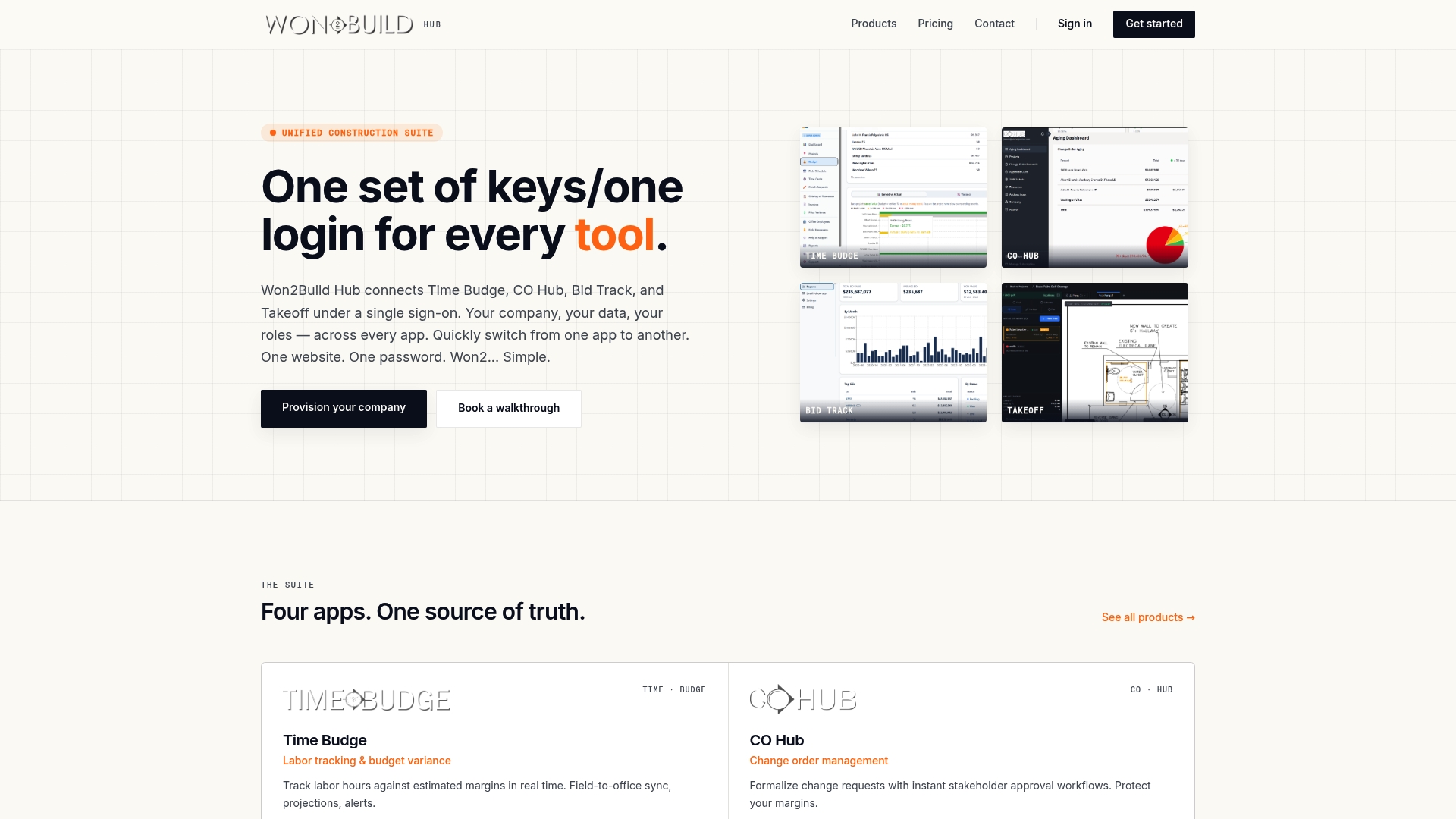
Won2build’s Takeoff software automates digital quantity measurement directly from construction plans, cutting the most labor-intensive stage of the estimating process. Bid Track manages your entire bid pipeline, so every opportunity is tracked, prioritized, and followed up without manual logging. Both tools operate under a single sign-on, meaning data flows between takeoff, pricing, and bid management without re-entry. Subcontractors using Won2build gain the real-time budget visibility that keeps field costs aligned with what was bid, protecting margin from the first measurement to the final invoice.
FAQ
How much time does estimating software actually save?
Automated workflows reduce bid time from 10–15 hours to 4–6 hours per bid, a 60% reduction achievable within 90 days of adoption.
Which estimating stage saves the most time with software?
Proposal assembly delivers the largest single-stage saving, dropping from 2–4 hours per bid to under 10 minutes with integrated templates.
Does faster estimating actually improve win rates?
Firms that automate estimating win 20–30% more competitive bids because faster turnaround and accurate pricing make their submissions more competitive.
How long does it take to see a return on estimating software?
For subcontractors doing $2M or more in annual volume, the typical payback period is 2–4 months, with first-year ROI ranging from 8x to 14x.
What is the biggest mistake when adopting estimating software?
Skipping pricing database calibration is the most common error. Using default rates instead of your actual costs saves setup time but produces inaccurate bids that cost more to fix after award.
Recommended
One login for estimating, bid tracking, change orders, and labor.
The Hub is free. Pay only for the apps you turn on.
Create your free Hub account- How to Compare Plan Revisions and Control Estimate ChangesA practical guide for commercial subcontractors on comparing plan revisions, catching scope changes, and keeping estimates and change orders in step.
- Drywall Takeoff Basics: A Step-by-Step Guide for SubsLearn drywall takeoff basics: how to measure walls and ceilings, deduct openings, convert to sheets, set waste and finish levels, and avoid costly misses.
- How to Reduce Profit Fade on Subcontractor JobsProfit fade usually starts in the field and hides until closeout. Here is how subcontractors can catch it weekly and protect the margin they bid.