
Why Commercial Projects Require Digital Tools in 2026
Discover why commercial projects require digital tools in 2026. Improve coordination and reduce costs with modern solutions for construction success.
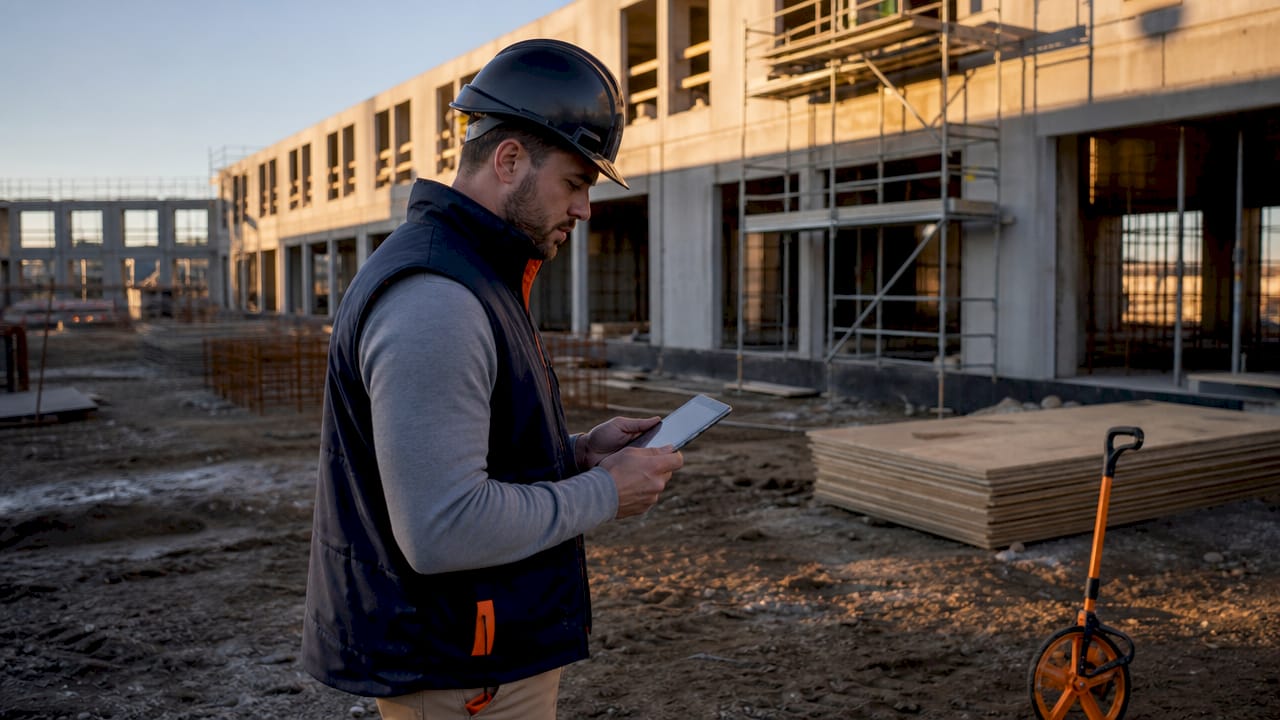
Digital tools are now standard infrastructure for commercial construction projects, not optional upgrades. BIM, integrated project management platforms, and 360-degree reality capture have moved from pilot programs to baseline requirements on mid-to-large commercial sites. Projects that skip them face measurable consequences: coordination failures, rework costs, and data gaps that compound through every phase of delivery. Understanding why commercial projects require digital tools starts with recognizing that the complexity of modern builds has outpaced what paper-based or siloed systems can manage.
Why commercial projects require digital tools for coordination
Coordination latency is the primary driver of rework in commercial construction. When field teams, engineers, and subcontractors work from different versions of the same document, conflicts surface on site instead of on screen. That is where the cost multiplies.
BIM addresses this directly. The technology creates a shared 3D model that every trade works from simultaneously. BIM clash detection applied before permit submission catches conflicts between structural, mechanical, and electrical systems before a single crew shows up on site. The Construction Industry Institute links rework to a material share of project cost overruns. Catching clashes in the model rather than in the field eliminates that cost entirely.

Integrated project management platforms extend BIM’s value by connecting field data to office workflows in real time. A superintendent logging a change on site updates the same record the project manager sees at the desk. That connection removes the lag between what happens on the ground and what the schedule reflects.
360-degree reality capture adds a spatial audit trail. Every site condition is documented at every stage, which protects all parties during disputes and supports a cleaner final closeout. The combination of BIM, integrated platforms, and reality capture is what makes modern commercial project delivery trackable and defensible.
Pro Tip: Run BIM clash detection at least two weeks before permit submission. That window gives your engineering team time to resolve conflicts without compressing the schedule.
How rework costs accumulate without digital coordination
Rework is not just a labor cost. It pulls materials, equipment, and supervision time back to work already completed. On a large commercial project, a single undetected clash between a ductwork run and a structural beam can trigger cascading delays across multiple trades. Digital coordination tools break that chain before it starts.
| Coordination method | Clash detection timing | Rework risk |
|---|---|---|
| Paper drawings only | On site, after installation | High |
| 2D CAD without BIM | Pre-construction, limited scope | Moderate |
| BIM with clash detection | Pre-permit, full model review | Low |
| BIM plus integrated platform | Continuous, real-time updates | Minimal |
What role do digital tools play in data security and risk management?
Cyber threats are a direct operational risk for commercial construction projects. 89 cyber attacks of national significance were identified in 2024 alone. That number reflects how frequently construction data, including contracts, bid files, and project financials, is targeted.
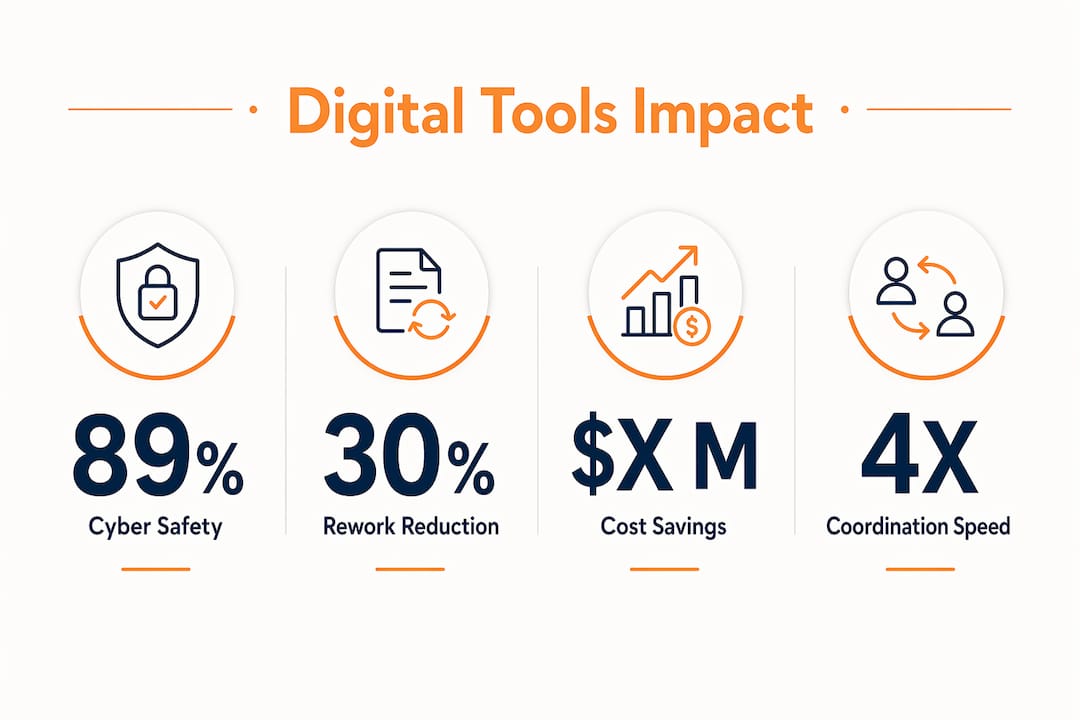
The cost of a breach is not abstract. A 2023 attack on the British Library caused £7 million in losses. Construction firms hold similarly sensitive data: subcontractor agreements, owner financials, regulatory submissions, and proprietary bid information. A breach at any point in the project lifecycle can halt work, trigger legal exposure, and damage client relationships permanently.
Digital tools address this risk in several ways:
- Centralized access control limits who can view or edit sensitive project files, reducing insider risk and unauthorized access.
- Audit logs record every action taken on a document, creating accountability across the project team.
- Encrypted data transmission protects information moving between field devices and office servers.
- Regulatory compliance features built into enterprise platforms help firms meet data handling requirements without manual tracking.
- Unified platforms reduce the attack surface by consolidating data into one system rather than spreading it across email threads, shared drives, and disconnected apps.
Real-time analytics also improve risk management beyond cybersecurity. When project data flows through a single platform, managers can identify schedule slippage, budget drift, and safety incidents as they happen rather than after the fact. Evidence-based decisions replace intuition-based ones. That shift alone changes how project leaders respond to problems.
Why usability determines whether digital tools actually work on site
A digital tool that crews do not use is worse than no tool at all. Inconsistent data entry creates a false picture of project status. Decisions made on incomplete records lead to the same coordination failures that digital tools are supposed to prevent.
The accountability gap describes exactly this problem. When visual data like 360-degree site capture is siloed from project workflows, the evidence exists but cannot influence decisions. A photo library disconnected from the RFI process, the schedule, or the change order log does not protect the project. It just fills storage.
“If technology isn’t simple, it is bypassed, causing inconsistent data worse than none at all.”
Field adoption depends on simplicity. Tools that require multiple logins, complex navigation, or extended training get abandoned by field crews. Apprentices and journeymen need to complete a data entry task in seconds, not minutes. If the process takes longer than writing it on paper, the paper wins.
A unified source of truth solves both problems. When all project data lives in one platform with a single login, field teams enter information once and it flows automatically to the office. Won2build’s single sign-on architecture is built on this principle. Project managers, estimators, and field supervisors access Time Budge, CO Hub, Bid Track, and Takeoff from one login, with no manual data transfer between applications.
Pro Tip: Test any new platform with your least tech-savvy crew member first. If they can complete a task without help in under two minutes, adoption will stick across the whole team.
How cost-effective project management software improves resource allocation
Affordability is no longer a barrier to digital project management. Project management software starts at $5–$10.99 per user per month for entry-level platforms in 2026. That price point puts centralized project oversight within reach for firms of any size.
The return on that investment shows up in several places:
- Budget tracking accuracy improves when labor hours, material costs, and change orders feed into one system automatically. Real-time budget tracking eliminates the lag between field activity and financial reporting.
- Scheduling precision increases when task completion data updates the project timeline in real time rather than through weekly status meetings.
- Reporting speed drops from hours to minutes when data is already structured and centralized.
- Bid accuracy improves when historical project data informs future estimates. Digital bid tracking creates a record of every bid submitted, won, and lost, which sharpens future pricing.
The cost-benefit case is straightforward. A single avoided rework event on a mid-size commercial project covers months of software subscription costs. The real question is not whether digital tools pay for themselves. It is how quickly.
What steps should project leaders take to implement digital tools effectively?
Selecting and deploying digital tools requires a deliberate process. Picking the wrong platform or rushing adoption creates the same fragmentation problems that digital tools are supposed to solve.
- Audit your current workflows first. Map where data is created, where it travels, and where it gets lost. That audit identifies the highest-value integration points before you select any software.
- Prioritize platforms that connect to BIM and site workflows. A project management tool that cannot receive data from your BIM model or field capture system creates a new silo rather than closing existing ones.
- Require single sign-on and unified data architecture. Single sign-on for construction reduces login friction and keeps all project data synchronized across applications without manual transfer.
- Run a phased rollout with a pilot project. Deploy the platform on one active project before committing the full organization. Collect feedback from field crews and project managers before scaling.
- Invest in change management, not just training. Training teaches crews how to use a tool. Change management explains why it matters and what happens to their work when they skip it. Both are necessary for consistent adoption.
- Measure adoption, not just installation. Track how often field crews log data, how quickly change orders move through the system, and how many manual workarounds persist. Those metrics tell you whether the platform is actually working.
Construction measurement tools and digital takeoff software are natural starting points for firms new to integrated platforms. They deliver immediate, visible value in estimating and planning before the full project management workflow is in place.
Key takeaways
Commercial construction projects require digital tools because coordination complexity, cybersecurity risk, and resource allocation demands have exceeded what manual or siloed systems can reliably manage.
| Point | Details |
|---|---|
| BIM reduces rework costs | Clash detection before permit submission eliminates field conflicts that drive cost overruns. |
| Cybersecurity is an operational risk | 89 attacks of national significance in 2024 show construction data is actively targeted. |
| Usability drives adoption | Tools that field crews can operate in under two minutes get used consistently and produce reliable data. |
| Affordable entry points exist | Project management platforms start at $5 per user per month, making digital oversight accessible for firms of any size. |
| Unified platforms close the accountability gap | Single sign-on and integrated data architecture prevent siloed evidence from disconnecting field activity and office decisions. |
The uncomfortable truth about digital maturity in construction
I have worked alongside commercial construction teams long enough to know that the biggest obstacle to digital adoption is not cost or complexity. It is the belief that the current system is “good enough.” That belief is most common on teams that have not yet experienced a major coordination failure or a data breach. They are measuring the cost of change against the cost of a problem they have not had yet.
Data analytics and intelligent automation are already driving delivery on major infrastructure programs. The firms building that capability now are not doing it because they had a crisis. They are doing it because they understand that project complexity only increases, and the teams that manage it well will win more work.
The shift I find most significant is the move from technology adoption to digital skill development. Installing a platform is the easy part. Building a team that reads project data, spots trends early, and adjusts before problems compound is the actual competitive advantage. That requires ongoing investment in people, not just software licenses.
Commercial project leaders who treat digital tools as a cost center will always struggle to justify the spend. Leaders who treat them as the primary mechanism for protecting margins and winning bids will find the ROI obvious. The data supports the second view. The only question is when you decide to act on it.
— Jen Reese
Won2build’s integrated platform for commercial project leaders
Commercial project leaders need tools that connect field activity to office decisions without adding complexity to either side. Won2build’s software suite does exactly that for construction subcontractors.
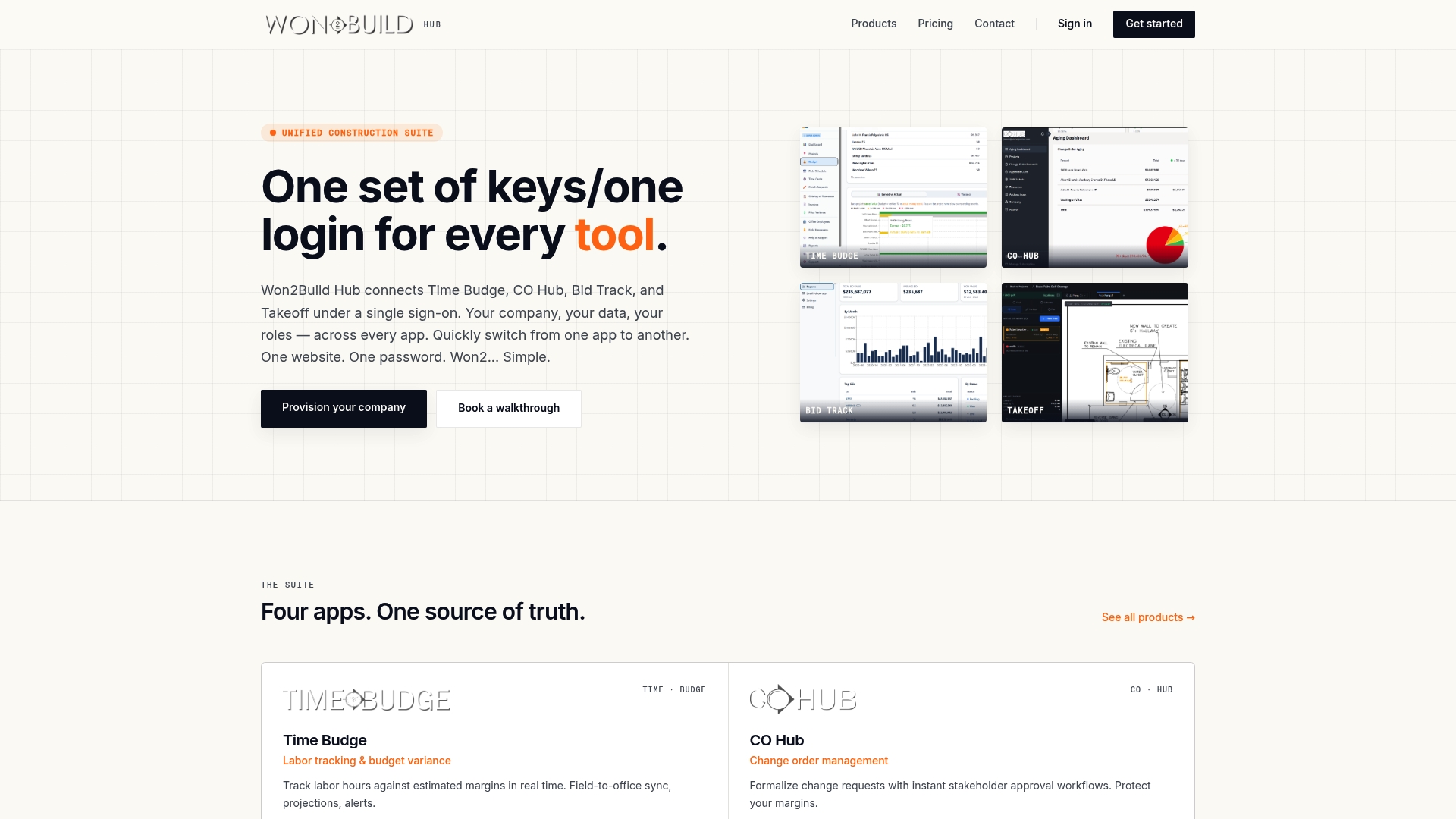
Won2build Hub integrates four applications, including Bid Track, CO Hub, Takeoff, and Time Budge, under a single sign-on. Project data moves between estimating, change order management, labor tracking, and digital plan quantification without manual re-entry. That architecture eliminates the double-entry errors and data losses that undermine project oversight on complex commercial jobs. Explore the full Won2build product suite to see how each application connects to your existing workflows.
FAQ
Why do commercial projects require digital tools specifically?
Commercial projects involve multiple trades, tight schedules, and large financial stakes. Digital tools reduce coordination failures, protect project data, and give managers real-time visibility into cost and schedule performance.
What is BIM and why does it matter for commercial construction?
BIM is a shared 3D model that all project trades work from simultaneously. It enables clash detection before construction begins, which eliminates the rework that drives cost overruns on commercial projects.
How much do digital project management tools cost in 2026?
Entry-level project management platforms start at $5 per user per month. That price point makes centralized digital oversight accessible for commercial subcontractors and general contractors of any size.
What is the accountability gap in construction digital strategy?
The accountability gap occurs when site data, such as photos or reality capture, is stored separately from project workflows. Evidence exists but cannot influence decisions, which defeats the purpose of collecting it.
How does a unified platform improve field adoption of digital tools?
A unified platform with single sign-on reduces login friction and keeps all project data synchronized automatically. Field crews enter information once, and it flows to every connected application without manual transfer.
Recommended
One login for estimating, bid tracking, change orders, and labor.
The Hub is free. Pay only for the apps you turn on.
Create your free Hub account- 7 Concrete Takeoff Steps Estimators Use to Avoid Ordering ShortfallsFollow seven concrete takeoff steps to calculate cubic yards, size rebar and formwork, convert volumes to supplier units, and verify quantities before bid...
- Are E-Signature Change Orders Legal and Worth the Switch?E-signature change orders streamline your workflow, ensuring faster approvals, fewer disputes, and quicker invoicing—discover the benefits now!
- How to Link Takeoff to Estimate for Accurate BidsLink your takeoff quantities to your estimate for accurate bids. Discover the seamless integration method that reduces errors and saves time.