
4 Step Daily T&M Tickets Checklist to Protect Subcontractor Pay
Follow a 4 step day of work checklist: capture, sign, export. Lock same day proof, speed billing, and stop payment delays for subcontractors.

A daily T&M ticket is the same-day, signed record of the labor, materials, and equipment used on a time-and-materials task, and it exists for one reason: to make sure you get paid for work the other side can’t later dispute. If the ticket is complete and signed before your crew leaves the site, you’ve turned a verbal agreement into documented proof that speeds up billing and shuts down most arguments before they start.
TL;DR:
- Use a consistent four-step process: capture details in real time, attach evidence immediately, secure same-day on-site signatures, and export summaries according to contract schedules.
- Include essential fields such as project information, labor details, materials, equipment, and signed authorization to prevent disputes or delays.
- Obtain signatures and attach documentation during the same shift to reduce billing disputes caused by memory fade or incomplete records.
- Choose digital ticketing software with offline capability, configurable templates, integrated signatures and photos, approval workflows, and a secure audit trail to streamline field-to-office data transfer.
- Build daily ticket discipline into routines and consider platforms like Won2Build to automate field data collection and accelerate billing through integrated workflows.
Table of Contents
- How Do You Manage Daily Ticket Updates From Field to Billing?
- What Fields Must Every T&M Ticket Include?
- How Do You Get Same-Day Sign-Off Without a Fight?
- What Should You Demand From Digital T&M Ticketing Software?
- How Do Daily Tickets Turn Into Invoices?
- What Field Discipline Actually Changes
- Put Daily Ticket Discipline on Autopilot With Won2Build
- Sources
- FAQ
How Do You Manage Daily Ticket Updates From Field to Billing?
A daily T&M ticket process only works if it happens in the same order every time. Skip a step, and you’re the one stuck chasing a signature three weeks later when nobody remembers what actually happened on-site.
Here’s the sequence that holds up:
- Capture in real time. Log who worked, what they did, hours, quantities, and the cost code before the details blur together. Waiting until end of shift to reconstruct the day from memory is how tickets get challenged.
- Attach evidence as you go. Photos of completed work, material receipts, and delivery tickets should get clipped to the ticket the moment they exist, not gathered later from a truck cab.
- Get the signature before the crew leaves. A digital signature on a tablet or a printed signature on paper both work, but the ticket has to be signed the same day, on-site, by someone authorized to approve it.
- Summarize and export on your contract’s schedule. Some contracts want tickets weekly, others want them per closeout. Either way, the summary should roll up cleanly into whatever format your billing team needs.
That four-step loop is the entire T&M ticket process in miniature. Everything else in this guide is detail on how to do each step well.
Pro Tip: Build the signature step into your crew’s actual departure routine, not a separate task. If signing off is the last thing that happens before trucks roll, it gets done. If it’s a “we’ll grab it tomorrow” task, tomorrow rarely comes.
What Fields Must Every T&M Ticket Include?

A ticket only protects you if someone who wasn’t on-site that day could read it and reconstruct exactly what happened. That’s the standard worth building toward: enough detail that a project manager sitting in an office three states away has no questions left.
At minimum, a complete daily ticket needs:
- Project name, location, date, and the directive or work request it ties back to
- Labor detail: worker name or ID, trade classification, hours worked, and rate or labor code
- Materials used, with quantities, unit cost, and a reference to the supplier receipt
- Equipment used, including rental receipts or hour-meter readings where applicable
- A unique ticket ID and a sign-off block with printed name, role, signature, and date
Miss any one of these and you’ve handed the other side an easy excuse to slow-walk payment.
How Do You Get Same-Day Sign-Off Without a Fight?
Crews that get tickets signed and documented daily see meaningfully fewer billing disputes than crews that batch their paperwork and chase signatures after the fact. The gap isn’t about honesty. It’s about memory. A superintendent who signs a ticket at 4:30 p.m. remembers the day. The same person asked to sign a week later is guessing.
A few habits close that gap:
- Make same-day sign-off a non-negotiable part of the shift, not an afterthought handled “when you get a chance.”
- Take timestamped photos with short captions that map directly to specific ticket lines, not generic jobsite shots.
- Attach receipts and delivery manifests immediately so the paper trail stays linked to the ticket instead of floating loose in a folder.
- If someone refuses to sign, document the refusal on the ticket itself, get a witness countersignature if you can, and send notice per your contract’s dispute terms right away.
- Use consistent ticket numbering and an aging view so you can spot which tickets have been sitting unsigned for days.
Pro Tip: A ticket sitting unsigned for a week isn’t a paperwork problem, it’s a cash-flow problem. Treat aged, unsigned tickets the same way you’d treat an overdue invoice, because that’s effectively what they are.
What Should You Demand From Digital T&M Ticketing Software?
Most crews eventually outgrow paper tickets, but not every app that calls itself “ticketing software” actually solves the field problem. Before you commit to one, run it through this checklist in a live demo, not a sales pitch.
- Mobile capture with offline mode. Job sites don’t always have signal, and a tool that only works with full bars is a tool that fails you exactly when you need it.
- Fast, configurable ticket templates. Data entry should take seconds per line, not minutes, and the fields should match your actual cost codes.
- Digital signatures and annotated photos. The signature and the photo evidence need to live on the same record, with edit history and user ID timestamps attached.
- Approval workflows and aging dashboards. Automated numbering and routing with a clear view of stuck approvals catches problems before they become billing delays.
- Real export options. Per-job PDF packets for backup, plus CSV or line-item exports that accounting can actually use without rekeying.
- A defensible audit trail. Every edit, timestamp, and user ID should be logged, because that trail is what backs you up if a ticket ever gets disputed months later.
How Do Daily Tickets Turn Into Invoices?
The handoff to billing is where a lot of good field work gets lost, usually because the packet is incomplete or arrives too late to matter.
- Build the billing packet: signed ticket PDFs, photos, receipts, rental invoices, and a CSV line-item export that matches the ticket IDs exactly.
- For high-volume teams, filter tickets by date range, export as a batch (often a ZIP of packets), and import the line-item data straight into accounting instead of retyping it.
- Submit on the cadence your contract requires, weekly for most T&M work, and stamp the received date the moment a ticket lands in the queue.
- Run a quick pre-flight check before submission: is it signed, are photos attached, are receipts attached, and does the ticket ID match the CSV row? That short checklist catches most of the reasons billing teams bounce tickets back.
What Field Discipline Actually Changes
Most T&M disputes I’ve seen traced back to the same root cause: not fraud, not bad faith, just a ticket that sat unsigned too long and turned a factual question into a memory contest. Crews that build the sign-off habit into their daily routine consistently see faster cash flow and fewer disputes that balloon into change-order fights. A tool like Won2Build Hub helps because it keeps that daily discipline connected to the office, not because software replaces the habit itself.
— Jen Reese
Put Daily Ticket Discipline on Autopilot With Won2Build
Won2Build is built specifically for subcontractors who need field-to-office ticket data to move without double entry or dropped paperwork. Time Budge handles mobile labor and hours capture on the job, while CO Hub turns signed T&M evidence directly into formal change orders and billing claims, all through one login instead of juggling separate apps.
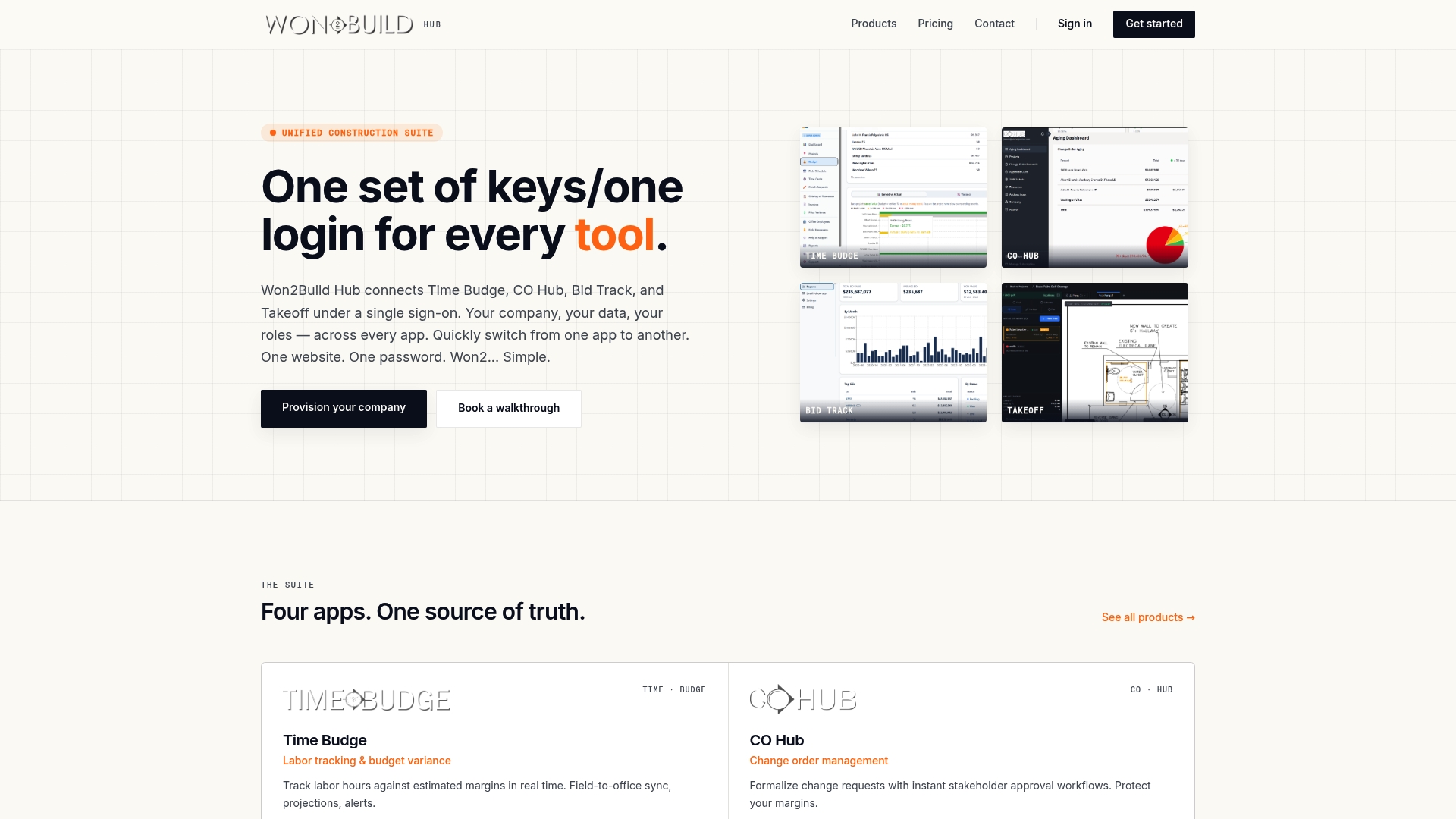
That single sign-on matters more than it sounds. When your crew captures hours, photos, and signatures in Time Budge in the morning, that same data is available to whoever handles change orders and billing that afternoon, with no re-keying and no version mismatch between field and office. Time Budge, CO Hub, and the active field worker fees are priced, with full details available on the pricing page. If you’re still stitching together paper tickets and spreadsheets, request a look at the platform and see what a same-day, exportable ticket workflow actually looks like in practice.
Sources
- What is T&M ticket? — Datumel construction glossary
- T&M Tickets: What to Include and How to Get Paid - LegalClarity
- Helpdesk
FAQ
What Is a T&M Ticket in Construction?
A T&M ticket is a daily, signed field record of the labor hours, materials, and equipment used on a time-and-materials task. It’s signed by the client or general contractor’s representative on-site the same day the work happens, which is what makes it enforceable evidence rather than just a note.
What Is the Difference Between a Time Card and a Time Ticket?
A time card typically tracks an employee’s hours for payroll purposes and stays internal to your company. A T&M ticket, by contrast, documents billable work for a client or GC and requires their sign-off, because it’s the basis for what you invoice them, not just what you pay your crew.
What Is a T&M Ticket Used For?
A T&M ticket exists to create same-day proof of exactly what a crew did, so that billing and payment aren’t left to memory or dispute later. A complete ticket should let someone who wasn’t on-site reconstruct the day from the record alone.
How Do I Handle a Ticket the Client Won’t Sign?
Document the refusal directly on the ticket, note who refused and why, and get a witness countersignature if one is available. Then send notice per your contract’s dispute or notice provisions right away, since many contracts have deadlines that start the moment a ticket is disputed.
Does Won2Build Handle T&M Ticket Management?
Yes. CO Hub is built to link T&M ticket evidence to change orders and billing claims, while Time Budge handles the field capture side, both accessible through a single login. Pricing and full plan details are available on the Won2Build pricing page.
Recommended
One login for estimating, bid tracking, change orders, and labor.
The Hub is free. Pay only for the apps you turn on.
Create your free Hub account- Managers: Make Mobile Field Workflows Resilient for 72 Hour OutagesPlaybook for field managers: offline first mobile workflows, resilient sync and conflict handling, compliance first AI guardrails, and practical pilot steps.
- Daily Signed Records: Force Account Tracking for Managers & InspectorsField checklist for project managers and inspectors to keep force account tracking audit-ready: use daily signed records for labor, equipment, and...
- Stop Timecard to Report Drift: Labor Cost Codes for SubcontractorsFix the timecard to report chain with labor cost codes that tie crews to budgets. Includes a 6 code starter and a burdened rate example.