
Types of Subcontractor Bids: A 2026 Field Guide
Discover the types of subcontractor bids for 2026. Learn the five methods to enhance your bid strategy and secure project success.

Types of subcontractor bids are formal methods by which subcontractors submit offers to perform specific portions of a construction project, each with distinct procedures, legal implications, and strategic advantages. Choosing the wrong bid type for a given project costs you time, money, and relationships. The five primary methods recognized by 2026 industry guidance are Open Bidding, Selective Bidding, Negotiated Tendering, Two-Stage Tendering, and Serial Tendering. Each method fits a different project profile, and knowing which one applies to your situation is the difference between a competitive submission and a wasted effort.
1. Types of subcontractor bids: the five core methods
The construction industry formally recognizes five bid types, and each one shapes how you prepare, price, and present your work. Picking the right method is not a formality. It determines your risk exposure, your pricing strategy, and your odds of winning.

Open bidding
Open bidding is a fully public solicitation where any qualified subcontractor may submit a bid. Government and publicly funded projects use this method most often because it satisfies transparency and equal-access requirements. The upside is broad market exposure. The downside is intense price competition, which pushes margins thin and rewards speed over thoroughness.
Selective bidding
Selective bidding limits the invitation to a pre-qualified list of subcontractors. General contractors use this method when they need proven performance and cannot afford the risk of an unknown sub on a complex scope. You earn a spot on these lists through past performance, bonding capacity, and safety records. Getting invited is itself a competitive advantage.
Negotiated bidding
Negotiated bidding skips the competitive submission process entirely. The general contractor approaches one or a small number of subcontractors directly and works out pricing and scope through discussion. This method suits specialized trades, design-build projects, and private owners who prioritize relationship and expertise over lowest price. Your negotiating leverage here comes from your track record and your ability to solve problems the owner cannot easily find elsewhere.
Two-stage bidding
Two-stage bidding separates technical qualification from final pricing. In stage one, subcontractors submit qualifications, methodology, and preliminary scope. In stage two, only shortlisted subs submit firm pricing. This structure produces more accurate bids because pricing happens after scope is fully defined. Complex mechanical, electrical, and plumbing packages benefit most from this approach.
Serial tendering
Serial tendering applies to repetitive work across multiple project phases or locations. A subcontractor wins a contract for one phase, then uses the same rates and terms for subsequent phases without re-bidding each time. This method rewards efficiency and relationship-building. If you perform well on phase one, you lock in a revenue stream without competing again.
Pro Tip: Identify which bid type applies before you invest time in a submission. A negotiated project requires a narrative-heavy proposal. An open bid requires a tight price and a clean scope sheet. Mixing up the format signals inexperience to the general contractor.
2. Subcontractor bid proposals explained: bids, proposals, and quotes
The terms “bid,” “proposal,” and “quote” are used interchangeably on job sites, but they carry different legal and practical meanings. Confusing them leads to scope gaps, pricing disputes, and lost contracts.
A bid is a firm, legally binding offer to perform a defined scope of work at a stated price. Public projects almost always require hard bids. Once submitted, a bid locks you into that number.
A proposal is a more flexible document that combines pricing with a narrative explanation of your approach, qualifications, and methodology. Private negotiated projects benefit from narrative-driven proposals that emphasize qualifications and approach rather than just a bottom-line number.
A quote is an informal, non-binding estimate typically used for small scopes or preliminary budgeting. Quotes carry no contractual weight until formalized.
“Successful subcontractors treat bids as legally binding documents. The approach varies by project type: public projects favor firm prices, while private projects favor detailed narrative proposals that demonstrate expertise and reduce owner risk.”
The practical implication is straightforward. When a general contractor sends you an Invitation to Bid (ITB), they expect a firm price with complete documents. When they send a Request for Qualifications (RFQ), they want your credentials and preliminary pricing first. General contractors distinguish between these two documents clearly, and responding to the wrong one with the wrong format wastes everyone’s time.
Pro Tip: Always confirm whether you are responding to an ITB or an RFQ before you build your submission. The document type tells you exactly how much pricing commitment is expected.
3. Bid evaluation criteria: how your bid gets scored
Understanding how your bid gets evaluated is as important as preparing it. General contractors and owners do not simply pick the lowest number. A structured bid evaluation scorecard typically weights price at 40%, with the remaining 60% divided among scope completeness, schedule, qualifications, and risk factors. That means a subcontractor with a slightly higher price but a complete, well-documented submission can beat a lower bidder with gaps in scope.
The five criteria that appear most consistently in 2026 evaluation frameworks are:
- Price — total cost, unit rates, and allowances
- Scope completeness — are all specified items included with no hidden exclusions?
- Schedule — can you meet the project timeline with your current workload?
- Qualifications — licenses, bonding, insurance, and relevant project history
- Risk factors — assumptions, exclusions, and contingency language that could inflate final cost
Bid leveling is the process general contractors use to normalize these differences before making a final selection. Bid leveling involves adjusting bids for missing scopes and assumptions, which often hides significant cost variances and risk. A bid that looks cheap on the surface frequently carries hidden costs once exclusions are added back in. Won2build’s bid leveling guide walks through how to normalize bids so comparisons reflect true cost.
The most common evaluation mistake subcontractors make is leaving out scope clarifications. Reviewers interpret silence as inclusion. If you are not covering something, say so explicitly. Undocumented exclusions become change orders, and change orders damage relationships.
Pro Tip: Use a standardized bid form that mirrors the general contractor’s scope sheet line by line. This makes leveling easier for the reviewer and signals that you read the documents carefully.
4. Bid timing and invitation strategy
Bid timing is a strategic variable that most subcontractors underestimate. Timely bid invitation windows of 10 days for simple scopes and a minimum of 21 days for complex mechanical, electrical, and plumbing packages improve bid quality and reduce contingency risks. When you rush a bid, you pad your number to cover uncertainty. That padding costs you wins.
From the general contractor’s side, inviting 6–8 subcontractors per trade is standard practice because average response rates run at 30–50%. That means inviting only three subs often yields one or two responses, which is not a competitive field. Knowing this helps you understand why you sometimes get invited to bids you are unlikely to win. The GC is building their field size, not necessarily targeting you specifically.
For subcontractors, the timing implication runs the other direction. Responding quickly and completely signals reliability. General contractors track who responds, who asks good questions, and who submits on time. That behavior record influences future invitations, especially for selective bidding lists.
5. Practical strategies to improve bid competitiveness
Winning more bids requires more than a low price. Submitting a professional bid package with itemized costs, clear exclusions, and documented schedules increases win rates by up to 40%. That is a significant return on the extra hour it takes to organize your submission properly.
The strategies that consistently separate winning subcontractors from the rest include:
- Itemize your costs. Break labor, material, equipment, and subcontracted work into separate line items. Reviewers trust detailed numbers more than lump sums.
- State your exclusions explicitly. List every item you are not including. This protects you legally and helps the GC level bids accurately.
- Match your format to the project type. Hard bids need tight pricing. Negotiated projects need a narrative that sells your approach and your team.
- Use historical bid data. Track your win rate by project type, bid method, and GC. Patterns in your own data reveal where you are competitive and where you are not.
- Respond to every RFI promptly. Questions during the bid period signal engagement. GCs notice who asks smart questions and who goes silent.
Many subcontractors lose bids by submitting price-only responses. A complete proposal with a detailed cost breakdown demonstrates that you understand the scope and have priced it accurately. Review Won2build’s bid submission checklist before you send any package out the door.
Technology also plays a direct role in bid accuracy. Digital takeoff tools eliminate manual measurement errors that inflate or deflate your material quantities. Bid pipeline software lets you track multiple active bids without losing details between submissions. The subcontractors who adopt these tools produce more consistent numbers and win at higher rates.
Pro Tip: Keep a bid log that records every submission: project name, bid type, GC, your price, the winning price, and the reason you won or lost. After 20 bids, the patterns become clear and your pricing strategy sharpens.
For additional context on tender process fundamentals and how bidding frameworks apply across different project structures, external resources can supplement your understanding of negotiated and selective tendering mechanics.
Key takeaways
Choosing the right bid type and submitting a complete, well-structured proposal are the two factors that most directly determine a subcontractor’s win rate and project profitability.
| Point | Details |
|---|---|
| Match bid type to project | Open, selective, negotiated, two-stage, and serial bids each fit different project profiles and risk levels. |
| Know your document type | Distinguish between an ITB and an RFQ before building your submission to avoid mismatched responses. |
| Price is only 40% of the score | Scope completeness, schedule, qualifications, and risk factors make up the majority of most evaluation scorecards. |
| Bid leveling changes the outcome | Exclusions and assumptions hidden in your submission get added back during leveling, often reversing a price advantage. |
| Complete packages win more | Professional bid packages with itemized costs and clear exclusions increase win rates by up to 40%. |
What I’ve learned watching subcontractors win and lose bids
The biggest shift I’ve seen in subcontractor bidding over the past few years is not about price. It’s about completeness. General contractors are under more schedule and budget pressure than ever, and they are selecting subs who make their job easier, not just cheaper. A bid that arrives on time, answers every scope question, and lists exclusions clearly saves the GC hours of follow-up. That saves them money. They remember it.
The subcontractors who struggle most are the ones who treat every bid the same way regardless of type. They send a one-page price sheet to a negotiated project that needed a full proposal. They submit a narrative-heavy document to a hard-bid public project where the owner just needs a number. Reading the room, meaning reading the bid type, is a skill that compounds over time.
I also think the industry underestimates how much bid timing matters. Rushing a complex MEP package into a 10-day window produces padded numbers and missed scope items. The best subcontractors I’ve observed push back on unrealistic timelines and explain why. That conversation itself builds credibility with the GC.
Technology adoption is no longer optional for competitive subcontractors. Digital takeoff tools and bid pipeline management are now table stakes in most markets. The subcontractors still doing manual quantity takeoffs on paper plans are not just slower. They are less accurate, and that inaccuracy shows up in their pricing.
— Jen Reese
Won2build tools built for subcontractor bid management
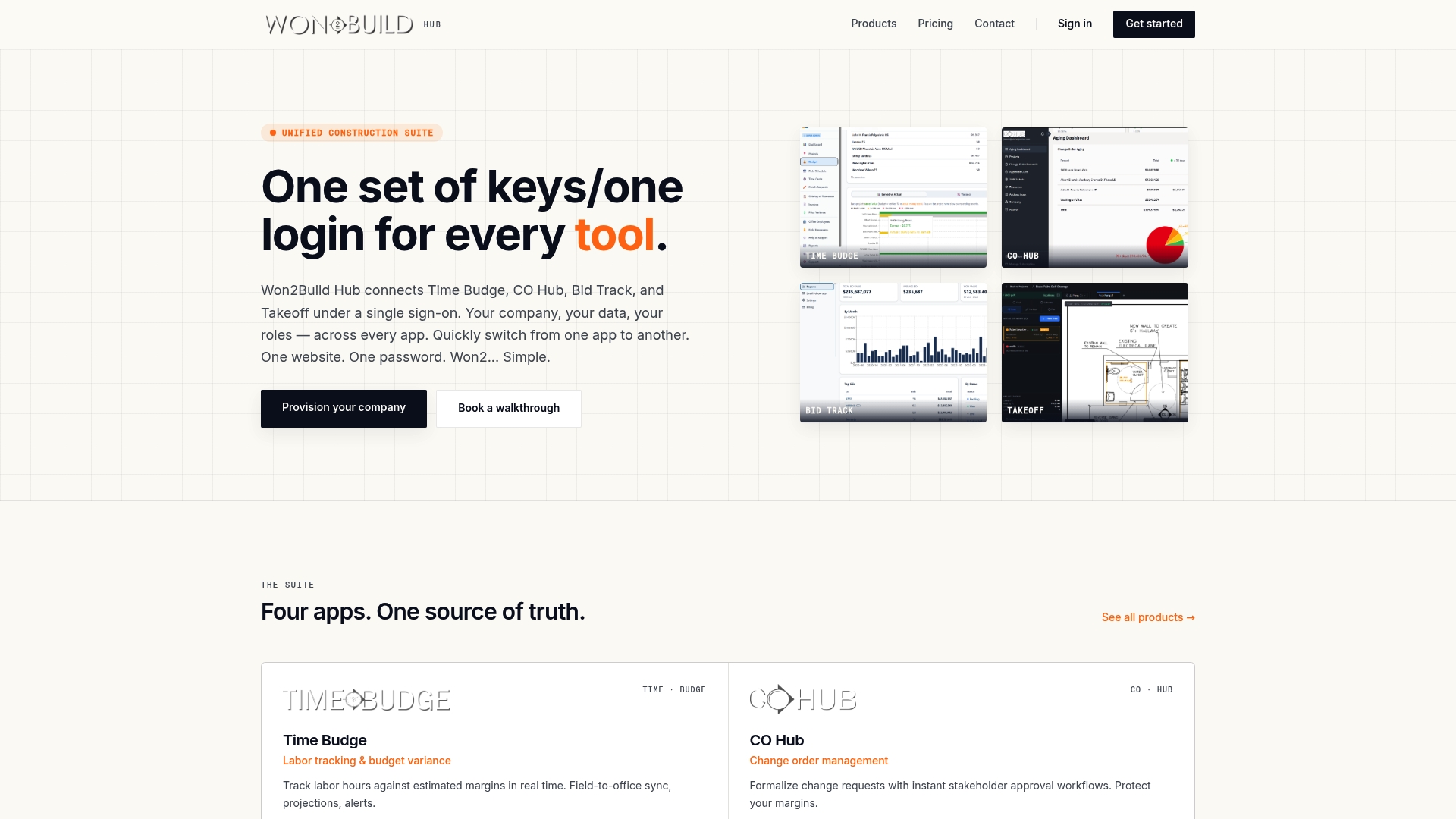
Won2build’s software suite addresses the exact pain points that cost subcontractors bids. Bid Track manages your entire estimating pipeline, so you never lose track of an active submission or miss a deadline. Takeoff handles digital plan measurement, eliminating the manual quantity errors that inflate your material costs and undermine your pricing accuracy. CO Hub manages change orders after the award, protecting the margin you worked to win in the first place. All three tools connect through a single sign-on, so data moves between estimating, field, and office without re-entry. For subcontractors who want to submit better bids and protect what they earn, Won2build is built specifically for that work.
FAQ
What are the main types of subcontractor bids?
The five primary types are Open Bidding, Selective Bidding, Negotiated Tendering, Two-Stage Tendering, and Serial Tendering. Each method suits different project types, owner requirements, and competitive conditions.
What is the difference between a bid and a proposal?
A bid is a firm, legally binding offer at a fixed price, typically required for public projects. A proposal combines pricing with a narrative explanation of qualifications and approach, used most often in private or negotiated projects.
How are subcontractor bids evaluated?
A structured scorecard typically weights price at 40%, with the remaining 60% split among scope completeness, schedule, qualifications, and risk factors. Bid leveling then normalizes exclusions and assumptions across all submissions before a final selection is made.
How many subcontractors should be invited to bid?
Inviting 6–8 subcontractors per trade is standard practice because response rates average 30–50%. Inviting fewer than three rarely produces a competitive field.
How can subcontractors improve their bid win rate?
Submitting complete packages with itemized costs, explicit exclusions, and documented schedules increases win rates by up to 40%. Matching your submission format to the bid type, whether a hard bid or a narrative proposal, also significantly improves your standing with reviewers.
Recommended
One login for estimating, bid tracking, change orders, and labor.
The Hub is free. Pay only for the apps you turn on.
Create your free Hub account- How to Compare Plan Revisions and Control Estimate ChangesA practical guide for commercial subcontractors on comparing plan revisions, catching scope changes, and keeping estimates and change orders in step.
- Drywall Takeoff Basics: A Step-by-Step Guide for SubsLearn drywall takeoff basics: how to measure walls and ceilings, deduct openings, convert to sheets, set waste and finish levels, and avoid costly misses.
- How to Reduce Profit Fade on Subcontractor JobsProfit fade usually starts in the field and hides until closeout. Here is how subcontractors can catch it weekly and protect the margin they bid.