
Subcontractor Project Reports: 3 Templates for Same Day Proof
Copy three daily report templates to log crew hours, work, materials, safety, and GC directives, creating records with timestamps that support pay.

A subcontractor daily report must capture crew by trade, hours, work performed with location and percent complete, materials delivered or installed, safety notes, general contractor (GC) directives, and the next-day plan. Copy-ready templates follow below: a one-line checklist, a full daily report, and a manpower and production sheet. You can start using any of them on an upcoming shift.
TL;DR:
- Record crew by trade and hours, task location plus quantity or completion, material ticket numbers, safety activity, named GC directives, and next shift needs.
- Complete reports before leaving site, attach dated photos and original delivery tickets, then have a second person compare headcount and production with timecards.
- Use a fillable PDF when a contract requires a fixed or signed form; choose a spreadsheet for running totals, sortable history, and production against bid.
- OSHA assigns injury logging to the employer providing daily supervision; if supervision is shared, employers must coordinate so each injury is recorded once.
- Check the contract for prior day submission deadlines, then reconcile reports weekly against payroll, time and materials tickets, and general contractor logs.
Table of Contents
- What do you write on each line of a daily report?
- Which templates can you copy and use today?
- Who fills, submits, and checks the report each day?
- How do you keep records accurate and defensible?
- Why does steady reporting protect your pay?
- What would a subcontractor-first pilot look like?
- How do we automate your daily reports and field-to-office sync?
- FAQ
- Sources
What do you write on each line of a daily report?
Every field exists to answer one question later: who was there, what did they do, and who told them to do it. Fill each line the same way every day and your reports become evidence instead of paperwork.
- Workforce: List crew by trade or classification, then individual or crew hours, start and stop times, and the foreman’s sign-off. “4 laborers, 2 operators” beats “6 guys.”
- Work performed: Describe the task in plain words, add a location identifier (a building, level, or grid location), and state percent complete or quantity installed, such as the length of conduit installed. Add a photo reference ID so the entry points to proof.
- Materials: Record delivery ticket numbers, installed quantities, shortages, damaged items, and the supplier when it matters. A short note like “2 pallets drywall short on ticket 4471” saves an argument later.
- Safety: Log toolbox talks held, incident notes, near-miss descriptions, and whether a recordable injury occurred. If nothing happened, write “no incidents” rather than leaving it blank. A blank line looks like a skipped line.
- GC interactions: Note who issued a directive, any RFI references, verbal change notes, and the immediate action you took. Verbal direction can be disputed, so name the person and record when it happened.
- Next-day plan: Write planned crew counts, critical materials or equipment you need, and any constraints such as an inspection hold or blocked access.
Pro Tip: Write the report before you leave the site, not the next morning. Details like which level a crew finished can fade quickly, and a time-stamped entry made that day carries far more weight.
If you pair reports with accurate hours, our guide to construction timecard best practices covers how to keep the numbers clean at the source.
Which templates can you copy and use today?
Start with the shortest version that still protects you, then grow into the full report. Each template below is plain text you can paste into a spreadsheet, a notes app, or a printed form.
Template 1: one-line daily checklist
- Date, project, weather: “date, project name, weather conditions”
- Crew and hours: “Electrical: crew by role, hours, start and stop times”
- Work done: “Rough-in Level 2 east wing, about 60% complete”
- Materials: “Delivery ticket received, EMT quantity recorded, no shortages”
- Safety: “Toolbox talk on ladder use, no incidents”
- GC direction: “Mark (GC super) moved Level 2 panel location, verbal, 10:15”
- Next shift: “crew planned, materials and equipment needed”
Template 2: full daily report
- Header fields: Project name and number, date, weather, report number, prepared by, submitted time.
- Row fields: Crew and trade, hours, task and location, percent complete or units, photo IDs, delivery tickets, safety entries, GC directives, foreman signature.
- Short filled example: “Plumbing crew, hours recorded, corridor location, copper quantity installed, progress noted, photo references, delivery ticket received, toolbox talk on hot work, no incidents, directive from GC superintendent to reroute drain, RFI submitted.”
Template 3: manpower and production sheet
- Columns: trade, headcount, hours, production unit (LF, SF, each), quantity today, quantity to date, percent complete.
- Totals row: sum hours and units so you can compare against your bid.
- Example row: “Drywall, headcount recorded, hours recorded, SF, quantity completed today, quantity to date, progress noted.”
Format guidance: Use a fillable PDF when a GC requires a fixed form or a signed copy. Use Excel or Google Sheets when you want running totals and a sortable history. Either way, attach photos and delivery tickets to the same day’s file, and name files consistently, for example “2026-05-14_Riverside_DailyReport.pdf.” To copy fast, keep a blank template file locked and duplicate it each morning.
Who fills, submits, and checks the report each day?
Give the report one owner. The foreman or a subcontractor admin fills it in and signs it, and a second person, usually the project manager, verifies crew counts and production numbers before it goes out. A second review can catch mismatches between the worker count on the report and the timecards.
- Fill it the same day. The foreman completes every field while details are fresh.
- Verify. Check headcount against timecards and quantities against what you actually installed.
- Attach proof. Add photos, timecards, delivery tickets, and T&M tickets. Our daily T&M tickets checklist shows how to capture extra work so it attaches cleanly.
- Submit on time. Some commercial contracts specify when the prior day’s report is due. Check your own agreement, because late reports may weaken a later claim.
- Reconcile weekly. Match reports to payroll, T&M tickets, and the GC’s own logs so differences surface in days, not at closeout.
- Store it safely. Save the signed PDF in a project folder, keep version history, and back it up off the device that created it.
Pro Tip: Name every attachment with the date and a short label before uploading. “Photo 4471” tells nobody anything; “2026-05-14_L3_drain_reroute” tells the whole story.
Our real-time labor reports guide explains how field hours can flow to the office without retyping.
How do you keep records accurate and defensible?
A report is only as strong as the habits behind it. Consistent entries read as credible; sloppy ones read as reconstructed.
- Use the same field names on every report so anyone can compare day to day.
- Timestamp entries and photos, and add short captions saying what and where.
- Collect signed daily copies from your foreman, and keep original delivery tickets rather than only scans.
- Keep your own independent, time-stamped copy instead of relying on the GC’s system, so you have a buffer if their records are incomplete.
- Coordinate with the GC on injury recording so each injury is logged once, with no gaps.
- Photo capture tools are getting better; this overview of construction safety technology shows how digital documentation supports safety records.
On injury recording, OSHA’s rule turns on supervision. Day-to-day supervision determines which employer records an injury on the OSHA 300 log, and when more than one employer supervises, they must coordinate so each injury is recorded only once. The agency’s own recordkeeping bulletin says the employer providing that supervision is responsible even if the worker is not on its payroll. Know who supervises your crew each day, and write it down.
Why does steady reporting protect your pay?
Disciplined reports do two jobs. They back up change-order and T&M claims by building a clear timeline, so a disputed invoice gets resolved by pointing to dated entries rather than memory. They also protect you on safety exposure: OSHA has addressed multi-employer responsibility, and redundant, time-stamped, verified records of who directed what give you a defensible buffer. For signed documentation habits, see our post on force account tracking.

What would a subcontractor-first pilot look like?
Most reporting failures I see are not about missing templates. They come from the gap between the field and the office: the foreman knows what happened, and the office learns it later. Reports written by whoever has time, in whatever format, are the usual culprit. So do not start with the full form.
- Use the one-line checklist on a single project for a trial period.
- Count how many days it was completed before leaving site.
- Add the full daily report only after the checklist habit holds.
- For tracking hours alongside it, read our field guide to tracking labor hours.
A short habit that survives beats a thorough form that gets skipped.
— Jen Reese
How do we automate your daily reports and field-to-office sync?
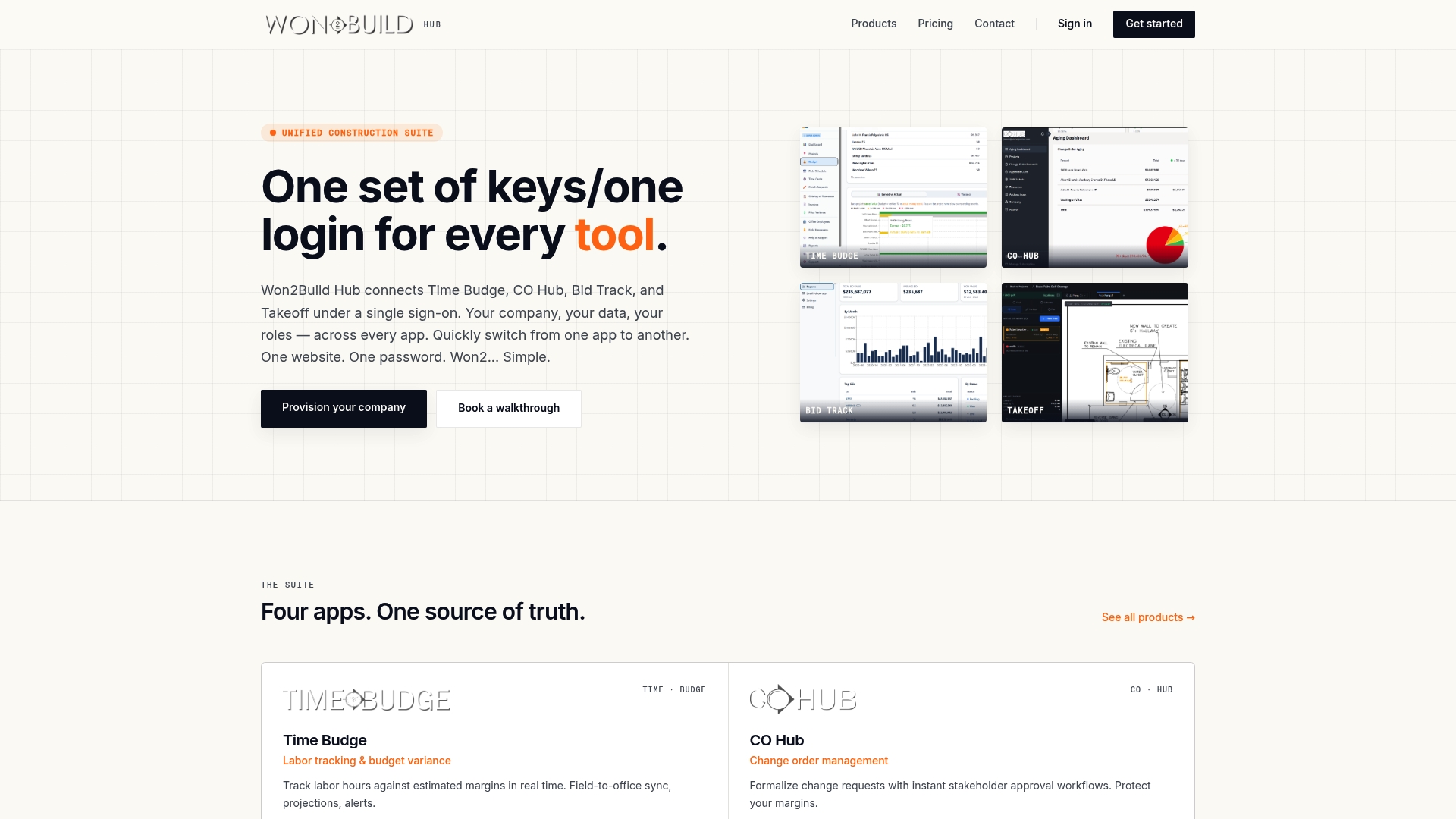
Re-entering the same hours across multiple places is where records can go missing. Our suite captures them once, with one login across every tool.
- Time Budge tracks labor in the field and feeds per-project reporting.
- CO Hub captures change work and T&M tickets as they happen.
- The Hub keeps one sign-on across all apps, so nothing is retyped.
Time Budge is $199 per month per company, plus $2 per month per active field worker, as listed on our pricing page. See pricing today.
FAQ
What is the role of a subcontractor in construction?
A subcontractor performs a specific trade, such as electrical, plumbing, or drywall, under contract to the general contractor. You are responsible for your own crew, materials, schedule, and documentation of that scope.
What is a daily report in construction?
A daily report is a written record of one day’s activity on site. It captures crew and hours, work performed, materials, safety notes, directives received, and the plan for the next day.
Who has to record an injury on the OSHA log when a subcontractor is involved?
The employer providing day-to-day supervision records the injury, according to OSHA’s interpretation of 1904.31. If supervision is shared, the employers coordinate so each injury is recorded once.
What is a project report?
A project report summarizes progress over a longer period, such as a week or month, drawing on your daily entries. It typically covers production against plan, changes, and open issues.
When should a daily report be submitted?
Some commercial contracts specify when the previous day’s report is due. Check your agreement for the exact requirement.
Recommended
One login for estimating, bid tracking, change orders, and labor.
The Hub is free. Pay only for the apps you turn on.
Create your free Hub account- Bid Pipeline Management: 7 Stages That Protect Subcontractor MarginsSee how subcontractors can track bids with CRM fields, a scorecard, weekly and monthly cadences, and a process with seven stages built to protect margins.
- Construction Estimate Accuracy: AACE Ranges, QRA, and EVM ChecksSee how AACE estimate classes set cost accuracy ranges, then apply QRA, EVM thresholds, and field checks to tighten construction estimates in practice.
- Change Order Pricing: Daily T&M Tickets Protect Subcontractor MarginLearn to price change orders with defined scope, cost codes, signed daily T&M tickets, and contract exhibits that support subcontractor payment.